
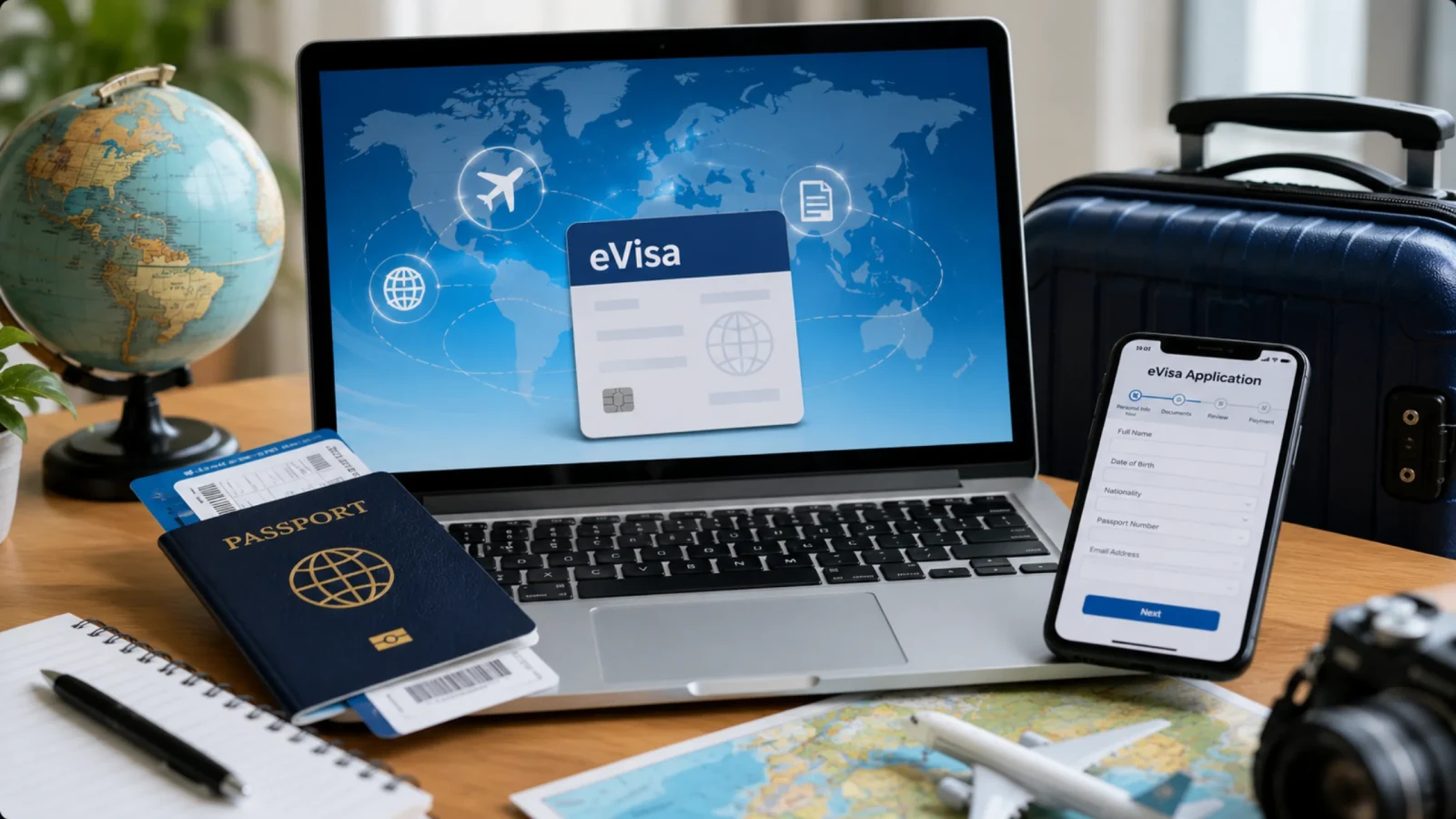
The eVisa, the biggest advantage for those planning for international travel in 2026, has revolutionized the way through which borders are crossed worldwide. An electronic visa also known as an e-Visa is an official grant by a nation's government in order for a foreign national to gain access for travel in, and to enter the country. It replaces the paper vignette/sticker that would normally be in your passport. It has been a huge deal for the travelers because making less hassles and getting your passport within time for a vacation or travel makes all the difference in the world when it comes to traveling with the same. This detailed EU guide answers all your questions about an e visa, including what countries offer them, what their requirements are and how to go about applying for them so as not to get lost in the process.
What Is an eVisa and How is it Different From Other Visa?
An eVisa is an electronic travel permission, which is securely attached to your passport containing biometric data. Your information is transferred to the immigration system of the country where you apply, after you have been approved a visa is issued electronically. When crossing the border your electronic visa status is automatically checked against the immigration system by the immigration officers who scan your passport.
eVisa vs. Visa on Arrival vs. Traditional Visa
It's essential to grasp the distinctions among these three main visa categories for hassle-free trip planning:
e-Visa: Solicited and decided all on the web BEFORE your journey. It offers secure access to the destination (at discretion of the border authorities) prior to boarding the aircraft.
Visa on Arrival (VoA): Received at the airport of arrival upon arrival. It is very easy to do, but usually requires long lines at the airport after an exhausting flight and may have the risk of being declined at the border.
Traditional Visa: It involves a physical application, which may require applicant's attendance at the embassy or consulate, fingerprinting and an actual sticker affixed to a passport. This is generally for those wishing to stay in the country for a prolonged period or for those who have a work permit or have stricter visa regulations.
eVisa vs. ESTA/ETA (Electronic Travel Authorization)
While they function similarly, there is a technical distinction. An e visa is a full visa processed electronically for travelers who are legally required to have a visa to enter. An Electronic Travel Authorization (ETA), such as the US ESTA or the new UK ETA, is a pre-screening system for travelers who are visa-exempt. In both cases, the application is digital, but an ETA is generally faster, cheaper, and applies to citizens of countries with visa-waiver agreements.
Benefits of Applying for an eVisa
The transition to digital borders seems to have many benefits for today's travelers. The main advantage is that it's convenient to apply from around the world with a smartphone or computer. The processing time drastically shortens, to the extent of only a few days or even a few hours. Besides, an eVisa doesn't run the risk of getting lost in an embassy which you are traveling to, as do physical passports. It is also more secure since it is much less likely to be lost, stolen or damaged.
Countries That Offer eVisa Facility
By 2026, scores of countries have completely gone digital or migrated to a hybrid immigration system, with the eVisa becoming the norm for tourist and short-term business travel.
Popular eVisa Countries for Tourists
Numerous the globe's hottest tourist attractions have enacted electronic visas to increase their tourist businesses. Australia, Vietnam, New Zealand, India, and Turkey are a few good examples of countries. The eVisa turkey system is one such example that is very streamlined and can get the tourists' entry quickly.
eVisa Countries for Business Travelers
Business is moving swiftly and electronic visas are just what it needs. Business travel has become a part of digital portals in countries such as Saudi Arabia and the U.K., where major economic hubs are found. Short-term business visitors' paperwork is now being replaced by the eVisa UK system, which was finalised in early 2026 and is managed online.
Countries Offering eVisa on Arrival
There are some countries that offer a hybrid model. They might have a Visa on Arrival desk for physical applications but they are adamant at encouraging applicants to come with e visa pre-applications to beat the queues. e-Visa applications like at Indonesia (eVisa indonesia portal) give you the option of paying online and then processing your visa upon arrival, creating a "paperless" fast-track visa experience.
Countries That Do Not Accept eVisa Applications
Even though the trend is towards visa-free travel, some countries may still need traditional visas for ending up in their country for a specific period of time, diplomatic considerations or because of technological infrastructure. Countries such as North Korea, Turkmenistan, and some countries with political turmoil do not have e visa. Moreover, some countries provide for electronic visas for certain nationalities, whereas other countries demand traditional visas for certain countries.
eVisa Requirements by Country
These are specific to each country and vary in regards to periods of validity and fees. This is a list of some of the most-popular spots for 2026.
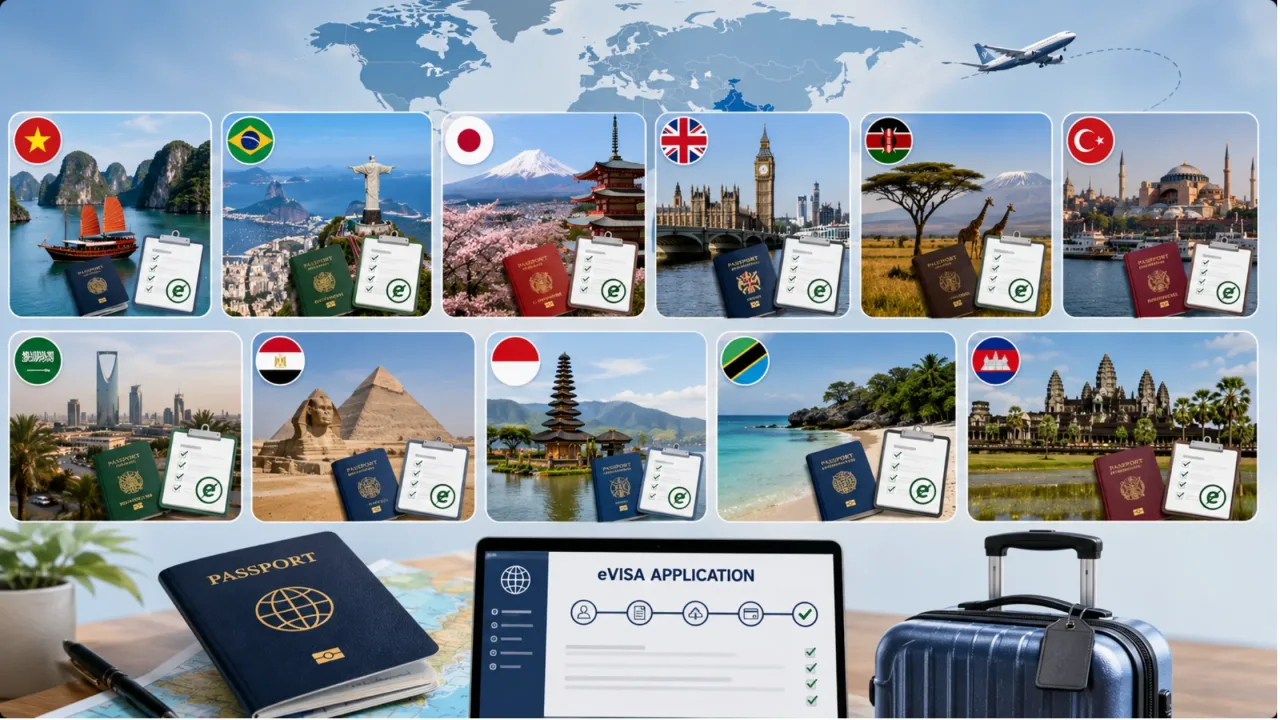
Vietnam eVisa Requirements
Vietnam eVisa is one of the most popular in Southeast Asia, has become a future hit. All citizens of any countries and territories are able to access it.
Validity: Single and/or multiple entry for up to 90 days.
Requirements: Passport (valid for 6 months beyond date of travel), passport photo (no glasses) and passport data page scan.
Processing: Please allow 3 to 5 working days for processing.
Brazil eVisa Requirements
There have been latest changes to the Brazil eVisa system. The procedure for tourists from other countries such as the US, Canada, and Australia, is completely electronic through the VFS portal. For all countries except India, however, a standard Visitor Visa (VIVIS) has to be obtained through an e-consular appointment and for business travellers, the DigiLocker e visa system has to be used.
Requirements: The documents required are a passport, a recent one , photograph, bank statements and flight documents in some cases.
Cost: The prices would range from around $80 - 95 depending on nationality and visa category.
Japan eVisa Requirements
The Japan eVisa was planned dealing primarily with short-term tourism. Now, it's offered to foreign nationals living in certain countries (e.g., the UK, US, Canada and parts of the EU) who must apply for a Japanese visa admittance.
Validity: Single entry, Maximum 90 days.
Requirements: Traveler's Passport, proof of financial reserve (bank statements) and a confirmed traveling schedule.
Note: The visa is entirely digital; travelers must log into their portal and display the "Visa Issuance Notice" on their smartphone at the airport.
UK eVisa Requirements
By 2026, the UK eVisa (and ETA system) has completely revolutionized British borders. The paper visa era is officially over.
Digital Shift: New digital system for implementing Physical BRPs (Biometric Residence Permits) and vignette stickers in place, now called digital e visa which is accessed through a UKVI account.
ETA: For visa-exempt short stay (tourism/business up to 6 months), Memorandum of Understanding is required by the guests to be an Electronic Travel Authorisation.
Requirements: A valid biometric passport, email address, and completion of the online suitability and criminality questions.
Kenya eVisa Requirements
The eVisa Kenya (now officially transitioned into the Electronic Travel Authorisation - eTA for all visitors) is mandatory for practically everyone entering the country.
Requirements: Valid passport (6 months minimum), a recent passport-size photo, contact details, and travel itinerary.
Processing: Usually very fast, often within 72 hours.
Turkey eVisa Requirements
The Turkey eVisa remains one of the fastest and most efficient systems globally.
Eligibility: Depends heavily on nationality. Some need supporting documents (like a valid Schengen, US, or UK visa).
Requirements: Passport valid for at least 6 months, an email address, and a credit/debit card for payment. The approval is almost instantaneous for eligible nationalities.
Saudi eVisa Requirements
Part of their massive tourism push, the Turkey Saudi search often overlaps, as both regions heavily promote digital entry. The Saudi eVisa is available to citizens of over 60 countries.
Validity: Valid for one year, multiple entries, allowing stays up to 90 days.
Requirements: Passport with 6 months validity, digital photo, and mandatory medical insurance (usually included in the visa fee).
Egypt eVisa Requirements
The Egypt eVisa simplifies entry to the land of the Pharaohs.
Options: Single entry (30 days) or multiple entry (6 months - 30 days per entry).
Requirements: Passport valid for 8 months from arrival date, travel plan (tourist visa) and hotel booking.
Indonesia eVisa Requirements
For trips to Bali or Jakarta, the Indonesia eVisa (specifically the e-VOA or electronic Visa on Arrival) is the way to go.
Validity: 30 days, extendable once for another 30 days.
Requirements: They require a passbook with at least 6 months validity, return flight ticket and an online payment.
Tanzania eVisa Requirements
If you are planning a safari or a trip to Zanzibar, the Tanzania eVisa is required.
Options: Ordinary (Single Entry) or Multiple Entry (frequently used by US citizens).
Requirements: Passport required for onward travel, must be valid for 6 months in advance, with passport photo on computer, and a return ticket.
Cambodia eVisa Requirements
This Cambodia eVisa is strictly a tourism basis.
Validity: The validity is based on single entry with a maximum of 30 days validity.
Requirements: Digital photo, passport bio-page and a valid credit card.
eVisa Eligibility Requirements
There are a handful of general guidelines that most platforms have in common. The rules for eligibility are somewhat different from country to country, but there are a few universal guidelines:
Passport Validity Requirements
Your passport must be valid for a specific period beyond your intended date of entry. The global standard is six months. If your passport expires in three months, almost every e visa portal will reject your application instantly. Furthermore, your passport must have at least one or two blank pages for entry/exit stamps.
Nationality-Based Eligibility
Not every e visa is available to everyone. Eligibility is strictly tied to your passport's issuing country. A US citizen might be eligible for a simple eVisa (electronic entry) to a country, whereas an applicant from a different nation might need a full embassy visa. Always check the official government portal for your specific nationality.
Purpose of Travel Restrictions
Almost the entirety of electronic visas are granted for tourism, transit or short-term business. If you plan to work for longer-term than three months, study at a university for multi-year duration, or move permanently, then an e Visa is not enough. You must apply for a specific work, student, or residence visa through traditional consular channels.
Health and Vaccination Requirements (if applicable)
While less common for the visa application itself, certain destinations (like parts of Sub-Saharan Africa or South America) require proof of vaccinations, such as Yellow Fever. While you might get your e visa approved online, border control will demand the physical Yellow Fever certificate upon landing.
Documents Required for eVisa Application
Having your documents prepared digitally before you start your application prevents session timeouts and frustration.
Passport Bio-Page Scan/Photo
This is the most critical document. You need a clear, high-resolution, color scan of the page containing your photo, personal details, and the MRZ (Machine Readable Zone) lines at the bottom. Glare or cropped edges are the number one reason for automated rejections.
Digital Passport-Size Photograph
You cannot simply upload a selfie. The photo must meet strict parameters:
Solid white or light background.
Directly facing the camera.
No glasses, hats, or heavy filters.
Appropriate file size and dimensions (often under 2MB, JPEG format).
Proof of Onward/Return Travel
Governments want to know you intend to leave. You will frequently be asked to upload a PDF of your confirmed return flight ticket or onward journey itinerary.
Proof of Accommodation
Many systems require you to state where you are staying and upload confirmed hotel reservations. If staying with a friend or family member, their exact address and sometimes their local ID are required.
Financial Proof/Bank Statements
Certain countries require assurance that you can fund your stay. This generally goes a ripple of PDFs for the past 3-6 months of your bank statements that have a healthy amount of money in your account.
Invitation Letter (For Business/Family Visits)
For a business e visa, a formal invitation letter from the host company, containing details of the purpose of visit, duration and financial responsibility is required.
How to Apply for an eVisa (Step-by-Step Process)
It's easy to apply when you have an organized approach to it.
Step 1 – Check Eligibility and Visa Type
Navigate to the official government website of your destination. Verify that your nationality is eligible and select the correct visa type (Tourist vs. Business).
Step 2- Fill Out Application forms
Go to the official website of the government of the area you are travelling to. Ensure that your nationality is acceptable and make sure you choose the right Visa (Business vs Tourist). Fill out the application form with the required details.
Step 3 – Upload Required Documents
Upload photo, passport and supporting documents (as needed). Make sure that all files are in the required format ("jpg" or "pdf") and not too large.
Step 4 – Make Online eVisa Payment
Continue on to the payment gateway. A majority of portals also take the major credit and debit cards (Visa, Mastercard). Make sure your card is valid for overseas web purchases.
Step 5 – Submit the Application
Double check each inputted value. You are not allowed to edit the application after it has been submitted. Please note the Application Reference Number you received to help track your application.
Step 6: Getting the approval
You'll receive your approved digital visa in your email provided. Be sure to watch your spam folder over this time.
Step 7 – Print/Carry the eVisa for Travel
It is a sort of electronic passport document, but most countries will strongly recommend the provision of a physical copy. There's a possibility of immigration systems being down, and if there's a paper copy of your approval notice then you won't have any hassles while crossing the border or boarding your flight.
eVisa Fees and Charges
Finances are a key factor in the planning of any trip too as regards planning one's visa and the value of it could be very different.
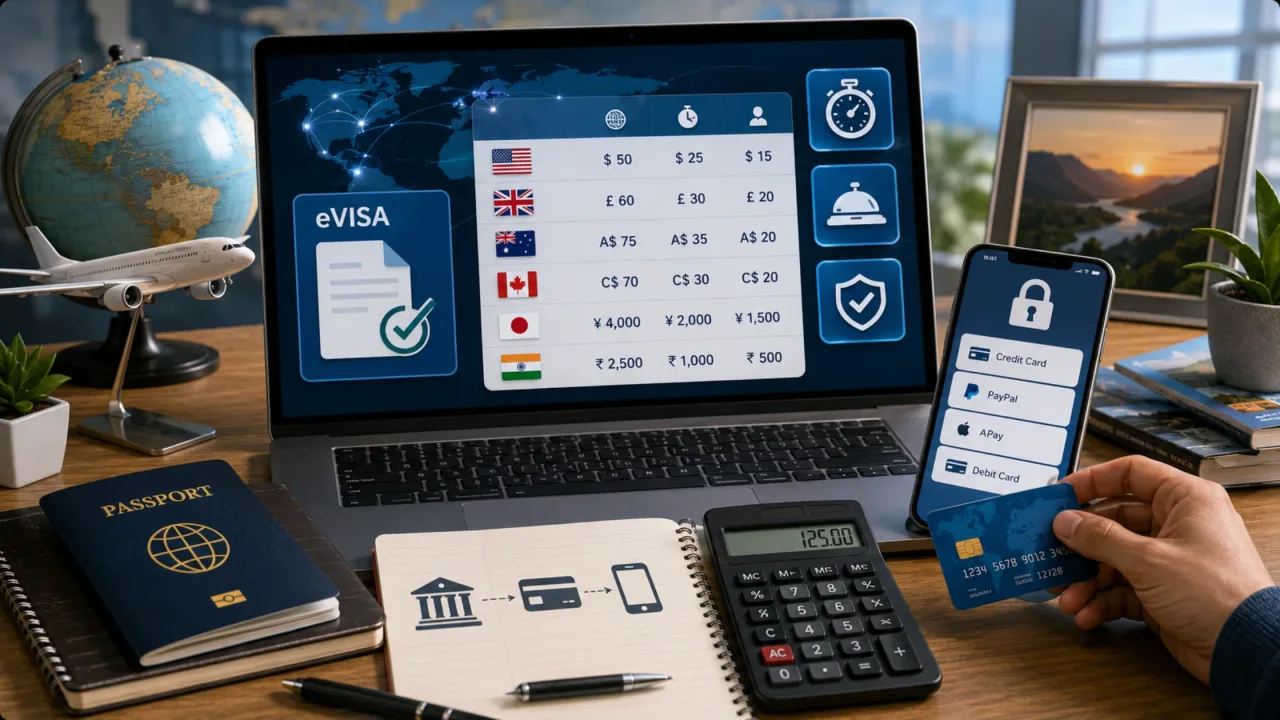
Standard eVisa Application Fees by Country
The fees are fixed mutually between the two parties and the administrative expenses of the country of destination. A Cambodia eVisa ticket is approximately $36 whereas a Brazil eVisa ticket (if available) is approximately $80-$95, for example. An ETA (such as the UK or US) will generally be around $20-$25.
Urgent/Rush Processing Fees
Many government sites have quick filing areas if you need to travel on short notice. An additional fee (usually double the regular fee) may be charged for processing the application within 24-48 hours as opposed to the 3-5 day turnaround normally required.
Service Charges (Third-Party Portals vs. Official Sites)
You must be vigilant here. The internet is flooded with third-party visa agencies. While some are legitimate concierges that help you apply for a fee, many are unnecessary middlemen that charge exorbitant markups ($50-$100+) on top of the government fee. Always strive to use the official portal of the destination country to avoid these hidden service charges.
Fee Payment Methods
Credit and debit cards are the universal standard. Some progressive nations are beginning to accept digital wallets like Apple Pay, Google Pay, or localized systems (like WeChat Pay or AliPay for certain demographics), but a reliable Visa or Mastercard is your best bet.
eVisa Processing Time
Do not leave your application to the last minute; processing times are estimates, not guarantees.
Standard Processing Time by Country
For highly automated systems like Turkey, approval can take minutes. For most other nations, the standard processing window is 3 to 7 business days. Public holidays in the destination country will halt processing, so plan accordingly.
Urgent/Express eVisa Processing
As mentioned, paying for premium processing can cut the wait time down to 1-2 days. However, if your application requires manual review due to a complex travel history, even express processing can face delays.
Factors That Can Delay eVisa Approval
Poor Document Quality: The leading cause is that people often take blurry passport photos.
Data Mismatches: When the name on your passport isn't exactly as on your application (Pronoun + Last name, Last name, First name, etc.)
Security Flags: If the name is a common name, and is listed on a Security Flag list, it requires human verification.
eVisa Validity and Duration of Stay
Understanding the timeline of your visa is critical to avoid illegal overstays.
Single-Entry vs. Multiple-Entry eVisas
A single-entry visa expires the moment you leave the country, even if the validity period hasn't ended. A multiple-entry visa allows you to enter and exit the country multiple times within the validity window (e.g., a 1-year multiple-entry visa).
Maximum Length of Stay Permitted
Do not confuse validity with duration of stay. A visa might be valid for use for 90 days from issuance, but it may only permit a maximum stay of 30 days once you enter. Always read the fine print on your approval document.
eVisa for Specific Travel Purposes
Be sure to submit the appropriate category - Border Guards will ask what kind of trip you are going on.
Tourist eVisa Requirements
For leisure, sightseeing or to visit relatives and friends only. Under this category, neither you can carry out any kind of paid occupation nor any discussion about business.
Business eVisa Requirements
When working at conferences, negotiating contracts or meeting clients. An invitation letter from the Host Company will be required. Note that a business e visa does not authorize you to join the local labor market or receive a localized salary.
Transit eVisa Requirements
If you have a layover and wish to leave the airport, or if the country requires a visa even for airside transit, you need a transit visa. These are usually cheaper and valid only for 24 to 72 hours.
Medical/Conference eVisa Requirements
Some nations offer specialized visas for individuals seeking medical treatment (requiring hospital letters) or attending specific international symposiums (requiring event registration proofs).
Common Mistakes to Avoid When Applying for an eVisa
Even minor errors can result in an outright rejection and the loss of your application fee.
Using Unofficial/Third-Party Websites
The biggest mistake travelers make is clicking the first link on a search engine, which is often a sponsored ad for a third-party agency. These sites mimic official government pages but charge massive hidden fees. Always look for URLs ending in .gov or official government extensions.
Document Upload Errors
Uploading a PDF when a JPG is requested, or uploading a file that exceeds the 2MB limit, will cause the system to crash or reject the application. Always compress and format your files correctly beforehand.
Passport Detail Mismatches
Your name must be entered exactly as it appears in the Machine Readable Zone (MRZ) of your passport. If your passport includes your middle name, you must include it in the application. Reversing your first and last name is a surprisingly common reason for denial.
Applying Too Early or Too Late
Many systems will not allow you to apply more than 3 months in advance of your trip. Conversely, applying 48 hours before a flight runs the massive risk of the visa not being approved in time. The sweet spot is applying 3 to 4 weeks before your departure date.
How to Track Your eVisa Application Status
Once submitted, you will want to keep an eye on the progress.
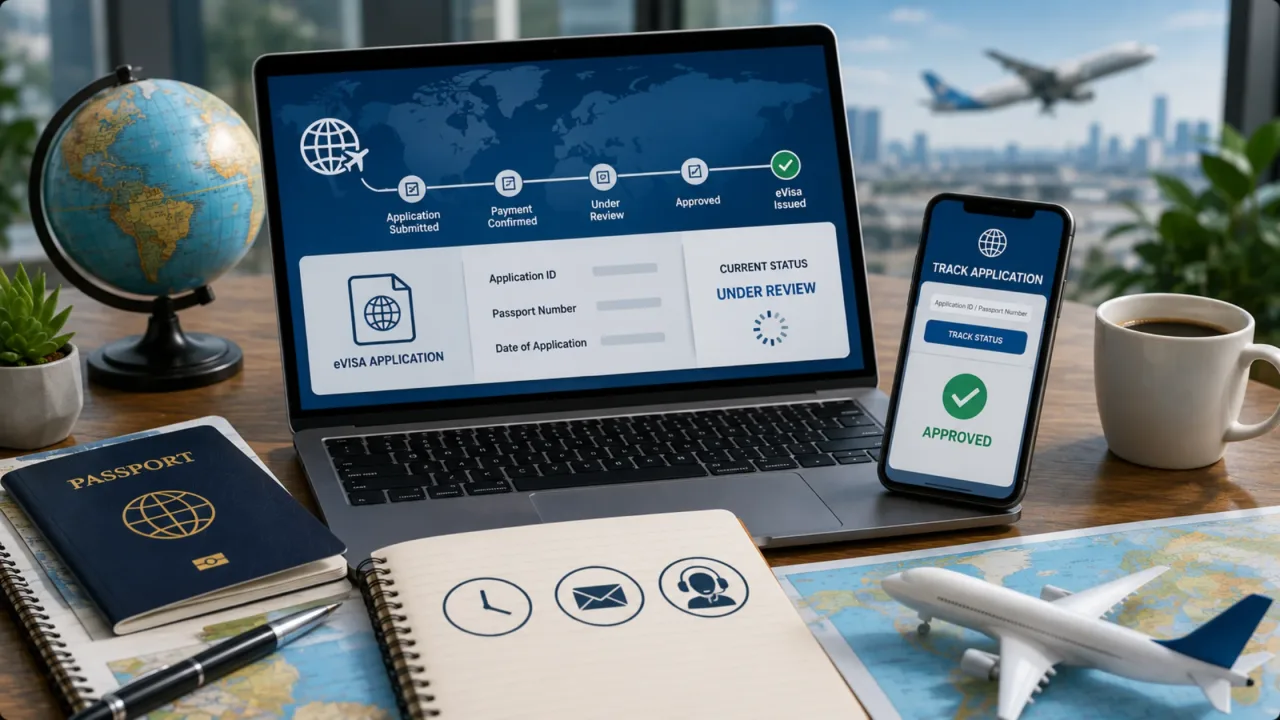
Online Tracking Methods
Every legitimate portal provides an "Application Status" or "Check Status" page. You will need your passport number and the unique Application Reference Number generated when you submitted the form.
What to Do If Your eVisa Is Delayed
If the standard processing time has elapsed, check your spam folder for requests for additional information. If there is nothing, locate the contact email or hotline on the official website. Have your reference number ready when inquiring.
Can a Country Reject my eVisa?
Yes, the country holds the final authority to accept or reject your eVisa application. However, being aware of certain things in advance can help you to avoid this situation. Let’s take a look at the reasons and your options if your eVisa gets rejected.
Common Reasons for eVisa Rejection
Convictions: If there are convictions on the criminal record of the person that contradict the host country's policies.
Previous Overstays: If you have previously overstayed any visas in that country (or related countries).
Insufficient Funds: The inability to demonstrate adequate funds for the trip.
Typographical Errors: Errors of basic typography; errors in the application data.
Can You Re-apply for an eVisa?
In certain instances, if they have simply made a typing error or a file was lacking, it's possible to resubmit the application as soon as you are refused. You will still have to pay the application fee, however. Make sure you fix the error that caused the first no.
Alternative Visa Options After Rejection
Failure to be accepted to apply for any electronic application, or for a complicated reason, if your electronic application is refused again and again, then you can only apply for a traditional visa at an embassy or consulate of your target country in your home country to issue and grant your visa. This will give you the opportunity to discuss your case with a consular officer and give a detailed supporting document.
Conclusion
The eVisas by 2026 have transformed international travel by replacing the traditional paper passport vignettes with secure, biometric digital visas. All solicitations are done online before travel for quicker processing, increased security and no lost documents. Although eVisas differ from Visas on Arrival and Electronic Travel Authorizations (ETAs), they are granted to all short-term tourists and business travelers from around the world, but are still nationally restricted. Requirements for applying include high resolution scans of passport, digital photographs and proof of onward travel and approvals are usually processed within 3-7 days. The travelers will have to use the official government portal to avoid costly rejection or overcharging from third parties, ensure that they have the correct data in their passport and apply for the travel three-four weeks prior to the departure.
FAQs
What does eVisa mean?
An e-Visa (electronic visa) is the digital form of a traditional paper visa stamped in your passport. It allows entry into a country and is completely processed online, with travelers applying for and being granted travel authorization via email or a secure portal prior to travel.
Do I need eVisa to travel?
Whether you need an eVisa (electronic visa) or not depends completely on which passport you hold and where you are travelling to. Some countries allow visa-free travel, but some countries require an eVisa. An eVisa is an online application for permission to enter the country before you travel, meaning you don’t need a paper visa.
How much does an eVisa cost?
Official ESTA Application Website $40.27 USD if you qualify for the United States online travel authorization The standard physical tourist visa will cost you $185 USD as a base price, but a new $250 USD Visa Integrity Fee was just added, bringing the total standard visa cost up to $435 USD.
Does everyone have an eVisa?
No, not all have eVisa (electronic visa). It is contingent upon your citizenship, your destination, and if you are a resident. Citizens of many countries, like the U.S. or EU, don’t need visas to visit dozens of places.