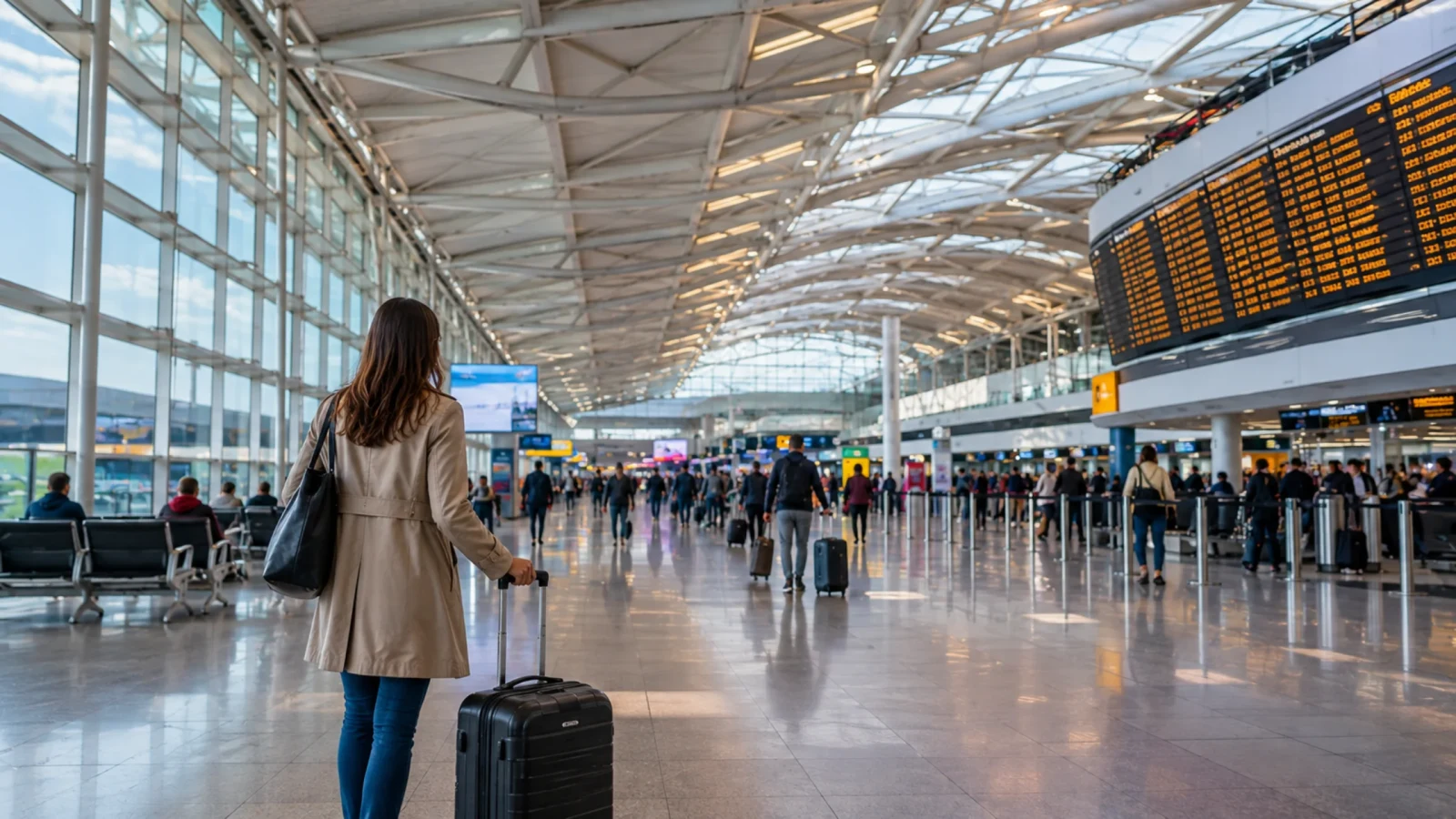
London Heathrow Airport is the busiest airport in Europe, with approximately 84.5 million passengers annually. By connecting travelers to more than 214 destinations across 84 countries, it is the United Kingdom’s primary international gateway to the world. Whether you are searching for parking, the lounge, or an exit door, the immense size of Heathrow Airport might feel overwhelming for the one visiting for the first time. The airport covers an area of 4.74 square miles (12.3 km) and has four active terminals that handle more than 80 airlines, including domestic and international flights.
The terminals at the airport are not interchangeable, and thus, it can create hassle if one steps inside the wrong terminal. If you are someone who has to board, deboard, or has a connecting flight from Heathrow Airport, then stay with this blog until the end and familiarize yourself with the airport layout.
Heathrow Airport at a Glance
Heathrow Airport is the busiest and largest airport in the United Kingdom. Before digging deeper, it’s good to get acquainted with the basic details of the airport. Here are some quick facts about the airport that will help the first-timer to understand the size and logistics of the airport:
IATA Code: LHR
Location: Situated about 14 miles (23 km) from the west of central London.
Terminals: The airport has a total of four terminals (2, 3, 4, and 5). Terminal 1 has been closed permanently in 2015.
Runways: The airport has two parallel runways.
Airlines: More than 89 airlines use Heathrow Airport to operate their flights in Europe.
Passenger traffic: It is the seventh busiest airport in the world, with annual traffic of 84 million.
Destinations: The airport covers more than 200 destinations worldwide.
Main Carriers: The airport is the largest hub for British Airways, along with Virgin Atlantic.
Time Zone: It operates on Greenwich Mean Time (GMT), which shifts to British Summer Time (BST) from March to late October.
Heathrow Airport was built in the year 1929. The airport was initially founded as a small airfield in 1930, but after the Second World War, authorities developed it into a much larger airport. It was opened for the public in 1946 under the name London Airport. However, the name changed in 1966 to avoid the confusion with the other two airports in London, Gatwick and Stansted. Currently, the airport connects every major region of the world with London. It also acts as a connecting point for the world and major European cities.
Heathrow Airport Terminal Map & Layout
Understanding the Heathrow Airport map is essential to easily locate entry roads, car parks, lounges, and stations to shops. However, the passengers often get confused with the layout, as the four terminals are not arranged in a single line. Knowing how each terminal connects to one another makes the complete difference between a smooth move and a stressful experience.
How the Terminals Are Arranged
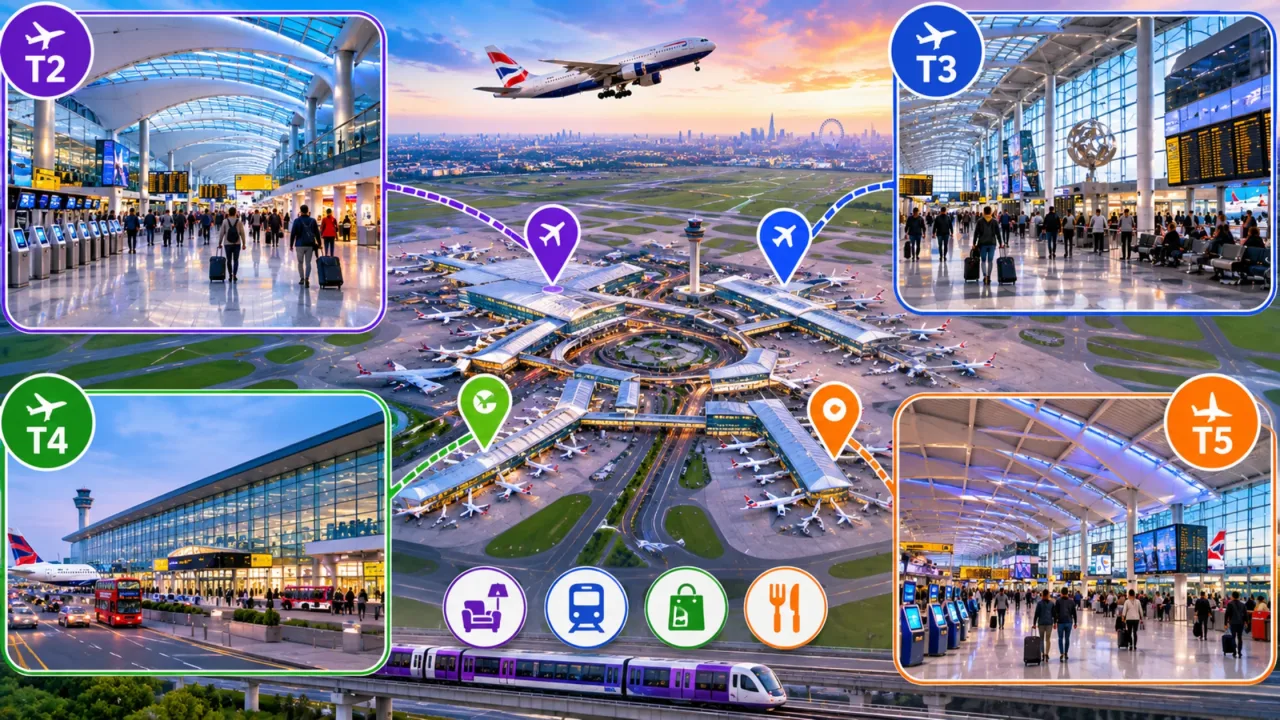
The terminal of Heathrow Airport does not have a single terminal shape; rather, the four active terminals (Terminals 2, 3, 4, and 5) are created in different architectural forms, including the linear, pier-and-satellite, and wave-like layouts.
The airport has three terminal zones, which are the Central Terminal Area, Western Area, and Southern Area. The Central Terminal Area has space for Terminal 2 and Terminal 3. Both the terminals share a single Heathrow Underground and rail station, which is connected to a short covered walkway.
Terminal 4 is located in the western area, near the cargo of the airport. Whereas Terminal 5 is situated on the western part of the airport. Due to this complex structure of the terminals, the passengers should keep the map open throughout their movement at the airport. It is good to save the Heathrow Airport map before moving to the airport to easily locate the terminals even if the internet connection is weak.
The passengers who have a connecting flight from the London Heathrow Airport should keep a certain gap between two flights that provides them with enough time to easily cross the terminals. It might look like a short distance on a map, but the security check, immigration, and customs may add extra time.
Moving Between Terminals
Terminals 2 & 3: Both the terminals are easily connected through an indoor walkway. The passengers can easily move between terminals without leaving the main building.
Terminal 4: A free rail shuttle will bring the passenger from the central area. The Heathrow Express and Elizabeth Line trains or the inter-terminal bus runs between terminals for free. It takes approximately 15 minutes to cover the distance.
Terminal 5: The same train can be used to reach the terminal. However, the terminal also has its own internal transit train that connects the main building and satellites 5B and 5C.
All the internal-terminal transits are available for passengers for free. The passenger is not required to purchase a ticket to use the facility of this internal-terminal transit infrastructure.
Heathrow's Four Terminals Explained
London Heathrow Airport has four different terminals. The terminals are organized by geographic zones. And each terminal is dedicated to specific alliances or carriers. Here is a breakdown of the Heathrow Airport terminal map, covering its location, key airlines, and unique features:
Terminal 2
Terminal 2 is officially known as Queen’s Terminal and is the newest building, which was reconstructed and opened for the public in 2014. The roof is designed with three waves that allow ample sunlight to reach the ground. The building consists of the main building (T2A), a 1,340-space car park, a cooling station to generate chilled water, and a satellite concourse (T2B). It annually handles 18 million passengers, primarily serving the Star Alliance member airlines. Terminal 2 is equipped with the latest services and amenities, including self-service check-in kiosks, multiple airline lounges, and retail shops, and it also has direct access to the central bus and train stations.
Terminal 3
Sprawling in an area of 98,962 m² (1,065,220 sq ft) with 28 gates, Terminal 3 is responsible for handling 20 million passengers each year. It primarily serves the OneWorld Airlines members along with the major carriers of the world, including Virgin Atlantic and Emirates. Most of the flights from this terminal are long-haul flights to Asia, America, and other international lands. The centerpiece of this terminal is its lounges, as it caters to some of the world’s best lounges. And also, Terminal 3 and Terminal 2 are located in the central area and connected through an underground central train.
Terminal 4
Terminal 4 is situated on the southern area of the airport and has 22 gates. The design of the building reflects a long and thin rectangular box, which is built parallel to the taxiways. This terminal has four operational levels: ground level for arrivals and to access the transport; the first floor for check-in; and the second floor for security, lounges, and boarding. Additionally, there is a sublevel, where the underground station links for the Piccadilly line and TfL Rail are. This terminal mainly serves the SkyTeam alliance member airlines, including Air France, KLM, and Saudia. Also, the terminal serves as the base for major OneWorld carriers, such as Royal Air Maroc, Malaysia, and Qatar Airways.
Terminal 5
Terminal 5 is the largest terminal of the airport. The terminal was built with a main building and two satellite piers, 5B and 5C, which are connected through an automated train. It is home to British Airways along with Iberia Airlines. The main terminal is further divided into Concourse A and Concourse B, which has a capacity to facilitate 60 aircrafts and 30 million passengers.
Terminal Assignment
| Feature | Detail |
|---|---|
| Terminal | Airlines & Alliances |
| Terminal 2 | Star Alliance (United Airlines, Eva Air, ANA, Air Canada, SWISS, Lufthansa); SkyTeam (, MEA, Tarom, Saudia, SAS, ITA Airways, and Vietnam Airlines); Malaysia Airlines, Emirates, El Al, Eurowings, Aer Lingus, Icelandair, Loganair,, and other non-aligned airlines |
| Terminal 3 | Most Oneworld carriers (Qantas, Cathay Pacific, American Airlines and others — excluding Iberia, Qatar Airways, Oman Air, Virgin Atlantic, Malaysia Airlines, and Royal Air Maroc), Delta, and other independent airlines |
| Terminal 4 | Most SkyTeam airlines (excluding Middle East Airlines, China Airlines, Delta, Aeromexico, Scandinavian Airlines, and Virgin Atlantic), plus various non-aligned carriers |
| Terminal 5 | British Airways and Iberia Airlines |
There are times when the airline terminal changes, and therefore, passengers must confirm the terminal on the boarding pass or the Heathrow Airport official website.
Getting to Heathrow Airport
Heathrow is located west of London and has three distinct rail lines as well as a large motorway network, so it's often about cost versus time. Let's see the principal choices via a solitary grown-up trip into core London. Let's compare the main choices for someone traveling toward the center of London.
Heathrow is accessible on the M4 (J4, terminals 2 & 3) and the M25 (terminals 4 & 5 – J15 & 14, respectively), and the roads both from these are marked with their own post code for sat navs/addresses. The short-stay car parks on the terminal forecourts are now called Terminal Parking car parks, and free pick-up and drop off services are available at all of them (currently under 30 minutes).
| Mode | Journey time to Central London | Approx. one-way price |
|---|---|---|
| Piccadilly line (Underground) | 50–60 minutes | $8 |
| Elizabeth line | 30–45 minutes | $21 |
| Heathrow Express | 15 minutes (to Paddington) | $14 advance / ~$35 walk-up |
| Black cab / taxi | 45–60 minutes (traffic-dependent) | $100 and up |
| Pre-booked private transfer | 45–60 minutes | Varies by provider |
National Express offers buses from Heathrow Central Bus Station (Terminals 2 & 3) out of London as well as to the UK, which tend to be cheaper but more time-consuming than traveling to central London. If driving, be prepared for about 45–75 minutes from central London, depending on traffic and time of day; the London ring roads around Heathrow are prone to congestion at peak times on your commuter days.
Heathrow Airport Parking
Do you have to pick up or drop off someone? Or you may be just driving your vehicle to catch a flight from Heathrow Airport. Under all these circumstances, you might need to park your vehicle. Heathrow Airport parking presents you the convenience of parking near the terminal and the safety of advanced security features. However, the price can differ based on how close you park to the terminal. Always look for online booking to avoid the hassle of paying at the gates and get discounted rates.
Parking Options & What They Cost
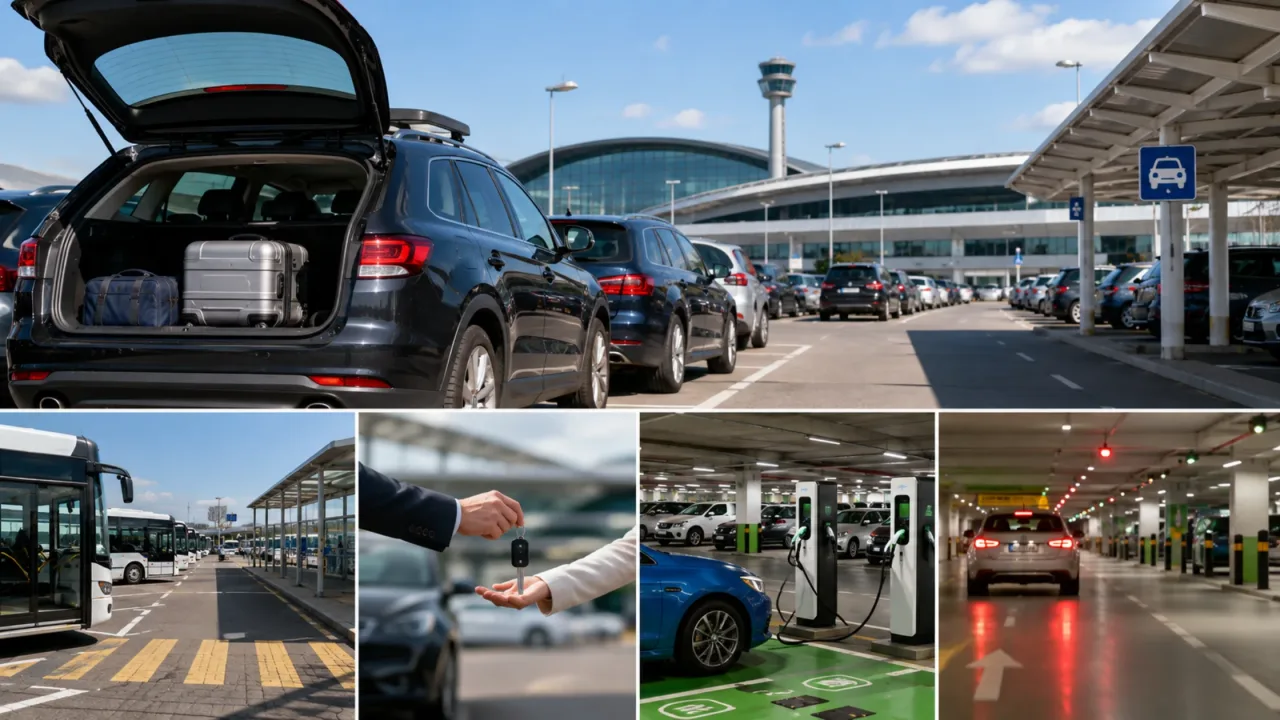
Terminal Parking (Short-Stay car parks): The Heathrow terminal parking is available closest to your selected terminal, just a short walk from the departure or arrival areas. It is an ideal choice for quick pickup and drop-off along with the one looking for a convenient start or finish of their trip. The Heathrow Airport parking prices at the terminal can differ based on the duration. The charge for the first 30 minutes is just $11, rising to the maximum cap of $130/day. Pre-booking is not available for parking for less than 9 hours.
Park & Ride (Long-Stay Parking): The cheapest option of all Heathrow parking, where no charges apply if you park for less than 30 minutes. The initial price is $12 if you park your car between 30 minutes and 2 hours, and the maximum price is $63/day. The parking lot is just 15 minutes away via free shuttle bus.
Priority Park & Ride: Park your car and get on an on-demand shuttle bus, which will transport you to your terminal within 10 minutes. The priority park & ride is available in terminals 2, 3, and 5. The price for a day is $65.
Meet & Greet: The meet and greet is located at a distance of just 5 minutes from the departure and check-in. No transfer, no shuttle, and no wait time on return; get your vehicle at the reception. The price for one-day Meet & Greet parking can be $190.
Tips for Cheaper Parking
Book online to guarantee a spot for your vehicle at a discounted rate.
Compare the price of off-site car parking to get the cheapest available rate.
Use park & ride for quick pickup and drop-off, as it provides free parking for 30 minutes.
If you have an electric vehicle, make sure to check the EV charging point before reserving a spot.
Online booking, amendments, or cancellation of the online car parking must be made at least 2 hours before arrival time.
Car Rental at Heathrow Airport
Hire a vehicle and explore the corner of Heathrow. The car rental Heathrow Airport gives immediate ground transport to arriving passengers. Car rental service is available at all terminals of Heathrow Airport.
Car Rental Desks by Terminal
Terminal 2 & 3: Both terminals share a common rental area, which can be reached through the arrival hall.
Terminal 4: This terminal has its own dedicated area for car rental Heathrow Airport close to the arrivals.
Terminal 5: The rental car desk is located on the ground floor (Level 0).
Once you reach the rental desk and complete the formalities, the rental car companies will take you to the car through a free bus shuttle.
What You'll Need to Rent a Car
The passenger will require a driving license to rent a car.
Visitors from outside the United Kingdom or the European Union may be required to present the International Driving Permit along with the domestic driving license.
A valid passport is mandatory for the international traveler.
A domestic or European traveler can present a photo ID card for identity proof and verification.
Car rental Heathrow Airport is available for travelers above 21 years. And drivers under 25 will be charged a daily young driver fee.
Heathrow Airport Lounges
London Heathrow Airport has a total of 40 lounges across all four terminals (Terminals 2, 3, 4, and 5). There are certain criteria that determine whether you will be allowed to access these lounges, such as airline, credit card, cabin class, and frequent flyer.
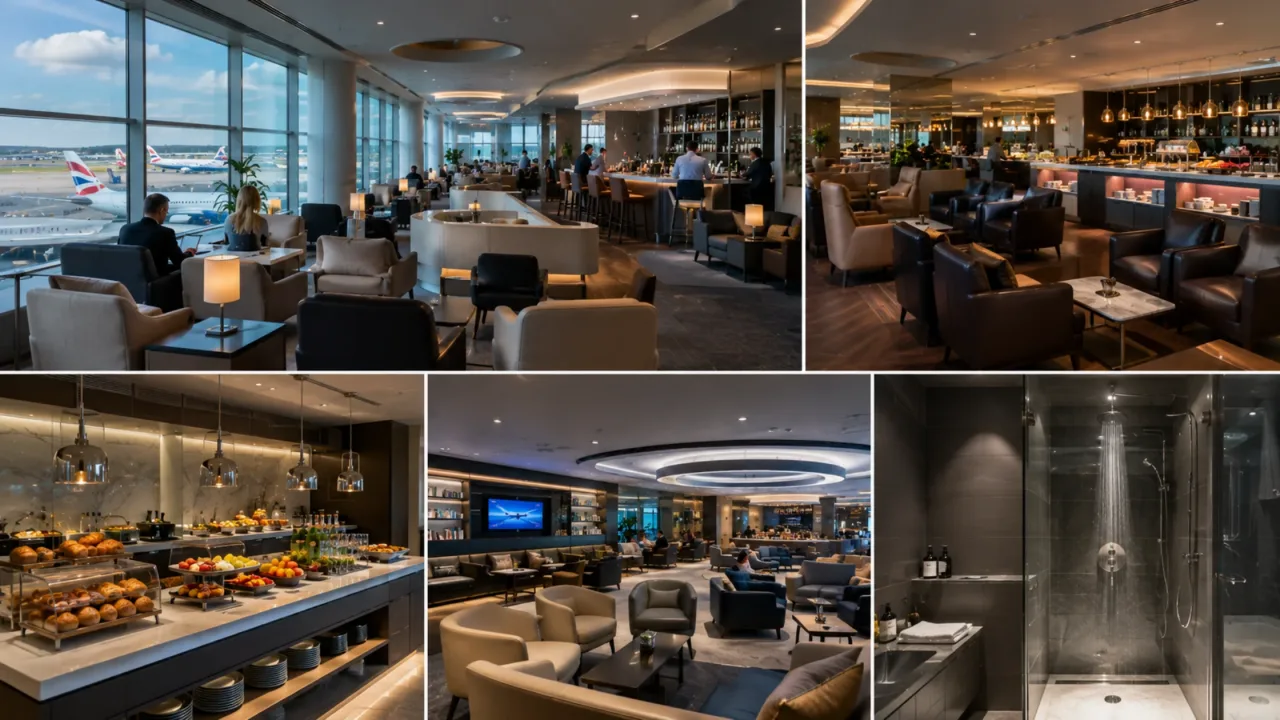
Lounges by Airlines
Lufthansa Business & Senator Lounge: The lounge is located on Level 5 of Terminal 2. It remains open between 05:00 and 22:00 on all seven days of the week.
Air Canada Maple Leaf Lounge: Find the lounge at Level 1 near departure gate B44 inside the Terminal 2B building. The lounge amenities includes TV, shower, wireless network, etc. It operates from 06:00 to 17:30 on all seven days of the week.
British Airways Lounge: Most of the British Airways lounges are located inside the terminal. 5. And it mainly operates between 05:00 and 22:00. Always confirm the timings and location before reaching the airport.
American Express Centurion Lounge: The lounge is located near the departure (level 1). It features amenities like a bar, shower suites, and high-end dining. The passenger exclusive to Amex Platinum/Centurion cardholders gets free access to the lounge.
Independent Lounge
Club Aspire - Terminal 5: Relax before your flight or between layovers. The lounge includes free relaxing space, complimentary Wi-Fi and charging, and free light meals and snacks. It remains open from 05:00 to 21:00 daily. The prices start from just $55 per person.
Plaza Premium - Terminal 4: A quiet place to relax and food and drinks to refresh you. It includes shower facilities and complimentary Wi-Fi. The price for an individual starts from $56 a day.
No. 1 Lounges - Terminal 3: Pay a price of $45 and access the TVs showing sports and movies, Wi-Fi, charging, quiet working areas, and food for free. The Heathrow Airport lounges open at 5 am and close at 10 pm daily.
Heathrow Airport Hotels
Whether you have to catch an early flight or are stuck for a long layover, Heathrow Airport hotels assure you the convenience without exiting the main building. Heathrow has a range of hotels from budget to luxury, providing an option to every type of traveler. Here is a list of hotels:
DoubleTree by Hilton: A four-star-rated hotel available in terminals 2, 3, and 5. It is easy to reach via the M4, and the prices start from just $80.
Hilton Garden Inn: The hotel is located near Terminal 4, just a few minutes' drive from other terminals. Get AC rooms with large beds and free Wi-Fi and a complimentary fitness center.
Marriott Heathrow: The 4-star-rated hotel is just located just near terminals 2 and 3. The passengers can use the M4 to reach the hotel easily. The facilities at the hotel include on-site restaurants, free Wi-Fi, and more.
Holiday Inn Express: A 3-star hotel, just a 15-minute drive from the terminals of Heathrow Airport. The hotel provides a variety of options to choose, including standard, family room, and suites. Facilities at the hotel include free Wi-Fi, a TV screen, AC, on-site restaurants, a lounge, and fitness suites.
If you have your own vehicle, you can get an even better deal, as most on-site Heathrow Airport hotels combine accommodation with parking. And remember, the prices change by season, so always check the prices on the Heathrow official website.
Facilities & Services at Heathrow Airport
Heathrow is not just about terminals, transport, and parking; there are a variety of everyday facilities passengers need at their fingertips, such as free WiFi and currency exchange, spread across all four terminals.
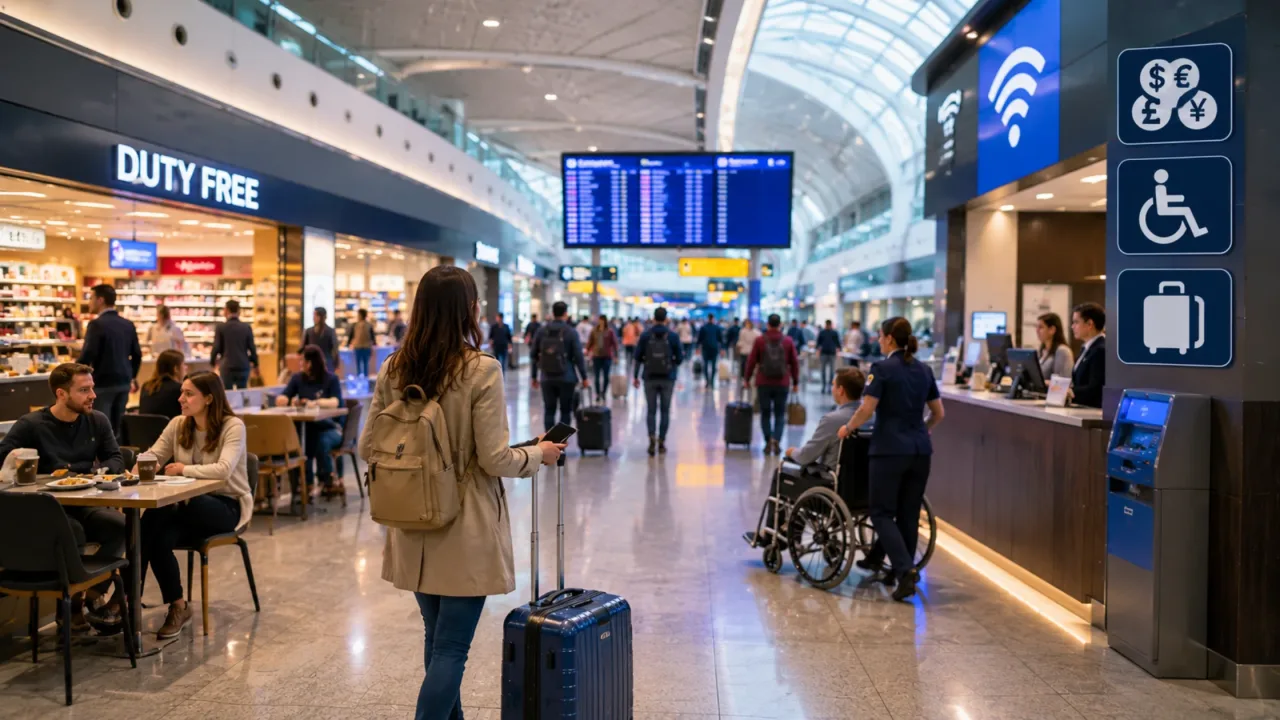
Shopping, Dining & WiFi: Each terminal features a significant retail and food court zone, which includes high street coffee bars, duty free luxury stores, and sit-down restaurants before and after security. Free WiFi is available throughout the airport (no time limit) and power points are incorporated into most seats close to the gates, however carrying an adapter or a portable charger is recommended for longer waiting times.
Currency Exchange & Banking: Every terminal will have the ability to exchange money at a counter and at ATMs in the arrivals hall and departures areas, but the exchange rates are generally not as good as a bank or an online service and it's generally better to exchange only a small amount at the airport and then get larger amounts at a bank or online.
Special Assistance: If you have reduced mobility, hidden disabilities or need some additional assistance to navigate through the airport, Heathrow provides free special assistance. This is booked separately via your airline and there are special assistance points throughout every terminal's arrival and departure hall.
Baggage Services: If you have to leave your bags at a terminal for a few hours or you have lost your bags after an air travel, left luggage, baggage wrapping, and lost property services are available in every terminal.
Heathrow Airport Departures
Departure can be smooth or tiring, depending on the preparation of the passengers Since several airport formalities must be completed before boarding, arriving on time is essential. To ensure smooth Heathrow Airport departures, keep the following points in mind:
The passenger must reach the airport at least 3 hours before an international flight and 2 hours prior to a domestic flight.
Save you time at the bag drop by completing online check-in and obtaining a digital boarding pass.
The boarding at Heathrow Airport typically starts 40 to 60 minutes before departure, and the gate closes 20 minutes before departure.
The passenger can check the live Heathrow Airport departures using the official Heathrow website or its mobile app.
Eligible members can skip the standard lane at the security check to fasten the airport departures process at Heathrow.
Heathrow Airport Arrivals
Landing is just half of the journey! You cannot simply leave the terminal after arrivals; there are customs, paperwork, baggage claim, and more. Know the complete Heathrow Airport arrivals procedure and make your way to the arrivals hall:
Once you land and enter the main building, follow the yellow signboards. Walking through the terminal can take 5 to 15 minutes.
UK and eligible ePassport holders can use the automated ePassport gates.
The rest of the travelers must face UK Border Force and complete the formalities.
Once completed, follow the signs to reach the baggage claim area and collect your luggage.
Now, move to customs to declare the items and pay the duty and customs. There will be different lanes:
Green lanes for the one who has nothing to declare.
Red lanes for the passengers who are bringing items exceeding the specified limit.
Blue lanes are for the passengers who took a domestic flight.
After this, enter the Heathrow Airport arrivals hall; you will have access to a range of passenger services, including currency exchange counters, ATMs, coffee shops, restaurants, and other essential airport facilities.
Conclusion
When you understand the Heathrow Airport terminal map, navigation becomes easier. It’s always a better idea to keep a downloaded map of the airport to move freely and easily access the hotels, parking lots, lounges, and departure and arrival processes.
If you are traveling to Heathrow Airport, here’s a tip only seasoned travelers know: many travelers skip the terminal parking and book Park & Ride or off-site meet-and-greet weeks or sometimes months in advance, often getting 50% discounted rates. Also, budget-conscious travelers can look for off-site hotels that combine the park & stay packages, offering weeks of parking at a lower cost. It often beats the on-site options while you are a minute away with a free shuttle.
Before you head to catch a flight or plan a trip to Heathrow Airport, plan a little and make your journey smoother and hassle-free.
Frequently Asked Questions
To clear the complete international terminal arrival process, including immigration, baggage claim, customs, and walking through terminals, can take roughly 45 minutes to 1.5 hours.
The Heathrow Airport is located in the city of London. It is approximately 14 miles west of Central London.
Both airports have their own benefits. LHR is considered a better choice for speed and global connection, whereas LGW can get you affordable flight deals.
Yes, but you can only walk between Terminal 2 and Terminal 3 through an underground pedestrian walkway. However, the rest of the terminals (Terminal 4 and 5) are built separately, and thus movement is not possible.
Terminal 3 and Terminal 5 are not interconnected to one another, and thus, the transit time between the two terminals can be 15 to 20 minutes. However, this is the actual physical transit time; the complete transfer process can take up to 45 minutes.