The first sign usually is not a museum or a tour brochure. It's a greeting. Someone behind a cafe counter says "kia ora" instead of "hello," and a street sign carries a Maori name alongside its English one. Auckland doesn't announce its Maori identity with fanfare; it simply lives inside the city, in language, place names, and everyday courtesy. That's part of what makes this city different from anywhere else you will visit in New Zealand.
Auckland is New Zealand's largest city, yes, but reducing it to skyline photos and harbor cruises misses the point entirely. This is a place built on land with deep Maori history, home to a large and visible Maori population, and full of accessible ways to learn, listen, and take part. Here's why so many travelers call it the true starting point for understanding Maori culture in Auckland and across the country.
Why Auckland Is the Best Place to Discover Maori Culture
Long before European settlement, this stretch of land was known as Tamaki Makaurau, meaning "Tamaki desired by many." The name refers to the volcanic isthmus's fertile soil, sheltered harbors, and strategic position, qualities so valuable that multiple iwi (tribes) settled, traded, and at times fought over the area across generations.
That layered history is one reason Auckland feels different from smaller New Zealand towns. Rather than a single dominant iwi story, the city reflects overlapping histories from groups including Ngāti Whātua, Waikato Tainui, and others with long-standing connections to the region. Add to that a significant urban Maori population that has grown through migration from across the country, and you get a city where Maori culture isn't preserved behind glass. It's active, contemporary, and constantly evolving alongside the rest of Auckland's identity.
Quick Facts
Tamaki Makaurau translates roughly to "Tamaki desired by many."
Auckland's volcanic cones (maunga) were once fortified Maori settlements
Multiple iwi hold historic and ongoing connections to the region
Auckland has one of the largest urban Maori populations in New Zealand
Maori place names appear throughout the city, often alongside english ones
Visit Auckland Museum to Understand Maori Heritage
If you visit only one cultural site in the city, make it the Auckland Museum. Set on the edge of the Auckland Domain, it holds one of the most significant Maori collections anywhere in the world, including intricately carved war canoes, ceremonial weapons, and taonga (treasured objects) passed down through generations.
What sets the museum apart is how it presents this material. Rather than static display cases, many exhibits use interactive elements and context from Maori communities themselves, explaining not just what an object is but what it means. Live cultural performances run daily in the museum's marae-style space, offering visitors their first real introduction to haka, waiata, and traditional welcome protocols.
Don't Miss
The war canoe (waka taua) in the Maori Court, among the largest surviving examples
Daily cultural performances included with museum entry
Carved gateway and meeting house replicas showing traditional building design
Interactive displays explaining ta moko (traditional tattooing) and its meaning
Experience an Authentic Maori Cultural Performance
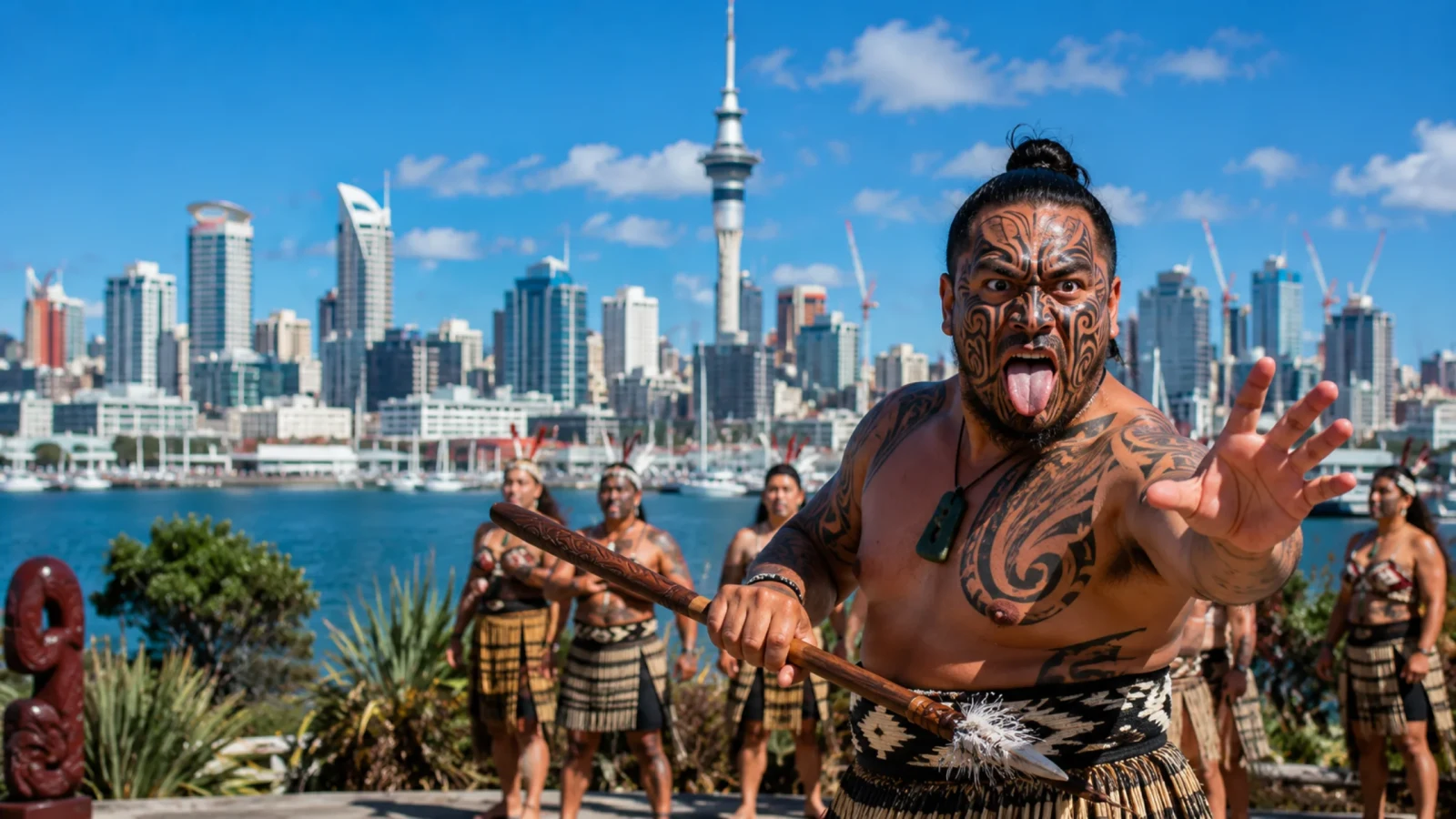
Watching a live performance is often where Maori culture in Auckland stops being an idea and starts feeling real. The haka, widely known through rugby but rooted in far older traditions, is a posture dance combining chant, movement, and facial expression to convey strength, challenge, or welcome, depending on context. Waiata, meanwhile, are songs that carry stories, genealogy, and emotion, often performed with quiet intensity rather than spectacle.
Traditional instruments like the pūtatara (conch-shell trumpet) and poi add texture to these performances, while storytelling threads through nearly everything, connecting movement and sound to specific ancestors or events. A proper ceremonial welcome, or pōwhiri, follows careful protocol: a call, a response, and often a hongi, the pressing of noses that symbolizes the sharing of breath between hosts and visitors.
Visitor Tips
Sit quietly during a haka; loud reactions can undercut its meaning
Photography rules vary by venue, so ask before recording
If offered a hongi, a light, brief nose press is appropriate
Performances at cultural centres often run 45–60 minutes with context provided beforehand
Explore Traditional Marae experiences
A marae is a communal meeting ground, typically anchored by a carved wharenui (meeting house) that represents an ancestor, with the building's structure symbolizing a body, the roof ridge as a spine, and the rafters as ribs. Marae serve as gathering places for events ranging from funerals to celebrations, and they remain central to community identity well beyond tourism.
Several Auckland-based cultural experiences offer respectful, guided marae visits designed specifically for travelers, usually including a welcome ceremony, explanation of customs, and sometimes a shared meal. These visits work best when approached with genuine curiosity rather than as a checklist stop, since a marae is a living space, not a museum exhibit.
Cultural etiquette Checklist
Remove shoes before entering a wharenui if instructed
Follow the host's lead on where to sit and when to speak
avoid sitting on tables or placing food-related items on the floor of a meeting house
Don't take photos unless explicitly told it's permitted
Speak quietly and let the pōwhiri process unfold without interruption
accept food or drink offered during a visit as a gesture of manaakitanga (hospitality)
Discover MAori Art, Carvings and Contemporary Creativity
Traditional Maori art carries meaning in every line. Whakairo (carving) transforms wood, bone, and stone into representations of ancestors and stories, often seen on meeting houses, canoes, and ceremonial items throughout the city. Pounamu, or greenstone, holds particular significance; pieces are traditionally gifted rather than bought for oneself since the stone is believed to carry the wearer's journey over time.
Weaving, using harakeke (flax), produces everything from cloaks to baskets, with patterns that often hold generational significance. Alongside these traditional forms, a new generation of Maori artists works across painting, sculpture, fashion, and digital media, and their work appears in Auckland's galleries and public spaces, including large-scale murals across the city.
What Makes Maori Art Unique?
every carved figure and pattern typically holds specific ancestral or symbolic meaning
Pounamu is traditionally given as a gift, not self-purchased
Weaving techniques have been passed down largely through oral and hands-on teaching
Contemporary Maori artists blend traditional symbolism with modern mediums
Taste Traditional Maori Cuisine
Food offers one of the most approachable doorways into Maori heritage New Zealand has to offer. Hangi, the traditional method of cooking food in a pit oven using heated stones, produces meat and vegetables with a distinctive smoky, earthy flavor that's hard to replicate any other way. Seafood has long been central to Maori diets given Auckland's coastal geography, alongside kumara (sweet potato), a staple crop grown in New Zealand for centuries.
Modern Māori-owned restaurants and food trucks around Auckland now reinterpret these ingredients through contemporary techniques, giving visitors a chance to taste both heritage and innovation on the same plate.
Foods to Try
hangi-cooked meat and vegetables
Kumara, roasted or mashed
Fresh mussels, paua (abalone), and other coastal seafood
Rewena bread, a traditional fermented potato bread
Modern Maori fusion dishes at Auckland eateries
Learn Basic Maori Words Before exploring Auckland
A little vocabulary goes a long way, both as a sign of respect and as a way to notice the language woven through daily Auckland life.
| Feature | Detail |
|---|---|
| Maori Word | Meaning |
| Kia Ora | Hello, and also a general expression of goodwill |
| Whanau | Family, including extended and chosen family |
| Mana | Prestige, authority, or spiritual power |
| aroha | Love, compassion, or empathy |
| Kai | Food |
| Haere Mai | Welcome, or "come here" |
| Ka Kite | See you later |
Local Insight: Radio and television presenters across New Zealand now regularly use Maori phrases on air, and most Aucklanders will appreciate hearing visitors attempt even a simple "kia ora."
Best Maori Cultural events and Festivals in Auckland
Matariki, the Maori New Year marked by the rise of a specific star cluster, has become a nationwide public holiday, and Auckland hosts events ranging from dawn ceremonies to concerts and community gatherings during this period. The Pasifika Festival, while broader than Maori culture alone, includes strong Maori representation alongside Pacific Island communities and draws large crowds each year. Smaller art exhibitions, seasonal performances, and community-led events run throughout the year at venues across the city.
Best Time to Visit: Matariki typically falls in June or July, making it one of the richest windows for cultural events, though performances and museum experiences run year-round.
Conclusion
Maori culture in Auckland is not packaged for tourists and set aside from everyday life. It shows up in place names, in greetings, in the carved details on public buildings, and in the way people speak about the land itself. Visitors who take the time to learn even a little often leave with a different sense of the country entirely, one shaped less by scenery and more by relationship, history, and identity.
Auckland works as a gateway precisely because it doesn't ask visitors to choose between modern city life and Indigenous heritage. Both exist together, layered into the same streets. Approach that layering with curiosity and respect, and Auckland will teach you more about New Zealand than any lookout point or harbor cruise ever could.
Frequently Asked Questions
Auckland, located on Tamaki Makaurau, has strong historical ties to multiple iwi and hosts a large urban Maori population, making Maori heritage accessible through cultural institutions and community events.
The Auckland Museum features artifacts and performances, while cultural centers offer guided marae visits and storytelling. For genuine experiences, choose Maori-owned or led tours to engage directly with the heritage.
Yes, but etiquette is crucial. Organized cultural tours with a formal pōwhiri are recommended for respectful visits, as marae serve community functions. Always book through reputable, culturally guided experiences.
Visitors should try hangi for its distinct smoky flavor. Other recommended dishes include kumara, seafood like paua and mussels, and rewena bread, with modern interpretations available at various Auckland restaurants.
Matariki, the Maori New Year in June or July, features dawn ceremonies and community events, making it a rich time to visit. Cultural performances and experiences are available throughout the year.