Everyone knows South Beach: the pastel lifeguard towers, the joggers on Ocean Drive, loungers packed so tight you can hear three playlists at once. It's iconic for a reason, but if you've tried parking there on a Saturday in March, you know the trade-off, crowds, inflated prices, and a beach day that can feel more like a nightclub queue than time by the water.
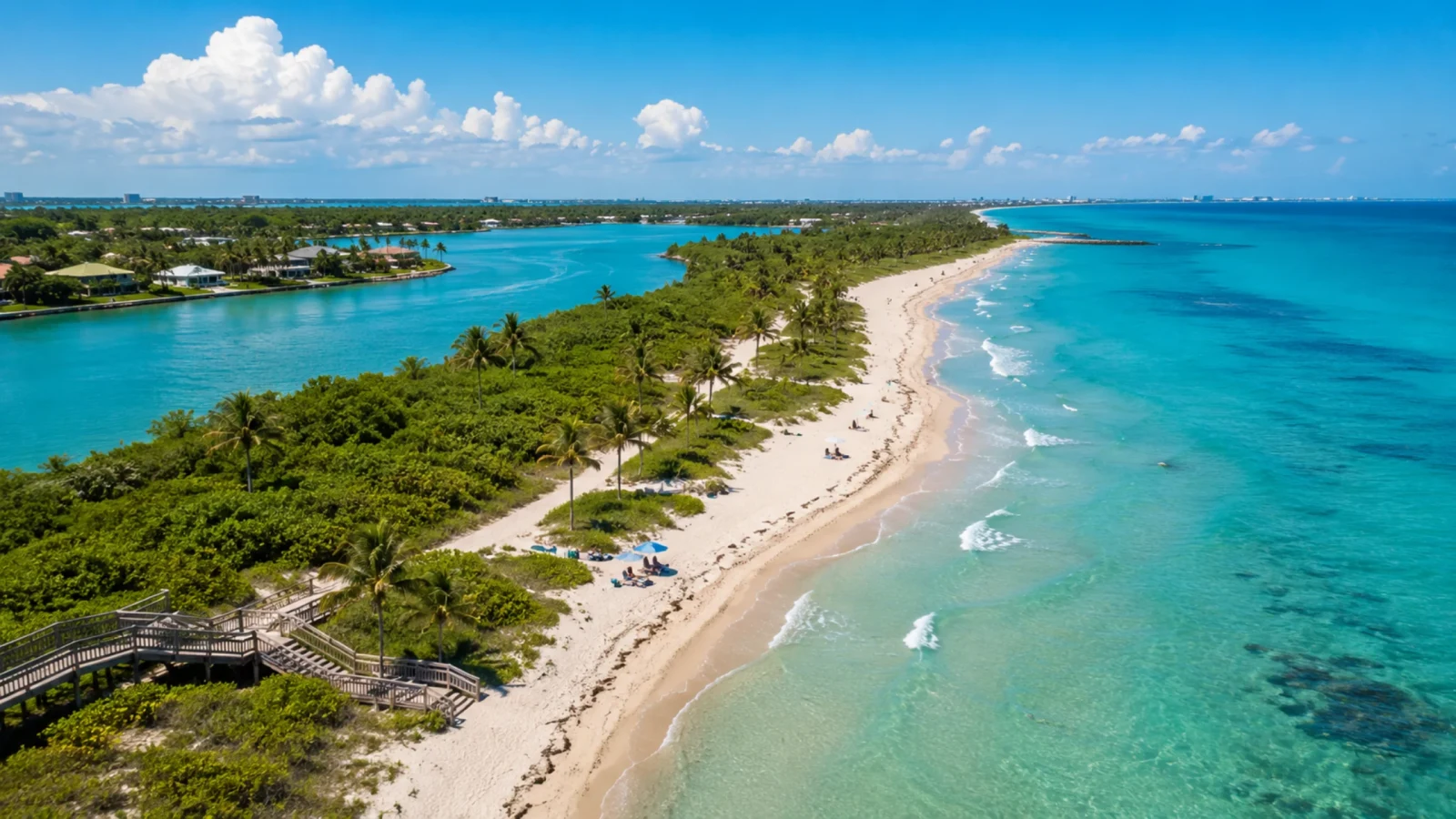
What most visitors never find out is that some of the best beaches near Miami sit just a short drive away, and almost nobody talks about them. These are the underrated beaches near Miami that locals actually use on their days off, the ones with real parking lots instead of valet lines, water that's calmer for kids, and enough space to actually hear the waves
This guide walks through seven hidden beaches near Miami that deserve a spot on your itinerary, whether you're planning a quiet morning alone, one of the better beaches near Miami for couples, or an easy family outing.
Bill Baggs Cape Florida Beach
Tucked at the southern tip of Key Biscayne, Bill Baggs Cape Florida State Park feels like a completely different coastline than the one twenty minutes north. The sand is wide and soft, the water is shallow for a long stretch, and a restored 1825 lighthouse gives you something to explore beyond just sunbathing.
What makes it one of the more underrated beaches near Miami is simple: most out-of-towners don't realize Key Biscayne even has a public beach this good, so they never make the drive across the causeway. Visitors can climb the lighthouse on a ranger-led tour, rent a bike along the park's shaded trails, or paddle out from the calm bay side. It's a strong pick for families with young kids, since the shallow water and grassy picnic areas give everyone room to spread out, and it works just as well for couples looking for a slower afternoon.
Grab lunch afterward at one of the casual spots on Key Biscayne's main strip, or pack a cooler and use the park's picnic pavilions. Parking is inside the state park (there's a small vehicle entry fee), and spots fill up by late morning on weekends, so arriving before 10 a.m. is the move.
Best time to visit: weekday mornings, October through April, when humidity drops and the lighthouse tours are less crowded.
From here, it's a short drive back over the causeway to another Key Biscayne favorite that locals rarely mention to visitors.
Crandon Park Beach
Crandon Park sits just north of Bill Baggs on the same island, and it's proof that you don't have to choose between a natural setting and actual amenities. The beach stretches for nearly two miles, backed by a thick line of sea grape trees that provide real shade, something South Beach's open sand can't offer.
This is one of the more family-friendly beaches near Miami precisely because of that shade, plus a marina, a golf course, and a nature center all within the park boundaries. Families can rent cabanas for the day, kids can wade into calm, gently sloped water, and photographers tend to love the tree-lined boardwalk that leads down to the sand. It's also a favorite among Miami locals for weekend picnics, since the park has dozens of covered pavilions you can reserve ahead of time.
For food, several casual concession stands operate right on the property, so you don't need to leave for lunch. Parking is plentiful in the main lot, with a modest per-vehicle fee on weekends.
Best time to visit: early weekday afternoons in the shoulder season (April-May or September-October), when the shade trees and lower humidity make for the most comfortable stretch of the year.
Heading back toward the mainland, the next stop trades Key Biscayne's open coastline for a hidden tidal pool that most Miami guidebooks skip entirely.
Matheson Hammock Park Beach
Matheson Hammock isn't a traditional ocean beach — it's a man-made atoll pool that fills and drains with the tides, bordered by mangroves and a marina full of sailboats. That alone makes it one of the more unusual quiet beaches in Miami, and it's exactly why so few tourists ever find their way here.
The still, shallow water is ideal for young children and nervous swimmers, and the surrounding mangrove trails are worth a slow walk if you brought binoculars or just want a break from direct sun. It's a strong pick for families and solo travelers who want scenery without the ocean's stronger currents, and paddleboarders sometimes launch here for calmer, more controlled practice sessions. The on-site restaurant overlooking the marina is a nice bonus if you'd rather not pack a cooler.
Parking is available in a lot right next to the atoll pool, and a small entrance fee applies per car.
Best time to visit: mid-morning on a rising tide, when the pool is fullest and the water is at its clearest — check a local tide chart the night before.
If Matheson Hammock felt like a secret, the next beach on this list is one even some longtime Miami residents haven't gotten around to visiting.
Hollywood North Beach Park
A short drive north of Miami proper, Hollywood North Beach Park offers something increasingly rare on this coastline: an undeveloped, natural stretch of sand backed by dunes instead of high-rises. It sits apart from the more commercial Hollywood Beach Broadwalk a mile or so south, which keeps the crowds thinner.
This one leans toward nature lovers and anyone hunting for genuine Miami beach alternatives to the resort-lined strips further south. Sea turtles nest here in the warmer months, and the park's boardwalk trail winds through native coastal vegetation before opening onto the beach itself. It's a comfortable spot for couples wanting a quieter walk at sunrise, and families appreciate the lifeguard coverage without the density of Hollywood's main Broadwalk.
A handful of low-key cafes sit just outside the park entrance for coffee or an early breakfast. Parking is on-site in a paid lot that rarely fills before midday, even on weekends.
Best time to visit: early morning, year-round, both for the light and for having long stretches of sand mostly to yourself.
From here, the drive back south passes right by one of Miami-Dade's largest and most surprisingly peaceful beach parks.
Haulover Beach Park (North End)
Haulover has a reputation, mostly thanks to its clothing-optional southern section, but the quieter northern stretch is a completely different experience and one of the most underused beaches near Miami's barrier islands. Wide, uncrowded sand meets an inlet that's popular with anglers and boat-watchers rather than sunbathing crowds.
The northern end works well for anyone who wants space without the drive out to the Keys. It's a solid choice for beginner kitesurfers thanks to consistent breezes near the inlet, and the jetty is a favorite for locals fishing or watching boats pass through the channel. Families tend to gather near the lifeguard stands closer to the marina, while the far northern dunes stay noticeably emptier even at peak season.
The on-site marina has a casual restaurant with waterfront seating, and parking is plentiful in Haulover's large lot, split across several sections so it rarely feels full.
Best time to visit: weekday mornings for calm water, or late afternoon if you want to watch the boat traffic through the inlet.
Just a short drive south, the next beach trades Haulover's open dunes for a shaded, old-growth hammock right along the water.
Oleta River State Park Beach
Oleta River is technically a state park built around a river mouth rather than open ocean, and its small beach area is almost entirely overlooked by beach-hopping visitors focused on the coastline further east. That's exactly what earns it a spot among the true hidden beaches near Miami.
The calm, brackish water and surrounding mangrove tunnels make this one of the better spots for kayaking and paddleboarding near Miami, with rental kiosks right at the park entrance. It suits families with older kids who want an activity-driven day, and mountain bikers use the park's extensive off-road trails before or after a paddle. Solo travelers looking for a slower pace often spend a full afternoon here without touching the main beach areas.
A small snack bar operates near the kayak launch, though most visitors pack their own food for a picnic table under the tree canopy. Parking is inside the park with a per-vehicle entrance fee.
Best time to visit: cooler months (November through March) when paddling conditions are calmest and mosquito activity is lowest.
The last stop on this list circles back toward the city, onto an island with one of Miami's more meaningful histories.
Virginia Key Beach
Virginia Key Beach Park holds real historical weight as one of the first beaches in Miami open to Black residents during segregation, and today it's a quiet, tree-lined stretch that still feels overlooked compared to its Key Biscayne neighbors just across the water. A small on-site museum tells that history for anyone who wants context before hitting the sand.
The beach itself has a laid-back, unhurried feel, with a mini train that runs on weekends, a splash pad for younger kids, and enough open lawn for a picnic blanket setup that doesn't feel cramped. It's well suited to families and history-minded travelers alike, and the calmer northern cove is popular with couples looking for a scenic, less-photographed sunset spot. Bike and kayak rentals are available near the entrance for anyone who wants to explore the surrounding nature trails.
A casual cafe near the park entrance covers coffee and light bites. Parking is on-site with a manageable fee, and the lot rarely reaches capacity outside of holiday weekends.
Best time to visit: weekend afternoons when the train and splash pad are running, or weekday sunsets for a quieter finish to the day.
Best Time to Visit These Underrated Beaches Near Miami
Timing matters more in Miami than in most beach destinations, mostly because of how dramatically the humidity and rain patterns shift through the year. November through April is Miami's dry season, with lower humidity, milder temperatures, and the least chance of afternoon thunderstorms. It's also, unsurprisingly, the busiest and priciest stretch to visit.
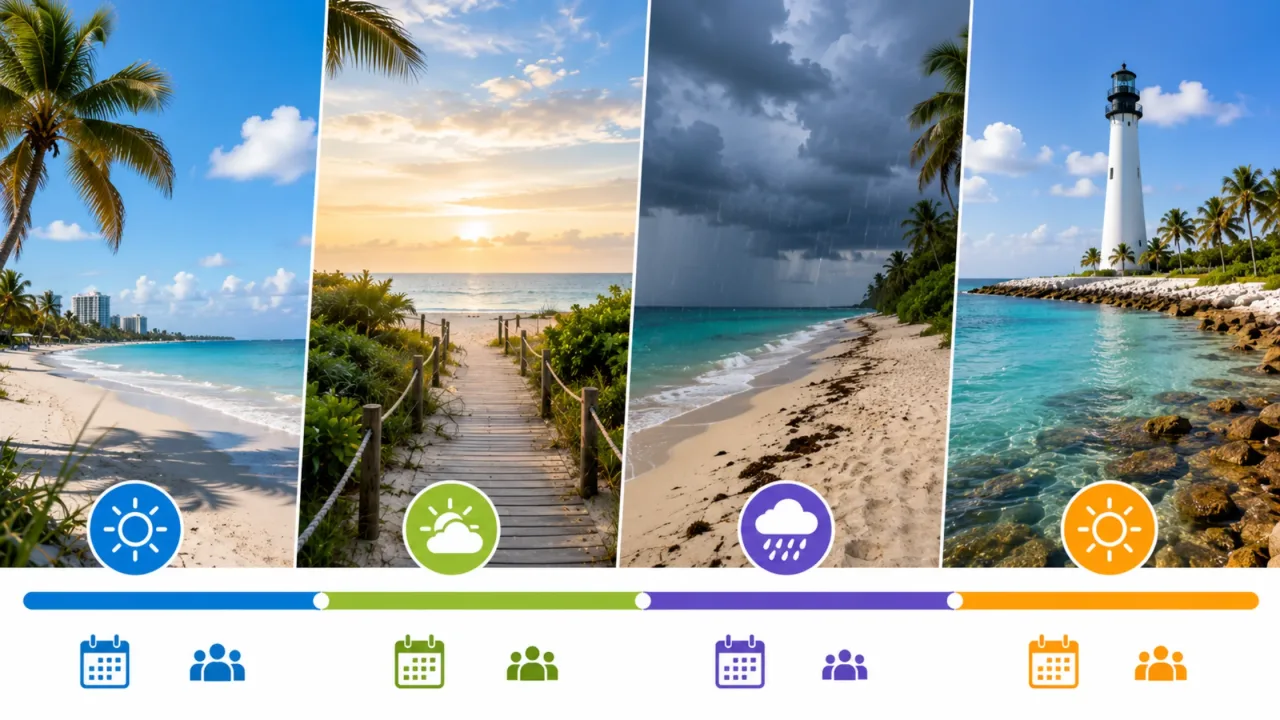
May through October brings heat, near-daily humidity spikes, and hurricane season, which officially runs June 1 through November 30. That doesn't mean the summer months are a bad time to go; storms are usually short afternoon downpours rather than all-day washouts, and the underrated beaches near Miami covered above tend to stay far less crowded during these months, since most tourists avoid them on purpose.
For the best mix of good weather and lower prices, aim for the shoulder seasons: April-May or October-November. Crowds thin out noticeably at all of these spots on weekday mornings, regardless of season, so building a weekday beach day into your trip is one of the simplest ways to find less crowded beaches near Miami no matter when you fly in.
How to Save Money on a Miami Beach Trip
A quieter beach doesn't have to mean a cheaper trip on its own, but a few smart choices around flights and lodging make a real difference to the total.
Cheapest months to fly to Miami: Late spring (May) and early fall (September) tend to have the lowest airfare, falling just outside peak holiday and spring break demand.
Book flights several weeks ahead: Fares tend to creep upward inside the three-week mark before a trip, especially around winter holidays. Booking a month or more out generally locks in a better rate.
Stay flexible with your travel dates: Shifting a trip by a few days, or flying midweek instead of over a weekend, can shave a meaningful amount off flights and hotels alike. A flight aggregator that compares a range of dates side by side makes this kind of search far faster than checking one date at a time.
Choose your neighborhood wisely: Areas like North Beach, Surfside, or Hollywood run noticeably cheaper than South Beach hotels, while sitting closer to several beaches on this list.
Skip the rental car if you can: Rideshares, public buses, and rental bikes cover most of these beaches without parking fees and insurance add-ons stacking up over a multi-day trip.
Practical Tips
Arrive before 10 a.m. on weekends for an easy parking spot, especially at Bill Baggs and Crandon Park
Bring small bills or a parking app pre-loaded, since several lots use pay stations instead of card readers
Pack reef-safe sunscreen; some parks restrict standard sunscreen to protect nearby reef and seagrass systems
Check tide charts before Matheson Hammock, since the atoll pool is far more enjoyable near high tide
Bring your own water and snacks, since a few of these beaches have limited food vendors
Respect roped-off dune areas at Hollywood North Beach and Virginia Key, where sea turtles nest in summer
Check radar before crossing the Rickenbacker or Broad causeways, since storms can roll in fast
Download an offline map of each park, since cell service can be spotty inside Oleta River's trails
Conclusion
South Beach earns its fame honestly, but it's just one version of what this coastline has to offer. The underrated beaches near Miami on this list trade the crowds and the price tags for calmer water, real parking lots, and a slower pace that's easy to forget still exists this close to downtown. Pick two or three that match how you actually want to spend your day, whether that's a paddle through Oleta's mangroves or a quiet sunrise at Hollywood North Beach, and you'll come away with a version of Miami most visitors never bother to find.
Frequently Asked Questions
Crandon Park Beach is the strongest all-around pick for families, thanks to its shaded sea grape trees, calm shallow water, cabana rentals, and picnic pavilions that make a full day easy to manage with kids.
Hollywood North Beach Park and the northern end of Haulover Beach Park both stay noticeably emptier than nearby alternatives, especially on weekday mornings outside of peak holiday periods.
Some, like Virginia Key Beach and Hollywood North Beach, are reachable by rideshare or local bus routes, though a car or bike rental makes reaching Oleta River and Key Biscayne beaches considerably easier.
Oleta River State Park Beach is the clear choice, with calm brackish water, mangrove tunnels, and rental kiosks right at the park entrance for both kayaks and paddleboards.
April, May, October, and November offer the best balance of manageable humidity, lower hotel rates, and thinner crowds compared to Miami's busiest winter dry season.