

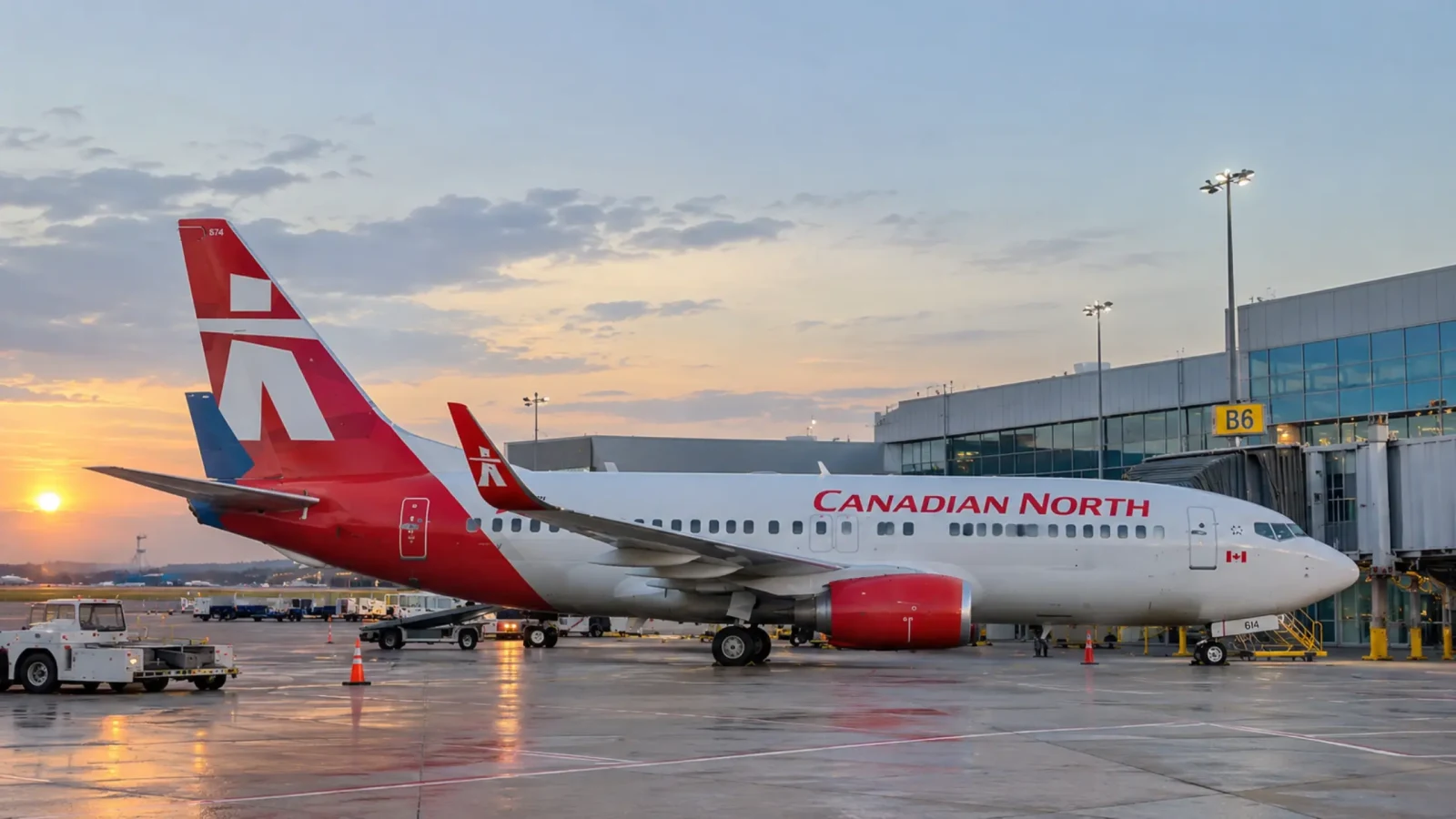
Canadian airlines are cutting back even more on routes to the U.S. this second winter following poor demand from Canadian passengers and high jet fuel prices and are reducing routes and seats in the process.
WestJet has the biggest recent cuts. AeroRoutes' analysis of its winter 2026/27 schedule filings shows a Calgary-based carrier cancelling 10 Canada-U.S. routes, five of which go to Vancouver. The U.S. network is reduced from 11 routes to six, and weekly departures drop from 66 to 49. Services are suspended between Vancouver and Atlanta as well as Vancouver and Los Angeles (from November 21) and Calgary and O'Hare, with Delta to replace the latter service from spring 2027. Also earlier this year WestJet eliminated 16 U.S. routes, including seasonal flights to Raleigh-Durham, and it doesn't appear transborder demand will be improving any time soon.
Air Canada also has plans to cut back its U.S. system. Eight transborder routes are being paused or postponed due to schedule changes, this fall. Three Midwest routes from Toronto and Montreal will be cancelled for the second consecutive winter, three seasonal Florida routes from Ottawa, Montreal, and Quebec City will resume in December instead of October, and two New York JFK routes will not be reopening this winter. The airline anticipates eventually returning to JFK but in the interim will run up to five flights a day between LaGuardia and Billy Bishop Airport in Toronto. Earlier this year it had to cut summer service at Sacramento, Raleigh, Charleston, and Austin due to fuel costs.
Smaller carriers have pulled back even more. Air Transat, which has not been forced to stop operations, saw its U.S. capacity disappear completely, but in the case of Flair Airlines the cuts were at 58% in the first quarter of 2026, which was just about one percent of its summer capacity. Porter Airlines has been the lone exception, having been dropped after seven months, but it has 18 U.S. destinations, and more will come.
It's a major withdrawal. Based on data from OAG, Canadian carriers reduced capacity on U.S. flights by 10%, or about 450,000 seats, during the first quarter of 2026, most severely in Las Vegas and Orlando. The preliminary data from Statistics Canada indicate that between May 2024 and May 2026, Canadian air travellers returning from the United States decreased by 28%. Airlines cite softer demand since the 2025 political and tariff unrest, which has been exacerbated by higher fuel prices during the conflict between Iran.
Aircraft are not being stored but are instead being redeployed. Capacity to Mexico and Costa Rica is increasing, as is capacity to the United Kingdom and Japan, with carriers filling up seats on domestic flights. There are some early indications of stabilization; travel to the United States from Canada increased by 3.2% for the month of June 2026 compared to a year earlier but is still well below pre-boycott levels.
The transition impacts travelers with fewer nonstop flights to the U.S. and may result in increased airfares in Mexico and within the country for those that still fly. Affected passengers are advised to confirm their booking with their airlines. Air Canada states that they are taking measures to give customers affected by the incident alternatives, including full reimbursement when applicable.
Read Also: - FAA Grants Type Certification for Boeing’s Long-Delayed 737 MAX 10
More From Trending
TRENDING
FAA Grants Type Certification for Boeing’s Long-Delayed 737 MAX 10
TRENDING
Lufthansa Adds Columbus and Phoenix in Summer 2027 U.S. Expansion
TRENDING
Southwest Airlines Adds 11 New International Routes for 2026 and 2027
TRENDING