

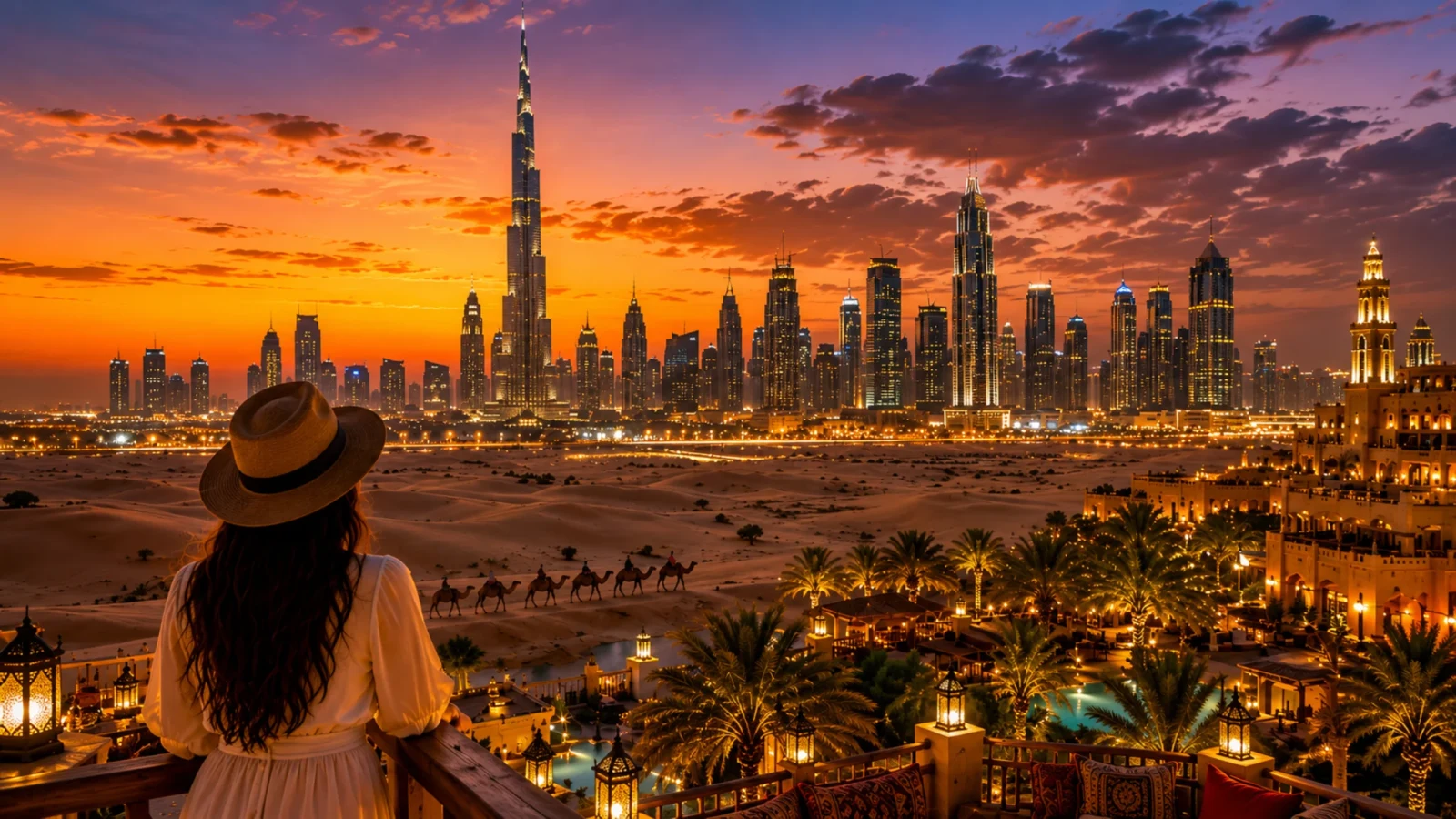
There is a particular kind of magic in watching the sun rise over glass towers and set over golden dunes within the same twenty-four hours. Dubai manages this trick better than almost anywhere else on earth, and it is precisely this contrast that draws travelers back time and again. How to experience Dubai's desert and skyline in one incredible trip comes down to timing and a willingness to move between two entirely different worlds without missing a beat. One moment you are standing beneath the tallest building on the planet, and a few hours later you are watching camels cross a ridge of red sand as the light turns amber. Few cities allow that kind of range within a single day, and fewer still make the shift feel this natural.
Why Dubai Feels Like Two Destinations in One Trip
Dubai sits at the meeting point of ancient desert tradition and rapid modern development, which is rare among major cities. This section explains how the emirate manages to feel like two separate holidays in one, and why that contrast has become part of its identity.
Arabian Desert Experiences
Beyond the city limits, the desert stretches out in long, rolling dunes that shift colour throughout the day, from pale gold at noon to deep amber by late afternoon. A Dubai desert safari typically leaves the city within thirty to forty minutes, so the transition from skyscraper to sand happens faster than most visitors expect. Bedouin heritage still shapes much of what happens out here, from desert camp layouts to the food served at traditional dinners.
Futuristic Skyline Attractions
Downtown Dubai and Dubai Marina represent the other half of the story, packed with architecture that seems to compete for attention. The Burj Khalifa pierces the skyline at a height that makes nearby towers look modest, while newer additions like the Museum of the Future push the city's ambitions further still.
Why the Contrast Feels So Memorable
The appeal lies in how quickly the mood shifts. A traveller can be photographing glass towers from an observation deck in the morning and riding across dunes on a camel by sunset, a range that rarely exists within a single trip, let alone a single day.
Best Time to Experience Dubai's Desert and Skyline
Choosing the right season affects comfort levels considerably, particularly for desert activities involving extended time outdoors. This overview breaks down what to expect throughout the year, helping travelers pick suitable dates.
November to March brings mild daytime temperatures, cooler evenings, and the most comfortable conditions overall.
April and October sit in between, with warmer days but still manageable heat.
Summer months, from June through September, bring intense heat that limits outdoor exploration to early mornings or evenings.
The best season for desert activities runs from late autumn through early spring, when dune bashing and camel riding feel far less exhausting.
Morning: Explore Dubai's Most Impressive Architecture
Mornings work well for skyline attractions, since temperatures are lower and popular sites are quieter before tour groups arrive. This part of the day suits Burj Khalifa visits, museum stops, and a walk through the older, historic side of the city.
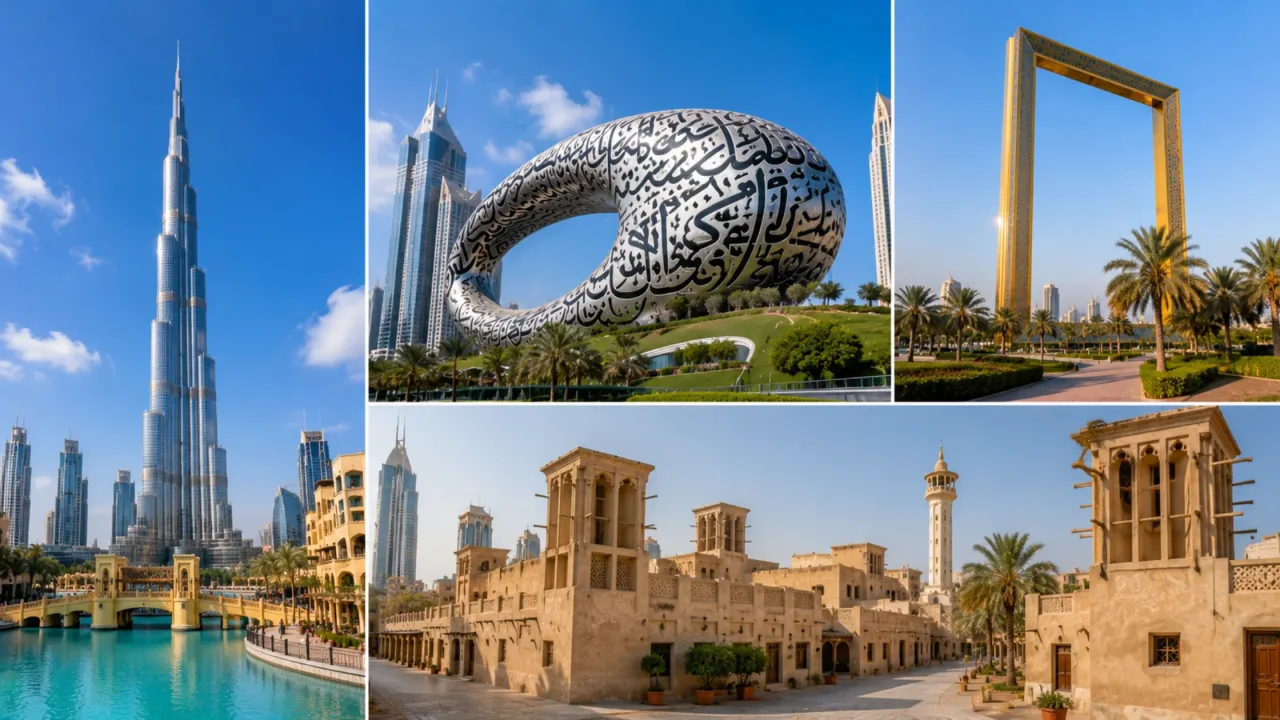
Burj Khalifa: Tickets for the observation decks sell out quickly during peak season, so booking a morning slot in advance tends to work better than arriving on the day. The view stretches across the entire city and, on clearer days, out toward the desert itself.
Museum of the Future: This building has become one of Dubai's most photographed landmarks, its torus shape wrapped in calligraphy spelling out quotes about the city's vision. Inside, the exhibits lean into speculative technology and sustainability.
Dubai Frame: Positioned between old and new Dubai, this gold-edged structure offers views in both directions at once, historic neighborhoods on one side and modern towers on the other. It rarely takes more than an hour to visit.
Al Fahidi Historical Neighborhood: Wind towers, narrow lanes, and restored courtyard buildings make this pocket of the city feel entirely different from the glass towers nearby. Small museums occupy several of the old buildings, offering a quieter pace before the afternoon's desert adventure begins.
Afternoon: Escape to the Arabian Desert
By early afternoon, most desert tour operators begin hotel pickups, timed so guests reach the dunes before the light turns golden. This section covers what a typical desert safari involves.
Dubai Desert Safari: Most safaris combine transport, activities, and dinner into a single package, collecting guests in four-wheel-drive vehicles built for the terrain. Paved roads give way to open sand within half an hour.
Dune Bashing: Drivers navigate steep dune ridges with a mix of skill and controlled speed, sending vehicles sliding down slopes at angles steeper than they look. It is not for everyone, and operators generally offer a calmer alternative.
Camel Riding: A short camel ride is often included as a slower counterpoint to dune bashing, echoing the way desert communities traveled long before four-wheel drives existed. The animals move at an easy pace.
Sandboarding: For those wanting something more active, sandboarding down the steeper dunes offers a low-cost thrill without much equipment. Most operators provide boards on request, and soft sand makes falls far less painful than they sound.
Desert Photography: Late afternoon light flattens shadows across the dunes in a way photographers tend to chase. Ridgelines, footprints, and the occasional camel silhouette make for strong compositions with little effort.
Evening: Sunset Across the Dunes
As the heat softens, the desert shifts into its most photogenic hours, with color spreading across the sand in shades of orange and pink. This part of the day centers around a desert camp and dinner.
Best Sunset Viewpoints: Higher dune ridges near desert camps offer unobstructed views west, where the sun drops quickly once it nears the horizon. Guides know which ridges catch the best light.
Desert Camps and Traditional Entertainment: Camps typically include seating areas, low tables, and performance spaces where traditional dance and music take place after dark. Henna painting and falconry displays are common additions.
Arabian Dinner Experiences: Buffet-style dinners usually feature grilled meats, mezze, and regional specialities, served beneath open-sided tents lit by lanterns. The setting matters as much as the food, with the desert darkening around the camp as dinner progresses.
Stargazing in the Desert: Away from the city's light pollution, the night sky opens up considerably, with far more stars visible than anywhere within Dubai itself. Some camps offer telescopes or guided stargazing sessions.
Night: Return to Dubai's Skyline
Once the desert portion of the day winds down, most tours return guests to the city by mid to late evening, timed well for a second look at the skyline after dark.
Dubai Marina: Restaurants and waterfront bars line the marina, their reflections stretching across the water alongside passing yachts. A walk along the promenade after dinner offers one of the better ways to unwind after a full day of activity.
Palm Jumeirah: The palm-shaped island lights up impressively after dark, particularly when viewed from one of its beachfront bars or elevated viewpoints. It is worth a visit even for those not staying at one of its resorts.
Jumeirah Beach: Quieter than the marina, this stretch of coastline offers a calmer place to end the evening, with the Burj Al Arab visible along the shoreline. Beach cafes here tend to stay open late.
Burj Khalifa and Downtown Dubai at Night: The Dubai Fountain performs choreographed shows against the base of the Burj Khalifa most evenings, drawing crowds along the promenade. Seeing the tower illuminated at night, after visiting it in daylight that same morning, tends to feel like watching the day come full circle.
Best Places to Visit in Dubai for First-Time Travellers
For those visiting Dubai for the first time, a shortlist helps avoid decision fatigue. This overview gathers the destinations covered throughout this guide into one practical reference point.
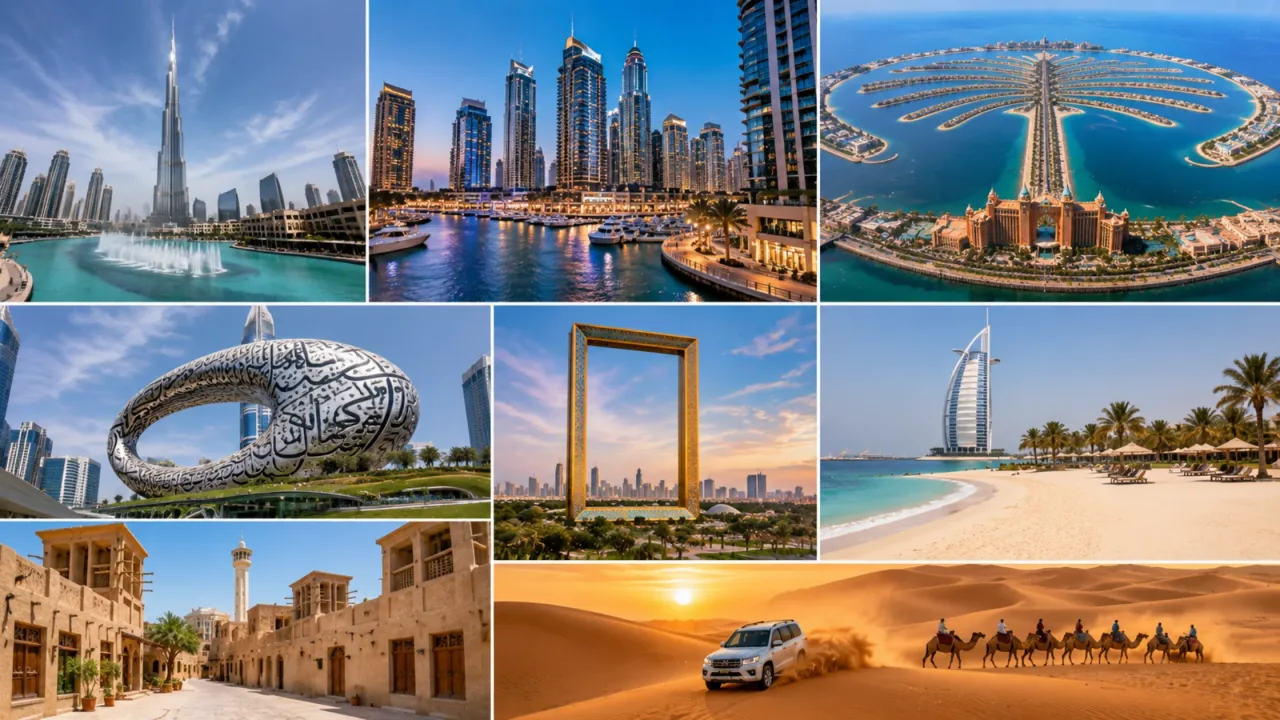
Burj Khalifa, for the city's defining skyline view.
Dubai Marina, for waterfront dining and evening walks.
Palm Jumeirah, for its distinctive shape and beachfront resorts.
Museum of the Future, for a striking building and forward-looking exhibits.
Dubai Frame, for views across both old and new Dubai.
Jumeirah Beach, for a quieter coastal alternative to the marina.
Al Fahidi Historical Neighborhood, for a glimpse of pre-modern Dubai.
Dubai desert safari for dune bashing, camel riding, and sunset views.
Practical Tips for Combining the Desert and Skyline in One Trip
Fitting both experiences into a single trip works best with a little planning around timing and logistics. These practical points cover what tends to catch first-time visitors off guard.
Transport: private taxis and ride-hailing apps are the easiest way to move between attractions.
Clothing: lightweight layers for the city, closed shoes for desert activities.
Desert tour timing: afternoon departures avoid the hottest part of the day.
Hydration: bottled water is essential during dune bashing and sandboarding.
Photography: pack a lens cloth, since desert sand gets everywhere.
Booking tours: reserve desert safaris a few days ahead during peak season.
Mobile connectivity: a local SIM or eSIM makes navigating between areas far simpler.
How to Save Money on Flights and Accommodation
Dubai can be visited on a wide range of budgets, and small planning choices make a noticeable difference to cost. This overview covers timing, location, and tools that help keep a Dubai itinerary within reach.
Best booking window: flights tend to offer better value six to eight weeks ahead of travel.
Cheapest travel months: late spring and early autumn often bring lower rates than peak winter.
Accommodation: Choosing accommodation near Downtown Dubai or Dubai Marina cuts down on transport costs and time.
Book cheaper: Using Booking Trolley to compare fares and flexible travel dates helps identify better-value flights and hotels.
Why This Dubai Experience Feels Different From Other City Breaks
Few destinations allow travelers to move between centuries-old tradition and cutting-edge architecture within a single day. This overview explains what sets Dubai apart from other short city breaks.
Ancient Desert Traditions: Long before the towers appeared, Bedouin communities navigated these same dunes, relying on camels, seasonal routes, and a deep familiarity with the terrain. Desert safaris, today, however commercialized, still borrow directly from that heritage.
Modern Architectural Ambition: Dubai's skyline exists largely because of decisions made within the last few decades, turning a modest trading port into a global showcase for architectural risk-taking. The pace of that change remains visible in how quickly new landmarks continue to appear.
Experiencing Both in a Single Trip: Very few cities let visitors witness both ends of that timeline within the same day, let alone the same afternoon. That compressed contrast is what makes a Dubai itinerary built around both feel genuinely distinctive.
Conclusion
Few trips offer the kind of range that Dubai manages within a single itinerary, moving from glass towers to golden dunes and back again before the day is done. Getting the timing right, mornings among the skyscrapers and afternoons and evenings in the desert, turns two separate holidays into one well-paced adventure. Booking Trolley makes the planning side easier, helping travelers compare flight prices and find flexible dates that suit both budget and season. Whatever draws you to Dubai first, the skyline or the sand, the real reward comes from experiencing both within the same trip.
Frequently Asked Questions
Yes. Many visitors spend the morning exploring Burj Khalifa and Downtown Dubai, then join an afternoon desert safari running through sunset, dinner, and stargazing before returning to the city that night.
November through March offers the most comfortable temperatures for both. Days stay warm enough for sightseeing, while evenings cool down considerably, making desert camps and outdoor dining far more enjoyable.
Most first-time visitors find it worthwhile, since it combines dune bashing, camel riding, and traditional dining into one afternoon. It offers a strong contrast to the city's modern architecture and rarely disappoints.
Hotels around Downtown Dubai or Dubai Marina work well, since most desert safari operators offer hotel pickup from these areas. Staying centrally also keeps skyline attractions within easy reach.
Budgets vary widely, but a mid-range 3-5 day trip, including flights, accommodation, a desert safari, and daily meals, typically falls between $900 and $1,600 per person, depending on season.