
In 2026, for the first time in the history of football, Mexico is hosting the World Cup. It is being held in Mexico City, Guadalajara, and Monterrey, providing a unique experience for millions of fans around the world. While prepping the jersey and booking the flight, there's something more important than match schedules and hotel reservations that every football fan should know: Mexico weather conditions. If the traveler wants to have an amazing trip, it is important to check the Mexico weather updates before departure. The Mexican leg is filled with challenges; it has been stated that, according to NPR, most of the World Cup matches are at risk of extreme heat and humid conditions. In this guide, you will gain all the information you need to stay safe, stay healthy, and enjoy each match and enjoy each match of the FIFA World Cup 2026.
What Is the Weather and Altitude in Mexico City During the World Cup?
The greatest challenge of the entire FIFA season will be Mexico City's June weather. The city is located around 2,240 meters (7,350 feet) above sea level, which is considerably higher than Denver, Colorado (5,280 feet), already deemed to be a high-altitude challenge. Estadio Azteca, officially known as the "Mexico City Stadium" for the tournament, is the tallest stadium in use at the Mexico FIFA World Cup, and no other stadium can match it. Due to this reason, fans can experience significant discomfort. Many fans do not know how Mexico weather can impact their health.
People coming from London, Lagos, Tokyo, or New York, where the air is denser in comparison to Mexico, might get affected by mild altitude sickness symptoms.
What Is the Weather Like in Mexico City in June and July?
Contrary to popular belief, Mexico City weather in June and July is not tropical or hot. Due to its elevation, the city's summer temperature is relatively moderate. June averages a high of around 75°F (24°C) and a low of 52°F (11°C), while July averages a similar high of 74°F (23°C) with a low around 54°F (12°C). The height prevents temperatures from hitting the highs of Monterrey or other cities on the U.S. Gulf Coast.
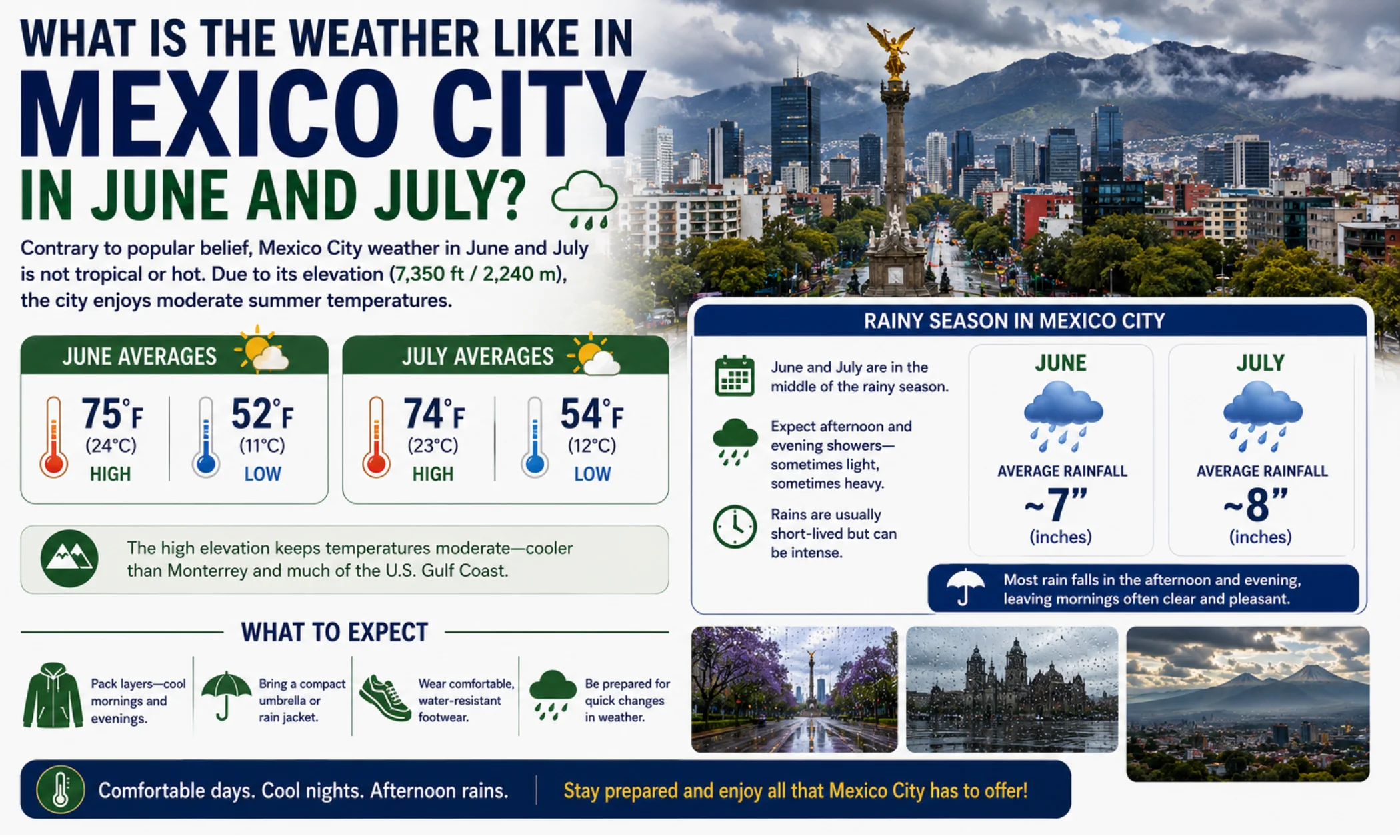
The bigger weather concern in Mexico City is rain. June and July are right in the middle of the rainy season in the city, and often you can get afternoon and evening showers, sometimes light and sometimes heavy. In June, you can look for an average of almost seven inches of rain and for July, over eight inches, but most of the time it will be in the afternoon and evening. Generally, these rains are short-lived, but when they do arrive, they can be heavy.
Safety tips to deal with heat
Get here at least 1 day prior to your match so you can get used to it before you get into the game.
- Drink lots of fluids as soon as you get back on land. One of the significant causes of altitude sickness is dehydration. The amount of water you drink should be increased even more than normal.
- For the first 24-48 hours avoid alcohol and caffeine. They both cause dehydration and will trigger or worsen symptoms of altitude after the initial getting-used-to period.
- Relax on day one. Avoid making exhausting sightseeing, long walks, or running on the first day in the city.
- Mexico weather is unreliable, so pack layers. Day-to-night temperature differences are quite large; you might be hot at lunchtime and really cold at night.
- Bring a small rain jacket or poncho to wear. Storms that develop in the afternoon come with very little warning.
- Only drink bottled or purified water. Mexico City's tap water is not potable. Even be sure to use bottled water for brushing your teeth.
- If you have pre-existing heart, lung, or respiratory conditions, seek advice from your doctor before traveling, as they may need special attention at altitude.
What Should Fans Know About Weather in Monterrey?
Mexico City is the altitude test, but Monterrey is the heat test, and it's likely the hottest that the World Cup has ever had. The 2026 World Cup has the closest association with extreme heat anywhere, with afternoons in June and July in Monterrey reaching into the high 30s Celsius (mid-to-upper 90s F). Travelers should pay attention to Mexico weather warning, especially in hot regions.
The international players' union, FIFPRO, especially named Monterrey as being in one of six areas with a "very high risk" of heat stress injury. That's a major issue for those playing for 90 minutes, but it's just as much of an issue for fans for hours at a stretch, sitting in open-air stands in the summer sun. Estadio BBVA, the World Cup stadium in Monterrey, is an outdoor stadium without a roof or air conditioning, so everyone inside will be as exposed as the weather dictates.
What Is Monterrey's Climate Like in June?
It's a hot month in June in Monterrey, much hotter than 35°C (95°F), and the humidity makes it feel even hotter on the body. The city is located in a mountain valley where heat is trapped; during the daytime, direct sunlight on the stadium's surface enhances the heat. Sunstroke is a very real and documented risk and affects fans more than others used to hot climates in Europe or East Asia. This is also one of the biggest reasons for Mexico weather to be unreliable.
Staying safe in Gudalajara’s heat
- Go to the shelter and get there early in the day. When it's an afternoon or early evening match, arrive at the stadium early enough to get to a shaded area before it gets too hot.
- Use a wide-brimmed hat and light, light-colored, loose-fitting clothing. These are not just about trendy fashion but also effective heat management options.
- Use sun-care products with an SPF rating of 50+ and reapply often. Monterrey's sun is very strong, and sunburns increase dehydration.
- Consume fluid regularly (before, during, and after games). Never wait until you feel thirsty, as this means you are already dehydrated.
- Be familiar with signs of heat exhaustion and heat stroke. Symptoms of heat exhaustion are heavy sweating, weakness, cold pale skin, and nausea. Heat strokes are a medical emergency, and if a person stops sweating, attention must be paid immediately.
- Retreat where possible between the stadium and fan area to air-conditioned areas.
- Do not drink alcoholic beverages before and during outdoor time in hot weather. Any beer in the stadium in the sun is a dehydrator.
- Avoid walking for long distances in hot afternoons; use Uber or DiDi instead.