

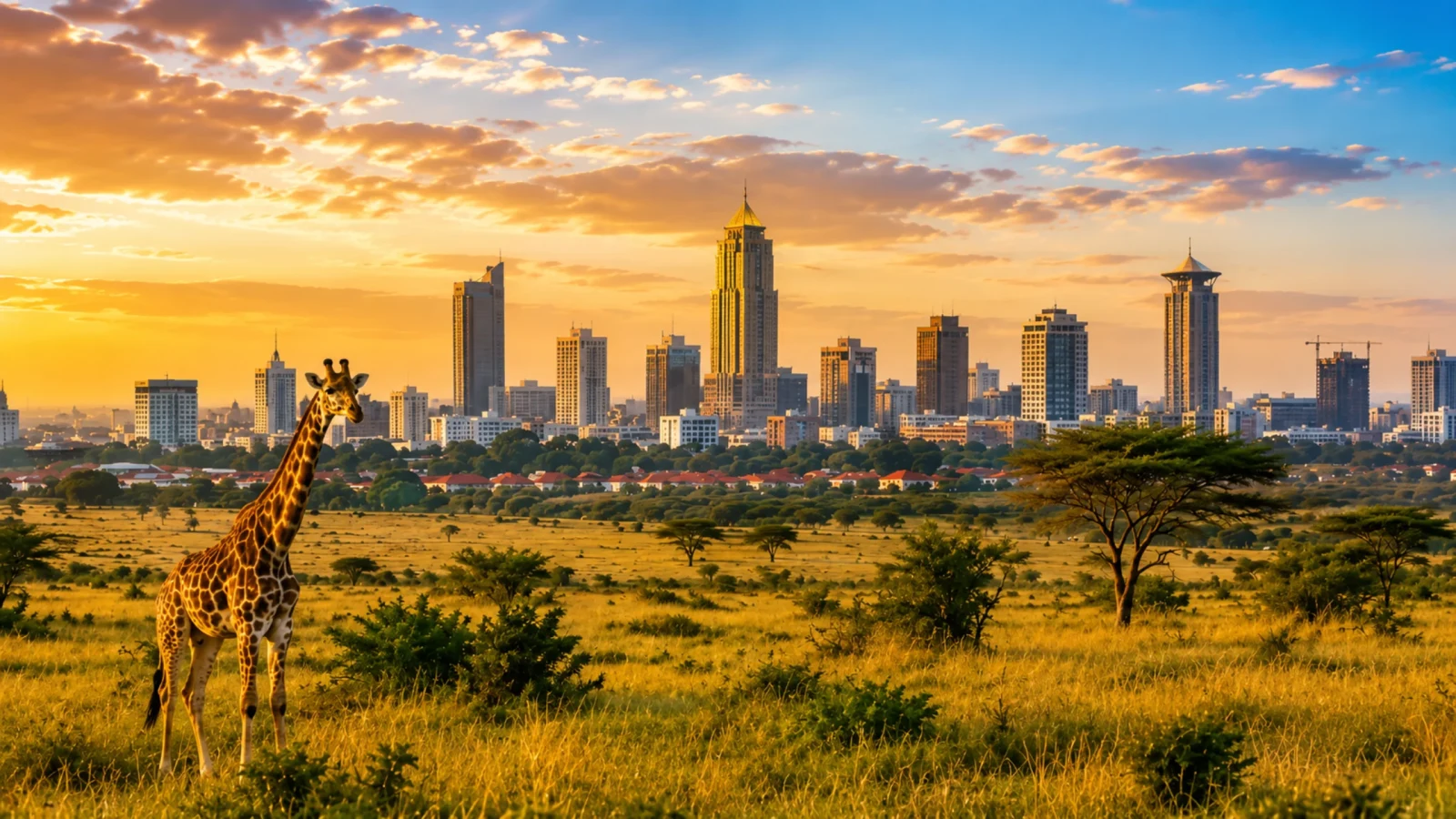
Most safari trips in East Africa begin the same way: a landing in Nairobi, a night to adjust, and then a drive or short flight toward the plains everyone actually came to see. What's easy to overlook is how much Nairobi itself already offers before that journey even starts.
This is a city where wild animals graze within sight of office towers, where conservation projects sit a short drive from five-star hotels, and where the logistics of an entire region's safari industry are quietly managed every day. Understanding Nairobi's role helps explain why it has held onto its position as East Africa's safari gateway for so long.
Long before flights and safari lodges entered the picture, this stretch of land already sat at a natural crossroads. Trade routes, grazing corridors, and settlement patterns overlapped here, which is part of why a city ever grew in this exact spot.
That layered background still shows up in small ways today, from the mix of communities living in Nairobi to the distinct character of its neighborhoods, markets, and food. A safari through this region effectively starts with that context, whether visitors notice it right away or not.
A City Built at the Edge of the Wild
Nairobi occupies a fairly unusual spot on the map. It sits inland, at a high enough elevation that the air feels cooler than the equatorial latitude would suggest, and close enough to several ecosystems that no single description of "Kenyan landscape" quite fits the city alone.
Grasslands, forest patches, and rift valley terrain all sit within a few hours of the capital. That geographic variety is part of why so many safari itineraries treat Nairobi as a base rather than a place to rush through.
The city's airport also handles a significant share of regional air traffic, connecting travelers arriving from Europe, Asia, and the Middle East to smaller domestic flights heading toward the country's parks and reserves.
Inside the city, the pace shifts constantly. Busy commercial districts give way to quieter, tree-lined residential streets within minutes, and green spaces appear in places a visitor might not expect from a capital of this size.
That mix matters for safari planning. A traveler can spend a morning navigating city traffic and an afternoon watching zebra graze in open grassland, all without a long transfer in between. Few capital cities anywhere allow that kind of shift within a single day.
What Makes Nairobi Kenya's True Safari Capital
Plenty of cities sit near wildlife areas. Very few let visitors encounter big game without leaving the city limits, and this is where Nairobi separates itself from almost anywhere else on the continent.
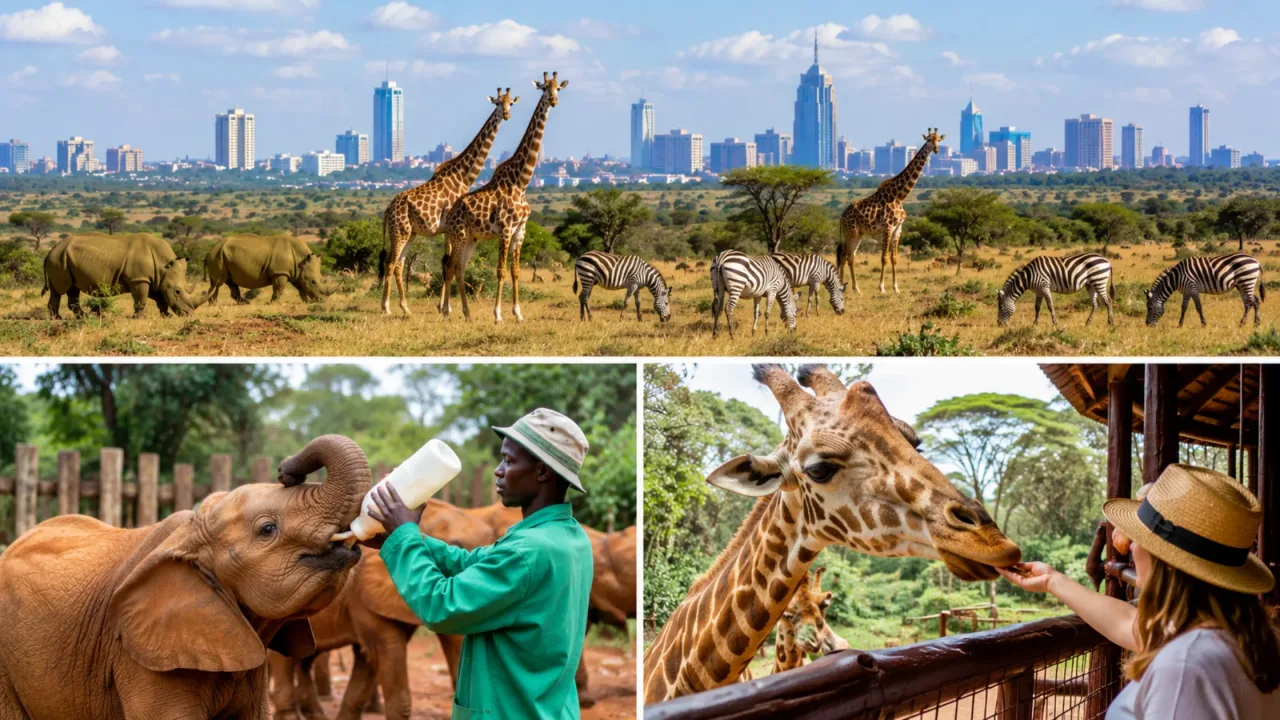
Nairobi National Park
A stretch of protected savannah borders the city on its southern edge, close enough that arriving flights sometimes pass directly over grazing herds. Lions, rhinos, giraffes, buffalo, and zebra all move through open grassland here, with the skyline visible in the distance on clear days.
Because the park sits so near the airport and central business district, visitors with only a few free hours between flights can still fit in a game drive. Guided walking trails also run through parts of the park, giving a slower, quieter way to experience the same landscape.
An Elephant Rescue and Rehabilitation Centre
Just outside the park boundary, a well-known elephant sanctuary cares for calves that have lost their mothers, often to poaching or drought. Visitors can watch keepers feed the young elephants and hear how each animal ended up there.
The work extends well past the daily visiting hours. Staff and researchers here have spent decades refining how orphaned elephants are raised and eventually reintroduced into the wild, making the centre as much a research operation as a tourist stop.
The Giraffe Centre
A short drive from the park, a raised wooden platform lets visitors feed Rothschild's giraffes at close range, close enough to feel the animal's tongue against an open palm. The centre was set up to protect a subspecies that had dropped to dangerously low numbers decades ago.
Beyond the visitor experience, the centre runs education programmes for local schoolchildren, introducing them to conservation ideas early. It's a small example of how Nairobi's wildlife attractions often serve two audiences at once, tourists and the local community.
Beyond Nairobi: The Parks Within Reach
Nairobi's real value as a safari base comes from what surrounds it. Within a few hours in almost any direction, travelers can reach reserves known for very different landscapes and wildlife.
That range is unusual for a single starting point. A traveller could spend one trip chasing open savanna traveler next exploring lakeside birdlife or dense highland forest, all while returning to the same city in between.
The Maasai Mara, several hours southwest, draws visitors for its open plains and seasonal wildebeest crossings.
Amboseli offers wide views of Kilimanjaro across the border, along with some of the region's largest elephant herds.
Lake Nakuru is known for its flamingo populations and steady rhino sightings within a compact park.
Samburu, further north, holds species rarely seen elsewhere in Kenya, including the reticulated giraffe and Grevy's zebra.
Tsavo's twin parks stretch across vast, dry terrain suited to longer, slower safaris.
Ol Pejeta Conservancy has become a stronghold for black rhino conservation, alongside broader wildlife protection work.
Lake Naivasha allows boat-based wildlife viewing, particularly hippos and resident birdlife.
Each of these can be reached comfortably from Nairobi, which is precisely why so many multi-park itineraries use the city as their starting and ending point.
Why Nairobi Functions as East Africa's Safari Hub
International flights, domestic charter services, established tour operators, and experienced guides are all concentrated in Nairobi, which keeps the logistics of a Kenya safari relatively simple to arrange.
Most visitors fly into Nairobi, spend a day or two adjusting and exploring the city, then continue on to their chosen parks by light aircraft or road transfer. The city absorbs the early travel fatigue so the rest of the trip can move more smoothly.
This hub role isn't limited to Kenya. Travelers heading toward parts of Tanzania, Uganda, or Rwanda often still transit through Nairobi, given how well connected the city is compared to some neighboring capitals.
Tour operators based here have built decades of working relationships with lodges, park authorities, and local guides across the wider region. That network is difficult for a newer safari hub to replicate quickly, no matter how appealing its own scenery might be.
There's also a practical side to consolidating everything through one city. Vehicle maintenance, fuel supply, medical evacuation services, and communication infrastructure are all easier to organise from a single, well-equipped base than scattered across smaller towns or individual parks.
Practical Tips for Safari-Bound Travelers
A safari through Nairobi runs smoothly for most visitors, provided a few practical points are kept in mind before setting off. None of these are unusual by international travel standards, but they're worth reviewing before the trip rather than figuring out on arrival.
Hotels and safari operators in the city are generally used to first-time visitors and can answer most questions directly, so travelers rarely need to solve these details entirely on their own.
Use registered taxis, hotel transport, or established ride-hailing apps rather than unmarked vehicles, particularly after dark.
Check recommended vaccinations well before departure, and speak with a travel doctor about malaria prevention if heading beyond the city.
Carry a mix of local currency and cards, since markets and smaller vendors often prefer cash.
Book wildlife experiences like the elephant sanctuary or giraffe centre through licensed operators, which helps limit overcrowding and protects the animals.
Learn a handful of Swahili greetings before arriving. Locals tend to respond warmly when visitors make even a small effort.
None of this requires special planning skill. It's closer to the kind of preparation any first-time visitor to an unfamiliar city would naturally do.
When to Plan Your Nairobi Safari
Weather shapes safari planning more than most first-time visitors expect. The drier months, roughly from the middle of the year through early the following year, tend to draw wildlife toward known water sources, which makes sightings a little more predictable.
The wetter stretch of the year still has plenty going for it. Landscapes turn a deeper green, birdlife becomes more active, and lodges are noticeably quieter, which suits travelers who don't mind trading a bit of unpredictability for lower rates and fewer crowds.
Timing a trip around one of the region's wildlife migrations adds another layer of planning, since the exact dates shift slightly from year to year depending on rainfall patterns further afield. A local operator based in Nairobi is usually best placed to track those shifts and adjust an itinerary accordingly.
Shoulder months, just before or after the busiest travel periods, often strike a useful balance. Parks are less crowded than at peak times, weather is still generally favorable, and flight or lodge prices tend to ease slightly compared to the high season.
Nairobi Beyond the Wildlife
Safari planning tends to dominate any conversation about Nairobi, but the city holds its own outside of game drives and orphaned elephants. Travelers who build in an extra day or two often come away with a fuller picture of Kenya than the parks alone provide.
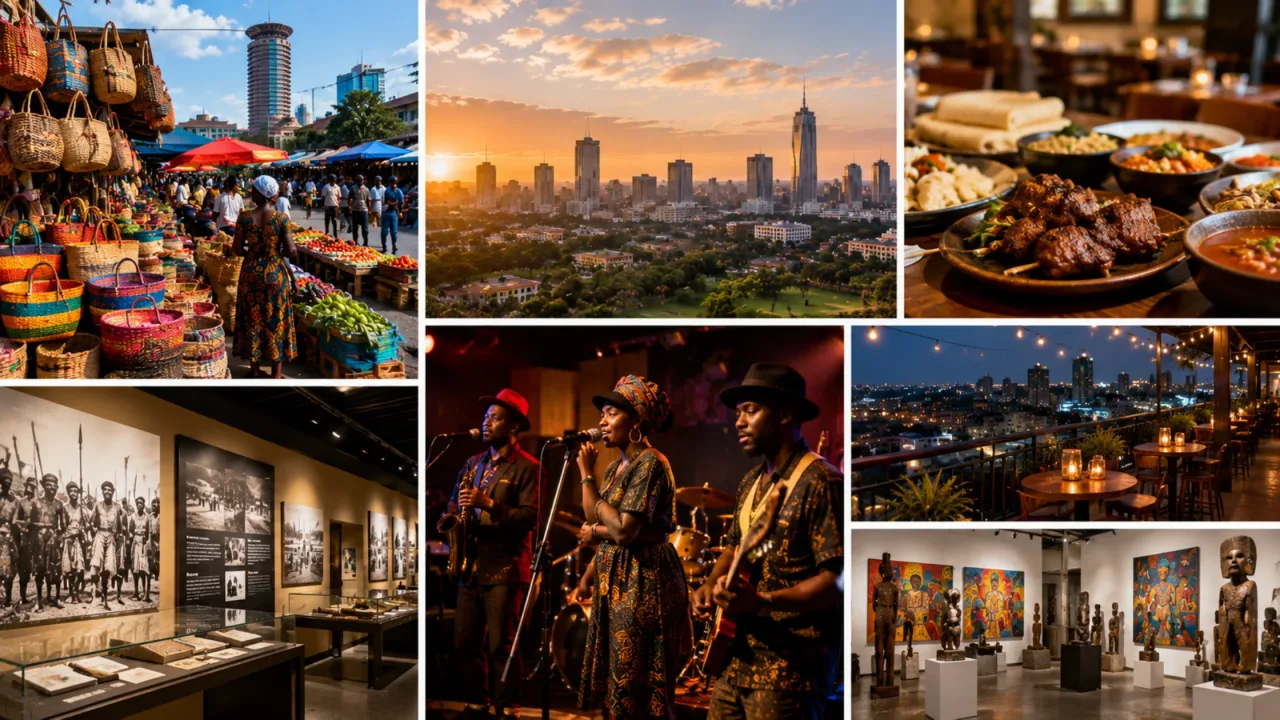
Local markets sell everything from woven baskets to fresh produce, and bargaining is part of the experience rather than an inconvenience.
Nairobi's restaurant scene ranges from simple roadside grills serving nyama choma to more polished dining rooms shaped by Indian, Ethiopian, and coastal Swahili influences.
Museums and cultural centers around the city trace Kenya's history well beyond the colonial period, including its role in the region's independence movements.
Live music venues and rooftop bars give a sense of Nairobi's evening energy, which runs at a very different pace from the quiet of a safari camp.
Art galleries scattered through the city showcase contemporary Kenyan painters and sculptors, many of whom draw directly on the same landscapes safari-goers are about to see.
None of these experiences require rearranging an entire itinerary. Most fit comfortably into the day or two most travellers already spend in the city before or after their time in the bush.
The City That Keeps Its Role
Airlines could, in theory, route travelers straight to smaller regional airstrips and skip Nairobi altogether. In practice, few do, because the city offers something none of the parks themselves can: a working, well-connected base with its own wildlife on the doorstep.
That combination, a functioning capital with lions grazing at its edge, is difficult to replicate anywhere else in East Africa. It's a large part of why Nairobi keeps its place at the start of so many safari stories, rather than becoming just another stop along the way.
For travellers weighing where to begin a Kenya safari, that role is worth remembering. Nairobi isn't simply the airport you land at before the "real" trip begins; it's already part of the story, and often one of its more memorable early chapters.
Given a little time, most visitors find that Nairobi earns its place on the itinerary rather than just serving as a convenient stopover between flights.
Conclusion
Nairobi remains the gateway to East Africa’s safari culture because it offers far more than a convenient arrival point. The city combines wildlife, conservation, history, culture, and transport connections in a way that few destinations can match. Travelers can experience a national park, conservation centers, local markets, and regional safari planning within a single itinerary. That rare balance between urban life and wilderness is what continues to keep Nairobi at the center of East Africa’s safari network, making it a destination that deserves time rather than simply a stop between flights.
Frequently Asked Questions
Nairobi connects travellers to Kenya’s major parks and neighbouring safari destinations while offering wildlife experiences, conservation centres, and safari infrastructure directly within and around the city.
Yes. Nairobi National Park allows visitors to see lions, rhinos, giraffes, zebras, and other wildlife within sight of the city skyline, making it an excellent introduction to Kenya’s safari landscapes.
Spending one or two days in Nairobi is usually enough to visit the national park, elephant sanctuary, Giraffe Centre, museums, local markets, and recover from international travel before continuing.
Yes. Nairobi is one of the easiest cities from which to combine Kenya and Tanzania safari routes, including connections to the Maasai Mara, Serengeti, and Ngorongoro regions.
The dry months, particularly from June to October and January to March, generally offer better wildlife visibility, easier park access, and more predictable safari conditions across Kenya.