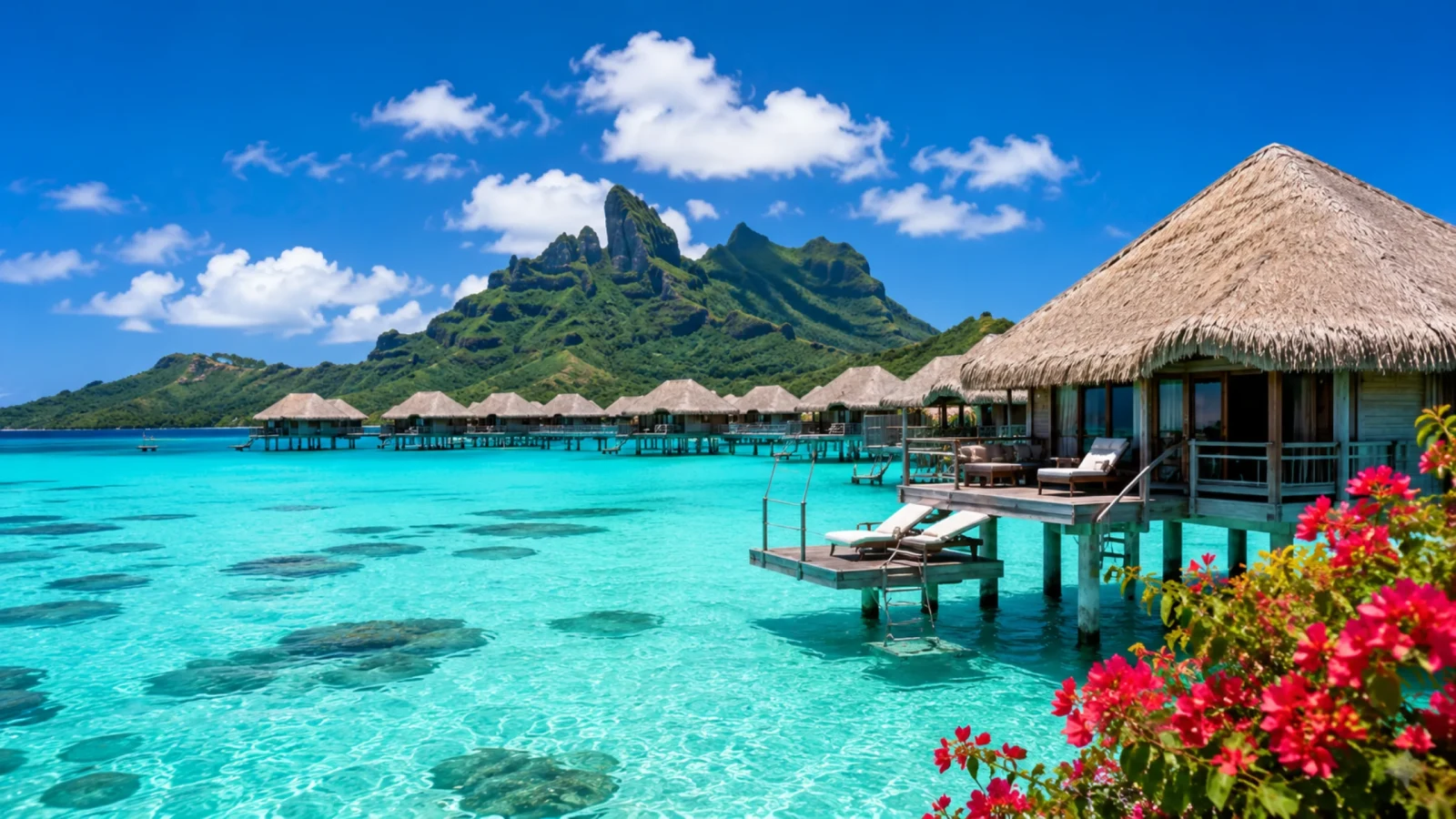
The lagoon changes color throughout the day, sliding from pale green near the shore to a deeper blue where the reef drops off. Mount Otemanu rises behind it, its peak often wrapped in a thin layer of cloud by mid-morning. Bora Bora has become shorthand for a particular kind of island living, one built around water more than land, where bungalows stand on stilts and boats replace much of the need for roads.
The island sits in French Polynesia, a short flight from Tahiti, and its layout is unusual enough to explain why overwater life took hold here first. A barrier reef circles the main island at a distance, creating a calm, shallow lagoon that barely resembles open ocean.
By afternoon, the wind usually picks up enough to ripple the surface without disturbing the calm underneath. Boats crisscross between motus on a loose but reliable schedule, carrying guests, staff, and the occasional delivery of fresh produce from the main island's small farms.
What Makes Bora Bora's Overwater Island Life So Special?
Bora Bora's geography does most of the work. The main island, a remnant of an extinct volcano, is ringed by smaller motu and protected by a barrier reef that keeps the lagoon calm even when winds pick up offshore. That protection is what allows bungalows to sit safely above the water year-round.
Mount Otemanu dominates the skyline at over 2,300 feet, and its jagged silhouette appears in nearly every photograph taken from a lagoon-facing bungalow. The mountain's steep basalt walls are too sheer for most hiking routes, so it tends to be admired from a distance rather than climbed.
Coral formations beneath the lagoon support a wide range of marine life, from small reef fish to the rays that glide through shallower sections near the motu. Overwater bungalows first appeared here in the 1960s, built by a small hotel group experimenting with construction methods borrowed from local fishing platforms. The concept caught on slowly, then became the defining image of the island by the 1980s.
Staying in an Overwater Bungalow
A typical bungalow sits on wooden pilings a short distance from shore, connected to the main resort by a narrow walkway. Many include a glass panel set into the floor, offering a direct view of the water and the fish that pass beneath. Mornings often bring a soft light that spreads across the lagoon before the heat of the day sets in.
Privacy varies by resort layout
Some bungalows sit close together along a single walkway, while others are spaced further apart or positioned around a motu for more seclusion. Travelers who value quiet should check bungalow spacing before booking, since proximity to neighboring units affects how private the experience actually feels.
Best Island Side for Sunsets
West-facing bungalows tend to catch dramatic evening light over the water, while east-facing units often get calmer, softer mornings. Room features usually include a private deck with steps leading into the lagoon, along with air conditioning that becomes necessary during the warmer months.
Practical expectations matter here
Wifi can be inconsistent, particularly in bungalows further from the main building, and boat transfers to and from the resort run on a set schedule rather than on demand. Travelers who plan around these details tend to enjoy the slower pace rather than fight against it.
Evenings on the water carry a particular kind of quiet
Once resort activities wind down, the loudest sound is often the light slap of water against the pilings below the deck, occasionally interrupted by a passing boat returning staff to the main island. Guests who step outside after dinner sometimes notice how few artificial lights compete with the stars overhead, a detail that surprises visitors used to brighter coastal towns.
The Best Lagoon Experiences
Snorkeling with Tropical Fish
Shallow coral gardens sit close to many resorts, making snorkeling accessible without a boat in some cases. Parrotfish, butterflyfish, and small reef sharks move through the coral in loose groups, generally unbothered by snorkelers who keep a respectful distance.
Lagoon Boat Tours
Half-day boat tours typically stop at several points around the lagoon, including sandbanks exposed at low tide. Guides often point out coral formations and explain how the reef structure protects the island from stronger ocean swells.
Shark and Ray Encounters
Shallow sandbars near the motu attract blacktip reef sharks and stingrays, both accustomed to the presence of boats and swimmers. These encounters happen in knee-deep water for the most part, with guides managing group size and behavior to keep the experience calm for both visitors and animals.
Paddleboarding and Kayaking
Early morning, before the wind picks up, tends to offer the calmest conditions for paddleboarding. The lagoon's shallow sections near shore are well suited to beginners, while more experienced paddlers sometimes head further out toward the reef.
Sunset Cruises
Evening cruises usually time their route to catch the light as it shifts over Mount Otemanu. Some include a stop for drinks near a quiet stretch of the lagoon, away from the resort clusters, where the water settles into a flat calm.
Why Travelers Love This Experience
The lagoon feels enclosed and safe, even for less confident swimmers.
Wildlife encounters happen at close range without feeling staged.
Boat schedules leave room for slower, unstructured time on the water.
The changing light throughout the day makes each hour look different.
Few other destinations combine this level of marine access with overwater lodging.
Exploring the Main Island
Vaitape, the island's small main town, serves more as a practical hub than a tourist attraction. Ferries and boats arrive here from the airport motu, and a scattering of shops, pharmacies, and small restaurants line the main road.
Local markets operate on a modest scale compared to larger Polynesian towns, but they offer a look at daily island life that resorts rarely show. Vendors sell vanilla, monoi oil, and woven pandanus goods alongside fresh produce brought in from smaller farms.
Polynesian food on the main island leans toward grilled fish, taro, and breadfruit, prepared in a more understated way than the elaborate resort versions. Poisson cru, raw fish marinated in lime and coconut milk, appears on nearly every local menu and varies slightly from one kitchen to the next.
Cultural performances, including traditional dance and drumming, are usually organized through resorts rather than found spontaneously in town. These shows draw on Polynesian storytelling traditions, with movement and rhythm used to represent local myths and historical events.
Scenic viewpoints on the main island offer a different perspective than the lagoon itself. A drive or guided tour toward the island's interior reveals views back over the water, with the barrier reef visible as a pale ring in the distance.
Daily life in Vaitape moves at a noticeably different pace than the resorts a short boat ride away. School children wait for rides along the main road in the late afternoon, delivery trucks unload supplies outside small grocery stores, and conversations happen in a mix of French and Tahitian that shifts depending on who is speaking.
Best Time of Day for This Experience
Late afternoon tends to suit exploring the main island best, once the midday heat softens and market stalls prepare for the evening. Light at this hour also flatters the drive along the coastal road, with the lagoon catching gold tones as the sun lowers toward the horizon.
Best Time to Visit Bora Bora
The Maldives is a year-round tropical destination, but choosing the right season can improve your experience. Weather, humidity, resort prices, and crowd levels vary throughout the year, making some months better for honeymoons, family holidays, or budget-friendly trips.
Dry Season (May to October)
Lower humidity and less rainfall This is the most comfortable period for beach days, snorkeling, diving, and other outdoor activities.
Steadier lagoon conditions Calmer waters and clearer visibility make it ideal for water-based experiences and island hopping.
Wet Season (November to April)
Short tropical showers Rain usually arrives in brief, heavy bursts and often clears quickly.
Better resort deals Lower demand during this season can mean more affordable accommodation and fewer crowds.
Best Months by Travel Style
Honeymooners: June to August offers the most predictable weather and romantic conditions.
Families: School holidays bring higher demand for family-friendly resorts.
Budget travelers: April, May, October, and November usually provide the best value.
How Expensive Is Bora Bora Really?
Bora Bora is not very expensive to explore, and a trip will easily fall within your budget. Here is a layout of the expenses in Bora Bora:
Accommodation costs vary enormously: Guesthouses and smaller pensions can run from roughly $150 to $300 per night, while mid-range resort bungalows typically fall between $500 and $900. High-end overwater villas at the island's most exclusive resorts can exceed $1,500 per night before taxes and service fees.
Food costs swing: A simple lunch at a local snack stand might cost $10 to $15, while resort dining, particularly at higher-end properties, often runs $50 to $100 per person for dinner.
Excursions add up quickly if booked individually: Snorkeling tours, shark and ray encounters, and sunset cruises typically range from $80 to $200 per person, depending on group size and inclusions. Airport transfers, often required since many resorts sit on separate motu, usually cost between $50 and $150 round trip per person.
Flights to Bora Bora generally route through Tahiti, with the international leg from the United States costing anywhere from $900 to $2,000 depending on season and airline, followed by a shorter domestic flight to Bora Bora itself.
How to Experience Bora Bora Without Overspending
Shoulder season travel, particularly in April, May, or November, tends to offer a useful balance of decent weather and lower rates across accommodation and flights. Comparing flight options well in advance, rather than booking the first available route, often reveals meaningful price differences between connecting airports and travel dates.
Lagoon excursions can be booked more affordably by combining activities into a single half-day or full-day tour rather than paying separately for each one. Choosing a guesthouse or smaller family-run pension over a resort bungalow can cut accommodation costs substantially while still offering lagoon access.
Combining Bora Bora with a nearby island such as Moorea or Huahine spreads the trip across a mix of price points, since those islands generally cost less than Bora Bora itself. Booking Trolley can help with the planning side of this, comparing flight prices, travel dates, and accommodation options across the trip to keep the full budget easier to track.
Practical Tips for First-Time Visitors
The local currency is the CFP franc, though many resorts also accept US dollars and euros.
Transportation on the main island relies on boats, shuttle transfers, and a limited number of taxis.
Internet access can be slow or intermittent, particularly at bungalows set further from the main resort building.
Tipping is not a strong local custom, though small gratuities for exceptional service are increasingly accepted at resorts.
Reef-safe sunscreen is worth packing, since regular sunscreen can damage the coral that draws so many visitors to the lagoon.
Booking transfers in advance, especially airport-to-resort boat transfers, avoids delays on arrival.
Lightweight clothing, a reusable water bottle, and sturdy sandals cover most of what a Bora Bora trip requires.
Respecting local customs, including modest dress in town and quiet behavior during cultural performances, goes a long way with residents.
Conclusion
Bora Bora's appeal rarely comes down to a single feature. It sits in the combination of things: the reef holding the lagoon still, the mountain standing behind it, and the quiet rhythm of boats moving between motu on a fixed schedule. Even a short stay tends to leave visitors with a clear sense of how closely island life here is tied to the water surrounding it.
Frequently Asked Questions
Yes. While often marketed toward couples, the lagoon activities, snorkeling, and cultural experiences appeal equally to families, solo travelers, and friends traveling together.
Four to six days allows time for lagoon excursions, a visit to the main island, and some unstructured time at the resort without feeling rushed.
Yes, particularly by choosing guesthouses over resorts, traveling in shoulder season, and combining the trip with a more affordable neighboring island like Moorea.
May and June often offer a strong balance of dry weather, manageable humidity, and slightly lower crowds compared to the peak summer months.
For many travelers, yes, given the direct lagoon access and privacy. Budget-conscious travelers may prefer a garden or beach bungalow with lagoon access instead.