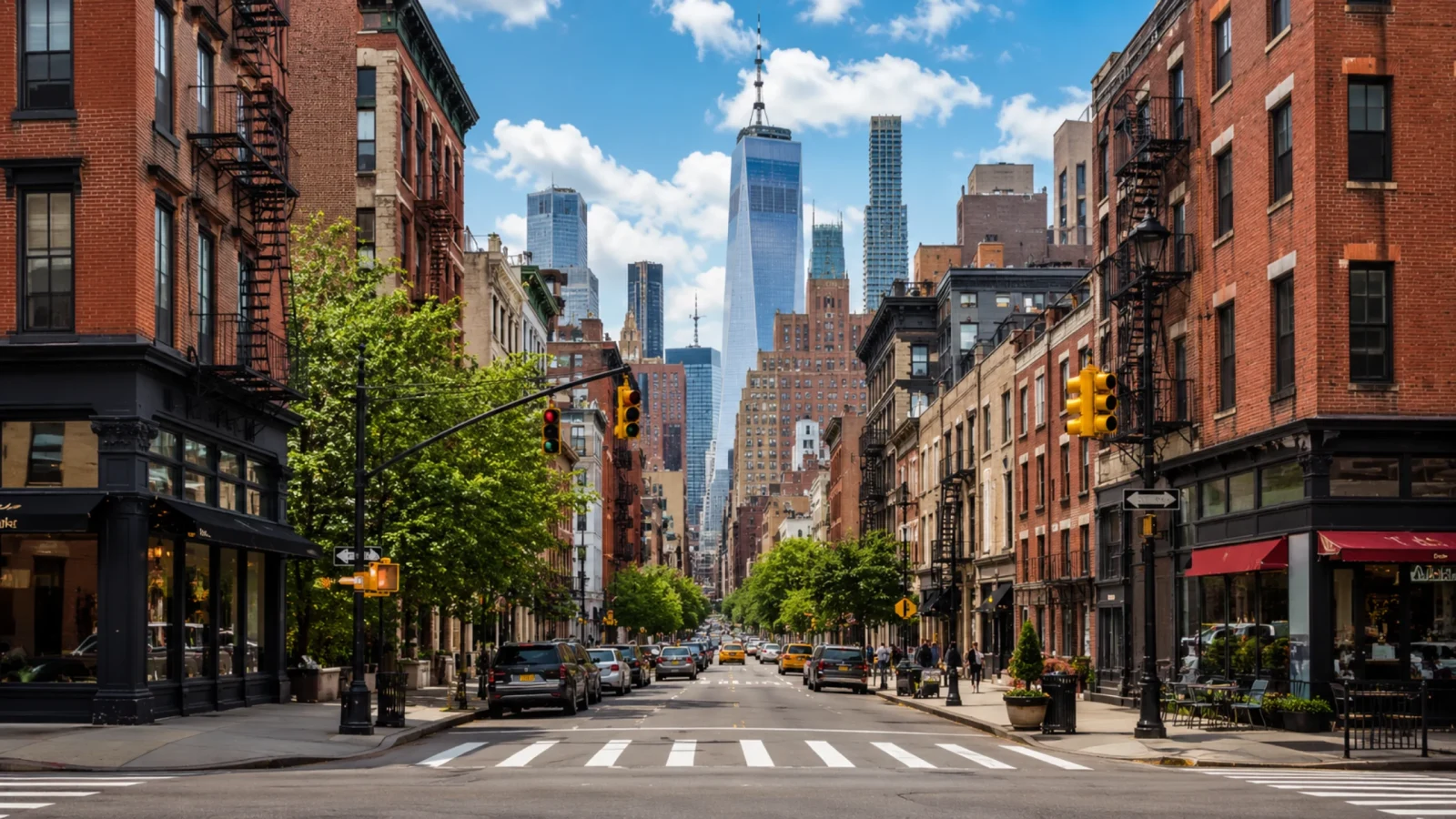
New York City is often reduced to a handful of postcard images, the Statue of Liberty, the Empire State Building, and a yellow cab blurred in motion. But ask anyone who actually knows the city, and they'll tell you the real New York lives in its neighborhoods. Each one has its own rhythm, its own smell of coffee or dumplings drifting from a corner shop, its own architecture, and unspoken rules. Manhattan neighborhoods feel worlds apart from Brooklyn neighborhoods, and even blocks apart, the city can shift entirely in mood. This guide walks through the New York City neighborhoods that give the city its character, so you can experience it the way locals do, one distinct, unforgettable corner at a time.
1. Times Square: The City's Electric Heartbeat
No list of places to visit in New York City is complete without Times Square, even if it's the one every local claims to avoid. It's brash, loud, and unapologetically commercial, and that's exactly the point. Towering digital billboards wash the streets in color day and night, Broadway marquees line the surrounding blocks, and the sheer human traffic can feel like its own kind of spectacle. This is where NYC performs itself for the world.
Beyond the lights, Times Square is the beating center of Broadway theater. Even if a full show isn't in your budget, the TKTS booth on the red steps offers same-day discounted tickets. Shopping ranges from flagship stores to novelty souvenir shops, and nightlife here leans toward big, flashy bars rather than intimate lounges.
Best time to visit: Early morning (before 9 a.m.) for photos without crowds, or after 9 p.m. when the billboards truly glow.
Quick Snapshot
📍 Borough: Manhattan
⭐ Famous For: Broadway, billboards, energy
🕒 Suggested Visit Time: 1–2 hours
💰 Budget: Moderate to high
👨👩👧 Best For: First-time visitors, families, photographers
🚇 Nearest Subway Lines: 1, 2, 3, 7, N, Q, R, W, S
📸 Best Photo Spot: Red TKTS steps at dusk
🍽 Signature Food: New York-style pizza slice
🌙 Nightlife Rating: 5/5 (loud and touristy)
🚶 Walkability: 3/5 (crowded)
Local Tip: Skip the costumed characters offering photos; tips are expected and often aggressively requested. Head one block west to Ninth Avenue for the same skyline views with a fraction of the congestion.
Did You Know? Times Square was originally called Longacre Square until 1904, when The New York Times moved its headquarters there, and the city renamed it in the paper's honor.
Times Square may be overwhelming, but it's also the perfect gateway into the city's energy , and just a short walk from a much calmer world of green space.
2. Central Park: Manhattan's Green Escape
Central Park is proof that New York understands the value of stillness. Stretching 843 acres through the middle of Manhattan, it offers boating on the lake, quiet walking trails, and iconic stops like Bethesda Terrace, with its grand fountain and arched underpass, and Strawberry Fields, the peaceful tribute to John Lennon near the Dakota building. Horse carriage rides along the park's edges remain a classic (if pricier) way to see it.
Photography lovers will find endless material here; the Bow Bridge, the Mall's elm-lined path, and the skyline peeking through autumn leaves are all favorites. Locals use the park for jogging, picnicking, and simply reading on a bench, so don't be surprised if it feels more like a neighborhood backyard than a tourist attraction.
Quick Snapshot
📍 Borough: Manhattan
⭐ Famous For: Green space, boating, iconic bridges
🕒 Suggested Visit Time: 2–4 hours
💰 Budget: Free (activities cost extra)
👨👩👧 Best For: Families, couples, photographers
🚇 Nearest Subway Lines: A, B, C, D, 1, N, Q, R
📸 Best Photo Spot: Bow Bridge
🍽 Signature Food: Halal cart lunch near the entrances
🌙 Nightlife Rating: 1/5 (closes after dark)
🚶 Walkability: 5/5
Local Tip: Enter from the west side near 72nd Street for the quickest route to Strawberry Fields and Bethesda Terrace without weaving through crowds from the main entrances.
Did You Know? Central Park is entirely man-made; every hill, lake, and rock outcrop was carefully designed by Frederick Law Olmsted and Calvin Vaux in the 1850s.
Just east of the park's tranquility sits one of the city's most refined and quietly elegant neighborhoods.
3. Upper East Side: Culture and Quiet Elegance
The Upper East Side is New York at its most polished. This is Museum Mile territory, home to the Metropolitan Museum of Art, the Guggenheim, and the Frick Collection, all within walking distance of each other. Fifth Avenue here means luxury shopping and pre-war apartment buildings with uniformed doormen, while the residential side streets stay remarkably calm compared to the rest of Manhattan.
Architecture lovers will appreciate the neighborhood's mix of Gilded Age mansions and elegant townhouses. It's a slower, more contemplative part of the city , ideal for a morning museum visit followed by a quiet lunch.
Quick Snapshot
📍 Borough: Manhattan
⭐ Famous For: Museums, luxury, architecture
🕒 Suggested Visit Time: 3–5 hours
💰 Budget: High
👨👩👧 Best For: History lovers, couples, culture seekers
🚇 Nearest Subway Lines: 4, 5, 6, Q
📸 Best Photo Spot: Steps of the Met
🍽 Signature Food: Classic New York bagel with lox
🌙 Nightlife Rating: 2/5 (subdued)
🚶 Walkability: 4/5
Local Tip: The Met operates on a "pay what you wish" basis for New York State residents, but even visitors can often find quieter, less crowded entry in the late afternoon on weekdays.
Did You Know? The stretch of Fifth Avenue bordering the park was once called "Millionaire's Row," lined with mansions built by the Vanderbilts and Carnegies.
From uptown refinement, the mood shifts entirely downtown, where cobblestones and creativity take over.
4. SoHo: Where Fashion Meets Art
SoHo, short for South of Houston Street, is famous for its cast-iron buildings, some of the best-preserved 19th-century architecture in the country. Today those historic facades house designer boutiques, contemporary art galleries, and some of the most photographed streets in the city. Cobblestoned Greene Street and Wooster Street are magnets for street photography, especially in the golden light of early evening.
The neighborhood also has a serious coffee culture, with independent roasters tucked between flagship fashion stores. It's a place to wander rather than rush; window shopping alone can eat up an afternoon.
Quick Snapshot
📍 Borough: Manhattan
⭐ Famous For: Cast-iron architecture, shopping, galleries
🕒 Suggested Visit Time: 2–3 hours
💰 Budget: High
👨👩👧 Best For: Fashion lovers, photographers, couples
🚇 Nearest Subway Lines: N, R, W, 6
📸 Best Photo Spot: Greene Street cast-iron facades
🍽 Signature Food: Artisanal sandwiches from a local deli
🌙 Nightlife Rating: 3/5
🚶 Walkability: 5/5
Local Tip: Visit on a weekday morning; weekends bring shoulder-to-shoulder shopping crowds that make photography nearly impossible.
Did You Know? SoHo has the largest collection of cast-iron architecture in the world, a building style once considered cheap and industrial that's now fiercely protected by preservation laws.
A short walk west leads into a neighborhood that has kept its bohemian soul for over a century.
5. Greenwich Village: Bohemian and Timeless
Greenwich Village has always attracted writers, musicians, and free thinkers, and that spirit still lingers. Historic townhouses line tree-shaded streets, jazz clubs hide behind unmarked doors, and Washington Square Park hums with street performers and NYU students. Independent bookstores and cozy cafés make this one of the most walkable, human-scaled parts of Manhattan.
It's a favorite for couples and solo travelers who want atmosphere over spectacle; an evening here often means a jazz set followed by a slow walk past brownstones.
Quick Snapshot
📍 Borough: Manhattan
⭐ Famous For: Jazz, history, bohemian charm
🕒 Suggested Visit Time: 2–4 hours
💰 Budget: Moderate
👨👩👧 Best For: Couples, solo travelers, history lovers
🚇 Nearest Subway Lines: A, C, E, B, D, F, M
📸 Best Photo Spot: Washington Square Arch
🍽 Signature Food: New York cheesecake from a classic bakery
🌙 Nightlife Rating: 4/5 (jazz and speakeasies)
🚶 Walkability: 5/5
Local Tip: Many jazz clubs have no cover charge before a certain hour , check listings and arrive early to skip the fee.
Did You Know? Washington Square Park was once a public burial ground, and an estimated 20,000 bodies still rest beneath it.
From literary charm, the next stop trades quiet streets for elevated views and industrial-chic energy.
6. Chelsea: Elevated Views and Creative Energy
Chelsea is defined by reinvention. The High Line, a former elevated railway turned public park, offers sweeping Hudson River views as it winds above the streets. Below it, Chelsea Market draws food lovers with its indoor stalls, while the neighborhood's west side holds one of the highest concentrations of contemporary art galleries in the city.
This is a neighborhood best explored on foot, ideally starting at the High Line's southern entrance near Gansevoort Street and walking north.
Quick Snapshot
📍 Borough: Manhattan
⭐ Famous For: High Line, art galleries, food hall
🕒 Suggested Visit Time: 2–3 hours
💰 Budget: Moderate
👨👩👧 Best For: Food lovers, photographers, couples
🚇 Nearest Subway Lines: A, C, E, L, 1
📸 Best Photo Spot: High Line overlooking 10th Avenue
🍽 Signature Food: Lobster roll at Chelsea Market
🌙 Nightlife Rating: 3/5
🚶 Walkability: 5/5
Local Tip: Enter the High Line from the northern end near 34th Street and walk south, you'll get the sunset over the Hudson in front of you rather than behind.
Did You Know? The High Line was nearly demolished in the early 2000s before a grassroots campaign transformed it into one of the city's most visited public spaces.
From Chelsea's creative calm, the pace quickens again in the historic financial heart of the city.
7. Financial District: History Meets Skyscrapers
The Financial District carries the weight of New York's economic history. Wall Street remains symbolic even if the trading floor itself is closed to visitors, and the Charging Bull statue nearby is one of the most photographed spots in the city. Trinity Church, dating to the 1600s, sits in striking contrast to the glass towers around it, while cobblestoned Stone Street offers a lively strip of restaurants and outdoor seating.
For panoramic views, One World Observatory delivers one of the best vantage points in the city, looking out over both rivers and the harbor.
Quick Snapshot
📍 Borough: Manhattan
⭐ Famous For: Wall Street, skyscrapers, history
🕒 Suggested Visit Time: 2–3 hours
💰 Budget: Moderate to high (observatory tickets)
👨👩👧 Best For: History lovers, families, first-time visitors
🚇 Nearest Subway Lines: 4, 5, 2, 3, R, W
📸 Best Photo Spot: Charging Bull at sunrise
🍽 Signature Food: Stone Street outdoor dining
🌙 Nightlife Rating: 3/5 (weekday-heavy)
🚶 Walkability: 4/5
Local Tip: Visit Charging Bull before 8 a.m.; by mid-morning, tour groups make a solo photo nearly impossible.
Did You Know? The Charging Bull statue was originally installed illegally overnight by artist Arturo Di Modica as a guerrilla art piece after the 1987 stock market crash.
Just north, the streets grow narrower and the smells shift entirely as you enter one of the city's most sensory neighborhoods.
8. Chinatown: A Sensory Feast
Chinatown is one of the most authentic pockets of New York City, where narrow streets are lined with markets selling fresh produce, live seafood, and imported goods you won't find elsewhere in Manhattan. The food here is the real draw , from soup dumplings to hand-pulled noodles, bakeries selling egg tarts, and traditional tea shops. Lunar New Year celebrations bring the neighborhood to life with parades, lion dances, and firecrackers.
Quick Snapshot
📍 Borough: Manhattan
⭐ Famous For: Authentic food, markets, festivals
🕒 Suggested Visit Time: 2–3 hours
💰 Budget: Low to moderate
👨👩👧 Best For: Food lovers, families, budget travelers
🚇 Nearest Subway Lines: 6, J, N, Q, R, W
📸 Best Photo Spot: Doyers Street's curved alley
🍽 Signature Food: Soup dumplings (xiao long bao)
🌙 Nightlife Rating: 2/5
🚶 Walkability: 4/5 (busy sidewalks)
Local Tip: Skip the restaurants directly on Canal Street; walk one or two blocks in any direction for better food at lower prices.
Did You Know? Doyers Street was once nicknamed "Bloody Angle" for its history of gang confrontations in the early 1900s, thanks to its sharp, blind curve.
Right next door, the scent of espresso and fresh cannoli signals a change in cultural atmosphere entirely.
9. Little Italy: A Taste of Southern Italy
Little Italy has shrunk over the decades, now concentrated mostly along Mulberry Street, but its character remains vivid. Red-and-white checkered tablecloths, family-run trattorias, and pastry shops selling cannoli and tiramisu line the block. The Feast of San Gennaro in September transforms the street into a lively festival with food stalls, music, and parades.
Quick Snapshot
📍 Borough: Manhattan
⭐ Famous For: Italian food, festivals, old-world charm
🕒 Suggested Visit Time: 1–2 hours
💰 Budget: Moderate
👨👩👧 Best For: Food lovers, couples, families
🚇 Nearest Subway Lines: 6, J, N, Q, R, W
📸 Best Photo Spot: Mulberry Street string lights at dusk
🍽 Signature Food: Cannoli from a historic bakery
🌙 Nightlife Rating: 3/5
🚶 Walkability: 5/5
Local Tip: Ferrara has been serving espresso and pastries since 1892; go for the cannoli, but skip the tourist-priced sit-down meals nearby.
Did You Know? Little Italy once spanned over 50 blocks; today it covers only a few, as Chinatown has expanded around it over the past century.
To see a completely different side of New York, cross the East River into Brooklyn's most photogenic corner.
10. DUMBO (Brooklyn): Industrial Charm and Skyline Views
DUMBO, Down Under the Manhattan Bridge Overpass, is one of the most photographed spots in all of New York City. The cobblestoned intersection framing the Manhattan Bridge has become an icon in its own right, while nearby Brooklyn Bridge Park offers unmatched waterfront views of the Manhattan skyline. Former warehouses now house galleries, cafés, and a thriving creative community.
Quick Snapshot
📍 Borough: Brooklyn
⭐ Famous For: Skyline views, photography, waterfront parks
🕒 Suggested Visit Time: 2–3 hours
💰 Budget: Moderate
👨👩👧 Best For: Photographers, couples, families
🚇 Nearest Subway Lines: F, A, C
📸 Best Photo Spot: Washington Street under the Manhattan Bridge
🍽 Signature Food: Pizza from Grimaldi's or Juliana's
🌙 Nightlife Rating: 2/5
🚶 Walkability: 4/5
Local Tip: Visit Washington Street early in the morning on weekdays; the famous photo spot gets flooded with tourists and even wedding shoots by midday.
Did You Know? DUMBO's name was intentionally unglamorous, chosen in the 1970s by local artists partly to discourage developers from moving in, a strategy that eventually backfired as the neighborhood boomed.
A short walk north brings you into Brooklyn's edgier, more youthful heart.
Hidden Gems: Beyond the Famous Names
While the neighborhoods above define the classic NYC travel guide, a handful of lesser-known areas reward travelers who venture off the main path.
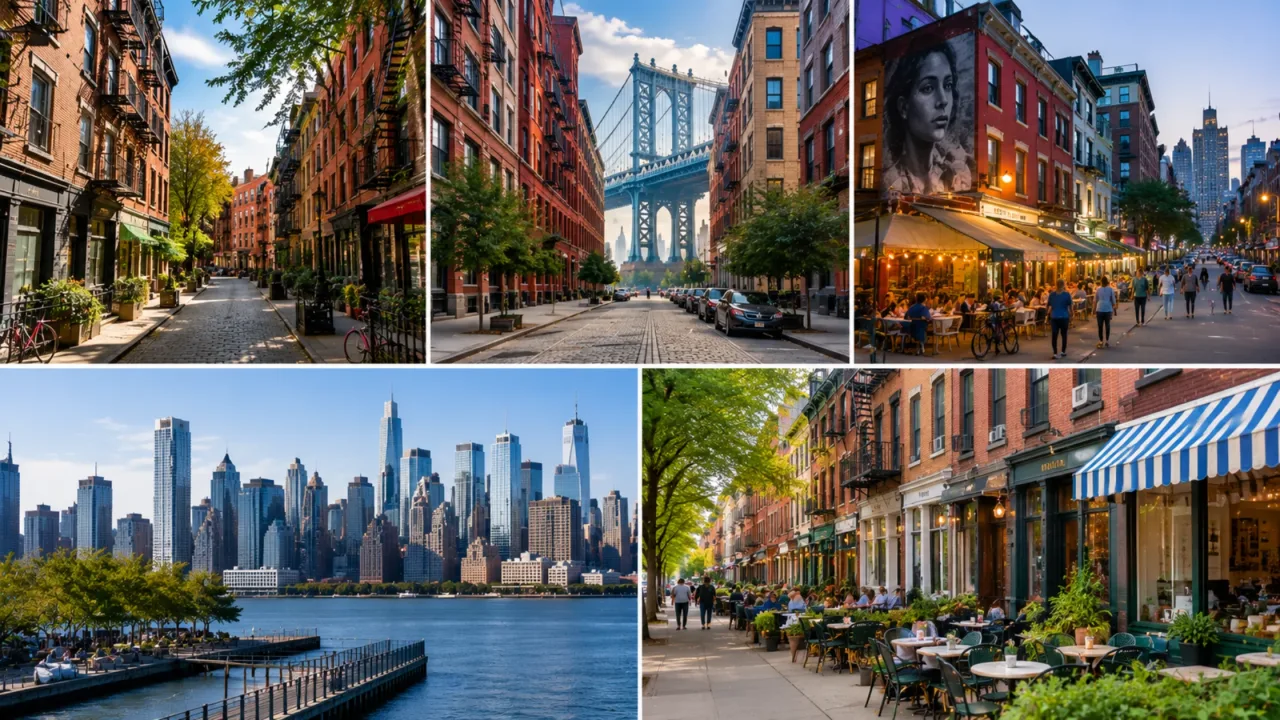
Nolita: Just north of Little Italy, Nolita offers boutique shopping and quiet cafés without SoHo's crowds, ideal for a slower, more local shopping experience.
Tribeca: Once industrial warehouses, now home to loft apartments, upscale restaurants, and the Tribeca Film Festival, this neighborhood blends quiet luxury with cultural energy.
East Village: Grittier and more eclectic than Greenwich Village next door, with a strong music scene, ethnic eateries, and a younger, artsier crowd.
Long Island City (Queens): A rising waterfront neighborhood with some of the best skyline photography spots in the city, plus a growing gallery and food scene, all at a fraction of Manhattan prices.
Astoria (Queens): Known for its Greek and Middle Eastern food scene, leafy streets, and a genuinely local, non-touristy atmosphere just minutes from Manhattan.
These areas may not headline most famous neighborhoods in New York lists, but they often deliver the most memorable, uncrowded experiences.
Local Etiquette & Practical Tips
Understanding a few unwritten rules will make navigating the city far smoother:
Walking etiquette: Keep to the right on sidewalks, and never stop abruptly in the middle of foot traffic; step aside first.
Subway tips: Stand clear of closing doors, let passengers exit before boarding, and avoid blocking doorways with luggage.
Tipping customs: 18–20% is standard at sit-down restaurants; bartenders typically expect $1–2 per drink.
Safety advice: Most tourist neighborhoods are safe day and night, but stay alert on quieter subway platforms late at night and keep valuables secure in crowded areas.
Best times to avoid crowds: Weekday mornings before 10 a.m. are consistently quieter across nearly every neighborhood on this list.
Public restrooms: Most large parks, department stores, and hotel lobbies allow public restroom access without requiring a purchase.
Free viewpoints: Rooftop bars often require a purchase, but spots like Brooklyn Bridge Park, the Vessel's surrounding plaza, and the Staten Island Ferry offer free skyline views.
Weather considerations: Summers are humid, winters are cold with occasional snow, and layering is essential for spring and fall visits, when temperatures can swing significantly within a single day.
Conclusion
New York City isn't defined by a single skyline or a single street; it's defined by the sum of its neighborhoods, each with its own pace, food, history, and personality. From the electric chaos of Times Square to the quiet dignity of the Upper East Side, from Chinatown's markets to Harlem's gospel choirs, every corner tells a different part of the city's story. The best NYC travel guide isn't a checklist of landmarks; it's an invitation to wander past them, into the neighborhoods where the city's real character lives. Go beyond the postcard views, and New York will reward you with the version of itself that only its neighborhoods can show.
Frequently Asked Questions
Times Square, Central Park, and the Financial District are excellent starting points for first-time visitors. They showcase New York's famous landmarks, entertainment, history, and provide easy access to several other iconic neighborhoods.
Chinatown, Little Italy, Chelsea, and Greenwich Village are among the best neighborhoods for food enthusiasts. From authentic dumplings and Italian pastries to gourmet markets and cozy cafés, each offers unique culinary experiences.
A three- to five-day trip allows you to experience many of New York City's most iconic neighborhoods at a comfortable pace, giving you enough time to enjoy attractions, local dining, shopping, and cultural experiences.
DUMBO in Brooklyn is famous for its stunning Manhattan skyline views and the iconic Manhattan Bridge photo spot. Brooklyn Bridge Park also offers some of the city's best waterfront panoramas.
Walk on the right side of sidewalks, use the subway for quick travel, visit popular areas on weekday mornings to avoid crowds, and keep valuables secure while exploring busy tourist neighborhoods.