Imagine yourself being on a stunning beach in Thailand. Explore the ornate Buddhist temples, taste the amazing street food, and witness the lovely culture. Every year 30 million tourists visit this amazing destination. So, what's stopping you? The visa! Getting a Thailand visa is easier than you can even imagine. Thailand is one of the most tourism-friendly countries that gives visa-free entry to almost 90 countries, including the USA, for short visits.
If you are someone planning a visit to Thailand and want to apply for a visa or are confused about whether you even need a visa, then you have landed in the right place. This guide covers everything regarding Thailand visa for US citizens in 2026, including the e-Visa, visa-free entry, nomad visas, fees, requirements, and more.
What Types of Visas Does Thailand Offer?
Whether you want to visit Thailand for a two-week vacation or want to stay there for life, the Thailand visa covers both types of travelers. Additionally, there are other visas, and the right type of visa depends on your nationality, why you are visiting, and how long are you staying. The following are the primary options for travelers to Thailand at this time, whether they are looking for a Thailand travel visa or a long-term stay permit.
Visa Exemption (Visa-Free Entry)
If your country’s passport is on Thailand’s exemption list, you actually do not require a visa. No need to submit an advance application; when you arrive at one of Thailand’s airports, you get your visa-free entry stamp directly at the immigration checkpoint at no additional cost. Citizens of over 90 countries, including the United States, are eligible for visa-free entry. The visa-free option is available for short trips of up to 60 days, which is further extendable to 30 days, making the total stay of 90 days in one visit. To extend your stay, you will have to visit the local immigration office.
Thailand Tourist Visa (e-Visa)
If your country’s passport does not fall on the visa exemption list of Thailand, the tourist visa is the best option. This also provides the same option for travelers, allowing them to stay up to 60 days and later extend it to a maximum of 90 days. This visa type provides a multiple-entry version, which offers multiple entries within six months; however, the stay cannot exceed 60 days. The single-entry e-visa may cost you $40, whereas the multiple-entry e-visa might cost you around $200.
Thailand Retirement Visa
Thailand is a beautiful country, and you might have thought of settling there after retirement. American citizens aged 50 years and older can apply for a Thailand retirement visa, which is a non-immigrant visa type O-A or O-X visa. The applicants are required to have a Thai bank account with a minimum balance of 800,000 THB (approx. $24,000). In case they do not have a bank balance of 800,000 THB, then a stable job with monthly income of 65,000 THB (approx. $2000) will also work. The applicant is required to qualify for one of the two situations and get health insurance to satisfy the visa requirements. The visa is valid for one year and can be renewed annually.
Thailand Digital Nomad Visa
The DTV—Thailand's long-stay visa for remote work (popularly referred to as the Thailand digital nomad visa). It is available for remote workers and freelancers. A five-year, multiple-entry visa that can be extended for a further 180 days of stay per entry. The applicant must provide documents documenting his income from a distance and have a savings account of approximately 500,000 THB (approx. $15,000), and the fee for the visa is around $275.
Thailand Elite Visa
The Thailand elite visa, also known as the Thailand privilege visa, is a paid membership program and is available for all foreign nationalities who can pay the membership fee. The member does not require showing a fixed income to acquire an elite visa. The charges for the visa can vary from $18,500 for a five-year to $143,000 for a twenty-year membership program. The applicant will have to pay the entire membership fee in a lump sum. The program permits multiple entries, with a maximum stay of one year for each entry.
Other Non-Immigrant Visas
The non-immigrant visas are designed for long-term stays, business, studies, work, or family reunification. The applicant will have to present different documents based on the purpose of their visit. Thailand's standard non-immigrant visa costs $80 for a 90-day single-entry visa. These visas can be extended to a maximum of one year at the Thai’s immigration office inside the country. Additionally, some categories provide multiple entries for a period of one year.
Which Countries Qualify for Visa-Free Entry to Thailand?
Not every country’s citizens are required to apply for a visa. There are many countries that are eligible for visa-free entry. The table below shows various categories of visas, durations, and the countries.
| Category | Example Countries / Regions | Visa-Free Duration |
|---|---|---|
| General Visa Exemption | United States, United Kingdom, EU member states, Australia, Canada, Japan, South Korea (93 nationalities total) | 60 days, extendable by 30 (currently — see note below) |
| Bilateral Agreement | China, Hong Kong, Macau, Vietnam, Laos, Mongolia, Russia, Kazakhstan | 30 days |
| Bilateral Agreement | Argentina, Brazil, Chile, Peru | 90 days |
| Bilateral Agreement | Cambodia, Myanmar (air arrivals) | 14 days |
| Visa on Arrival | Currently around 31 countries — a list expected to shrink sharply under pending rules | 15 days |
Thailand has revised its visa-free entry policy and reduced the maximum stay to 30 days from 60 days. It will come into effect 15 days after being passed in the Royal Gazette, and that has yet to happen. Please check the website of the Royal Thai Embassy close to your travel date to see which of the rules is applicable to you.
What Are the Document Requirements for a Thailand Visa?
To acquire the Thailand visa, the applicant will have to present certain documents to the authorities. However, the exact documents depend on the type of visa applied for, but most documents remain the same, irrespective of the visa type. Here is a checklist of the documents for the visa:
The applicant must have a valid passport for six months beyond the date of entry. It also must have at least one blank page.
A Thailand Digital Arrival Card (TDAC) is mandatory for all foreign nationals, which must be completed three days prior to the date of arrival.
The applicant will have to present a return ticket before the officer to prove that he/she will return to his/her home country after the completion of the stay.
You will give the proof of accommodation during your stay in Thailand.
The applicants will also be required to show the evidence of funds. It is generally $600 per person and $1,200 per family for visa-exempt and e-visa entries.
Documents required for visas, including the bank statements and health insurance required for the retirement visa, income or savings proof for the digital nomad visa, and a background check for the Elite/Privilege visa.
These are the general Thailand visa requirements for US citizens and most other visa-exempt countries. However, if you are applying for a non-immigrant visa, you might have to present other documents based on the purpose of your visit, such as a letter of admission for a study visa or a letter of employment for a work visa.
How Do You Apply for a Thailand Visa?
To get the Thailand entry visa, the procedure differs based on the type of visa you are applying for. If you want to get a visa, here is the general path to follow:
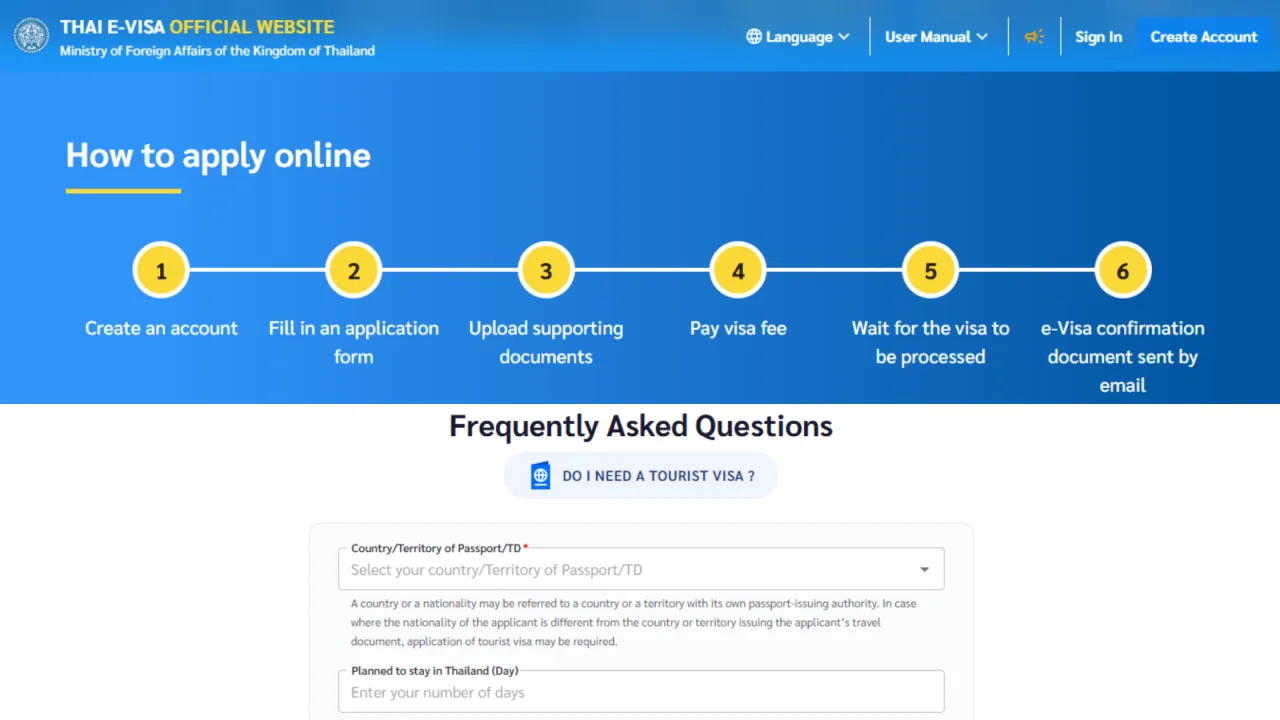
Confirm your visa category: First you will have to check whether your country falls in the visa exemption list of Thailand, or you need a tourist visa or other type of visa based on your purpose and length of visit.
Gather your documents: Start gathering the required documents, such as a passport, evidence of funds, return ticket, photo, and visa-specific documents.
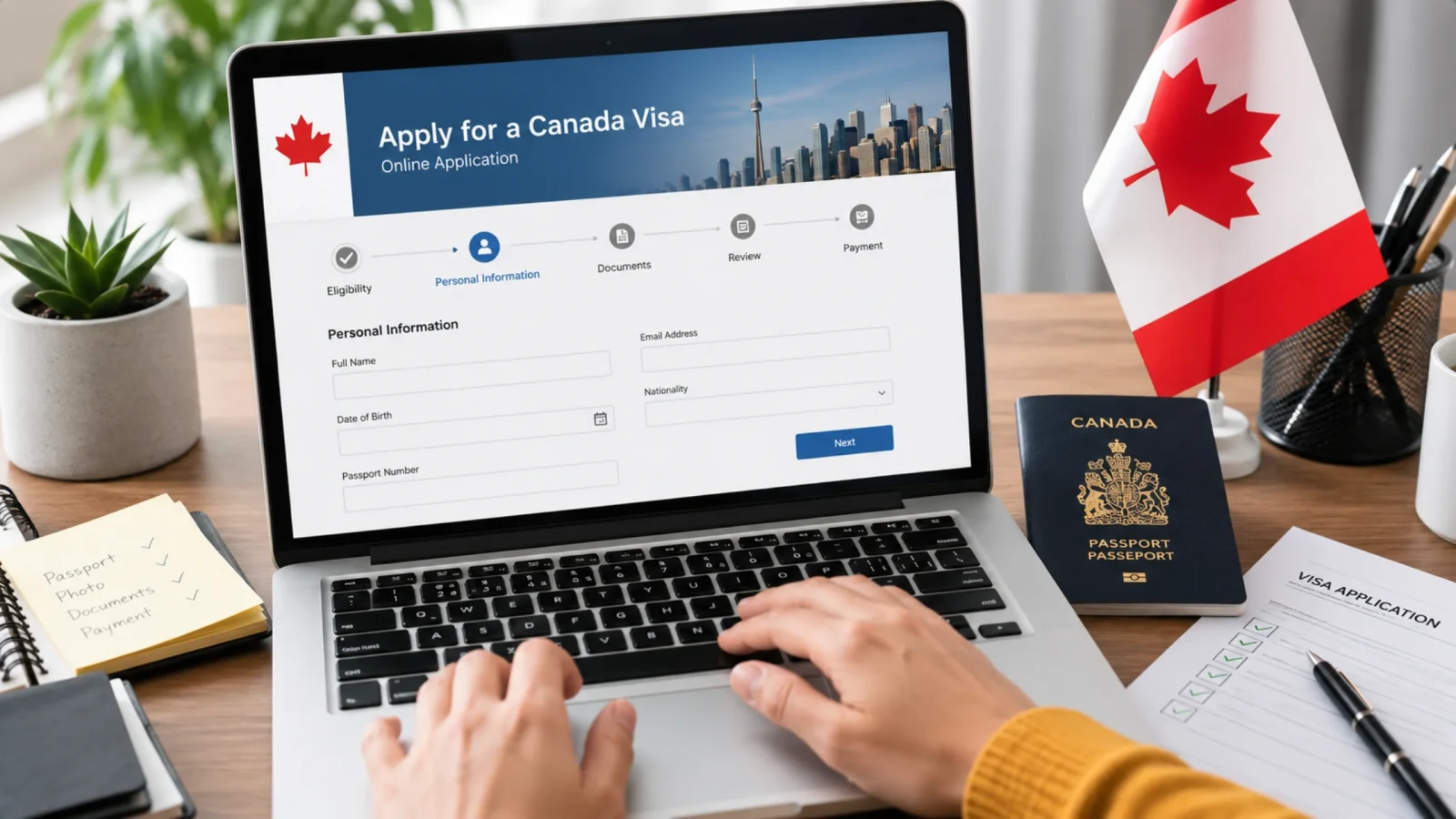
Apply online or through an embassy: Go to https://thaievisa.go.th/ for the Thailand visa application for US citizens and other nationalities. Fill out the application form and upload the supporting documents.
Pay the applicable fee: The fee ranges from free (visa exemption) to as much as $143,000 (Elite Visa membership). Enter the card details to complete the payment.
Wait for approval: Now, you just have to wait for approval; it can take 3 days to 12 weeks, depending on your visa type.
Complete the Digital Arrival Card: Next, you have to file the TDAC at least 72 hours before the flight.
Clear immigration on arrival: Move to the immigration officer and present your passport, visa (if applicable), and TDAC form at the airport or border.
How Much Does a Thailand Visa Cost, and How Long Does It Take?
Not all visa types cost the same. The cost and processing time entirely depend on the type of visa. The table below shows the application fee and the processing time of each Thailand visa type.
| Visa Type | Fee (USD) | Processing Time |
|---|---|---|
| Visa Exemption (visa-free entry) | Free | The applicant will get the stamp instantly on arrival. |
| Tourist e-Visa (single entry) | ~$30–$40 | 3 to 10 business days |
| Tourist e-Visa (multiple entry / METV) | ~$150–$250 | 5 to 10 business days |
| Visa on Arrival | ~$58, cash only | The visa will be received on the day of arrival. |
| Retirement Visa (Non-Immigrant O-A) | ~$200 | 10 to 20 business days |
| Digital Nomad Visa (DTV) | ~$275–$1,150 (varies by embassy) | 5 to 10 business days |
| Elite / Privilege Visa | ~$18,500–$143,000 (one-time, by tier) | 4 to 12 weeks |
| Digital Arrival Card (TDAC) | Free | It is completed online and hardly takes a few minutes. |
The e-visa and non-immigrant visa fees depend on the embassy, and thus they can change as per the exchange rate. Therefore, the applicants are suggested to confirm the fee with their embassy.
Do I Need a Visa for Thailand?
In most cases, the response would be no. As a U.S. citizen tourist, if you are able to travel in the current period of visa exemption, you will be issued an entry stamp without charge. If you intend to remain longer than the exemption period, or you are working, retiring, studying or marrying a Thai, you will need to obtain a Thailand visa. If you have any questions, check with the current exemption requirements before purchasing anything that isn't refundable.
What Is a Visa on Arrival, and Are Americans Eligible?
A visa on arrival (VOA) is a short-term visa issued at the airport or border checkpoint, not beforehand. It is only available for the benefit of a few nationalities which are not already eligible to obtain a visa exemption when entering Thailand.
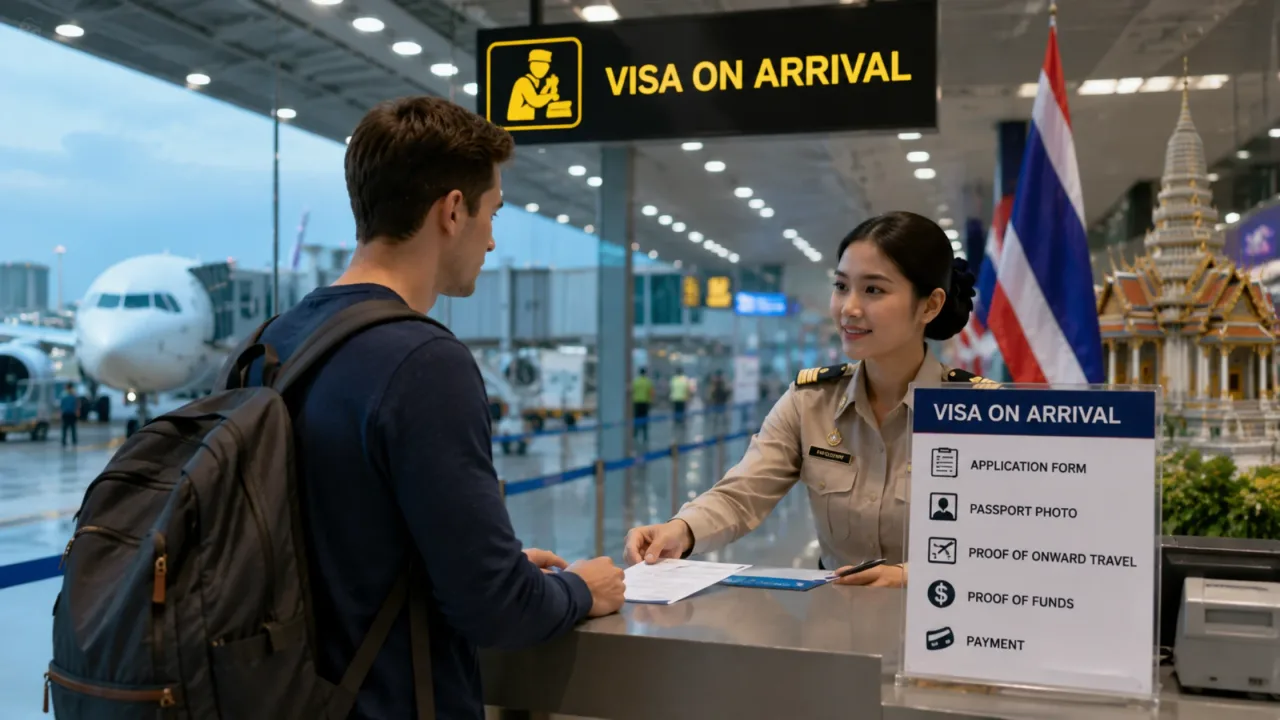
Can U.S. citizens apply for VOA? There is no point in applying for a VOA when the Americans are already included in the visa-exemption category as well, and the latter is not provided to the U.S. passport holders. VOA is an entity that was created only for the countries that are not on the exemption list, which currently numbers about 31, though it could be cut significantly after Thailand's new regulations for entry into the country are put in place.
The process for those from countries where VOA will be accepted is first you will have to fill out the application form at the immigration counter (or apply online in advance through the e-VOA system, if available), attach a passport photo, proof of onward travel and proof of funds ($300/person or $600/family), and pay a $58 cash fee at the immigration counter. It is typically processed on the day of application, although at major airports, lines form up.
Thailand e-Visa vs. Visa on Arrival vs. Digital Arrival Card: What's the Difference?
People often get confused between e-Visa, visa on arrival, and Digital Arrival Card. Most people think that all three are different types of visas only. However, only one of these three is a visa; one is a border-issued alternative for some countries, and one is not even a visa. To understand the difference among the three, go through the table below.
| Feature | Thailand e-Visa | Visa on Arrival | Digital Arrival Card (TDAC) |
|---|---|---|---|
| What it is | This is an actual visa, and the applicant must get it approved before traveling | A visa issued at the airport or border for eligible nationalities | This is not a visa; rather, it is a mandatory digital form that needs to be completed at least 72 hours before departure |
| Who needs it | This is for the travelers from countries that are not on the visa exemption list. | Citizens of VOA-eligible countries only | Every foreigner who is visiting Thailand, including the US citizens |
| When to apply | Must apply before the date of travel | On arrival, at the immigration checkpoint | Within 72 hours before arrival |
| Typical cost | Roughly $40–$80+, depending on visa type | $58, cash only | Free |
| Processing time | You will receive the visa within 3 to 10 business days. | The visa will be received on the day of arrival. | The processing time just takes a few minutes |
Note: As per the current traveling rules, the US citizens do not require a visa if they are visiting for a short stay of 60 days for tourism purposes. They only require filling out the TDAC form at least 72 hours prior to the departure time.
Conclusion
For many travelers, including most Americans, it's incredibly easy to travel to Thailand and enjoy all of its beaches, temples, and cuisine without having to go through the long visa application process. There is a visa for everyone whether you are just stopping by for two weeks vacation or years of work from home. The trick is to keep up to date as Thailand's entry rules are changing in 2026. Always verify the current rules and regulations for the Thailand visa before applying for it. Take advantage of the information above and make your Thai vacation dream a reality.
Frequently Asked Questions
No, the US citizens do not require a visa to travel to Thailand as long as their visit does not exceed the visa exemption period. However, for stays longer than 90 days, a US citizen will also require applying for a visa.
If your country falls on the visa-exemption list, you do not need a visa to enter Thailand. However, you must get an on-arrival stamp, permitting you a stay of 30 to 90 days depending on your nationality. If your country does not fall on the visa exemption list, you can apply for an e-Visa.
Yes, you must carry at least 20,000 baht ($600) or equivalent foreign currency to enter Thailand.
The Thai government has reduced the maximum stay for visa-free from 60 days to 30 days for 93 countries. However, the rules have yet to come into effect and are not applicable at this time.
The official Thailand Digital Arrival Card (TDAC) does not include any application fee, government charges, or processing fee. It is a mandatory form to enter Thailand.