Tokyo doesn't reveal itself all at once. It's a city built from dozens of smaller cities stitched together, and each one carries its own rhythm, food, fashion, and architecture. Shibuya feels nothing like Yanaka, and Ginza has almost no overlap with Akihabara, even though a subway ride separates them by minutes. Visitors who plan their trip around individual neighborhoods, rather than a checklist of landmarks, tend to walk away with a far more layered understanding of the city. This guide breaks down ten districts worth building a Tokyo itinerary around, along with where to stay, what to do, and how to get the logistics right.
Shibuya: Crossings, Fashion, and Nonstop Motion
Shibuya is the district most people picture when they imagine Tokyo: neon signage, stacked department stores, and crowds moving in every direction at once. It grew from a modest rail junction into one of the busiest commercial hubs on the planet, and that energy still defines it. The area rewards visitors who wander past the main crossing into its side streets, where record shops and cocktail bars take over. Budget half a day here.
Experiences in Shibuya
Cross Shibuya Scramble — watching thousands of pedestrians flow past each other in complete order says more about Tokyo's character than any museum could.
Ride up to Shibuya Sky — the rooftop observatory gives a different perspective on the crossing below and the skyline beyond it.
Duck into Nonbei Yokocho — this cluster of narrow lanes preserves old-school Tokyo drinking culture, with bars that seat only a handful of people.
Hotels in Shibuya
Cerulean Tower Tokyu Hotel (luxury): Sits directly above the station, ideal for travelers who want comfort without sacrificing convenience.
Shibuya Excel Hotel Tokyu (mid-range): connected straight to the station, a dependable pick for anyone prioritizing location.
Nine Hours Shibuya (budget): a capsule-style stay that trades space for an unbeatable spot in the middle of the action.
Shinjuku: Skyscrapers, Alleyways, and After-Dark Chaos
Shinjuku operates on a larger scale than almost anywhere else in the city. Its station handles millions of passengers daily, and the district above ground matches that intensity with towering office blocks and one of Tokyo's most famous nightlife strips. Yet it also holds surprising calm, including a sprawling national garden. A full day allows time for both the chaos and the quiet corners.
Experiences in Shinjuku
Wander Golden Gai — a maze of alleyways packed with tiny themed bars, offering nightlife that feels intimate rather than overwhelming.
Stroll Shinjuku Gyoen National Garden — a genuine escape from the district's density, with some of the city's best cherry blossom viewing in late March and early April.
Head up the Metropolitan Government Building — the free observation deck rewards visitors with skyline views that rival paid options, including Mount Fuji on clear days.
Hotels in Shinjuku
Park Hyatt Tokyo (luxury): made famous by Lost in Translation, with a celebrated top-floor pool overlooking the skyline.
Hotel Century Southern Tower (mid-range): strong value with direct access to Shinjuku Station.
APA Hotel Shinjuku Kabukicho Tower (budget): compact, efficient rooms just steps from the nightlife strip.
Asakusa: Temples, Old Streets, and Living History
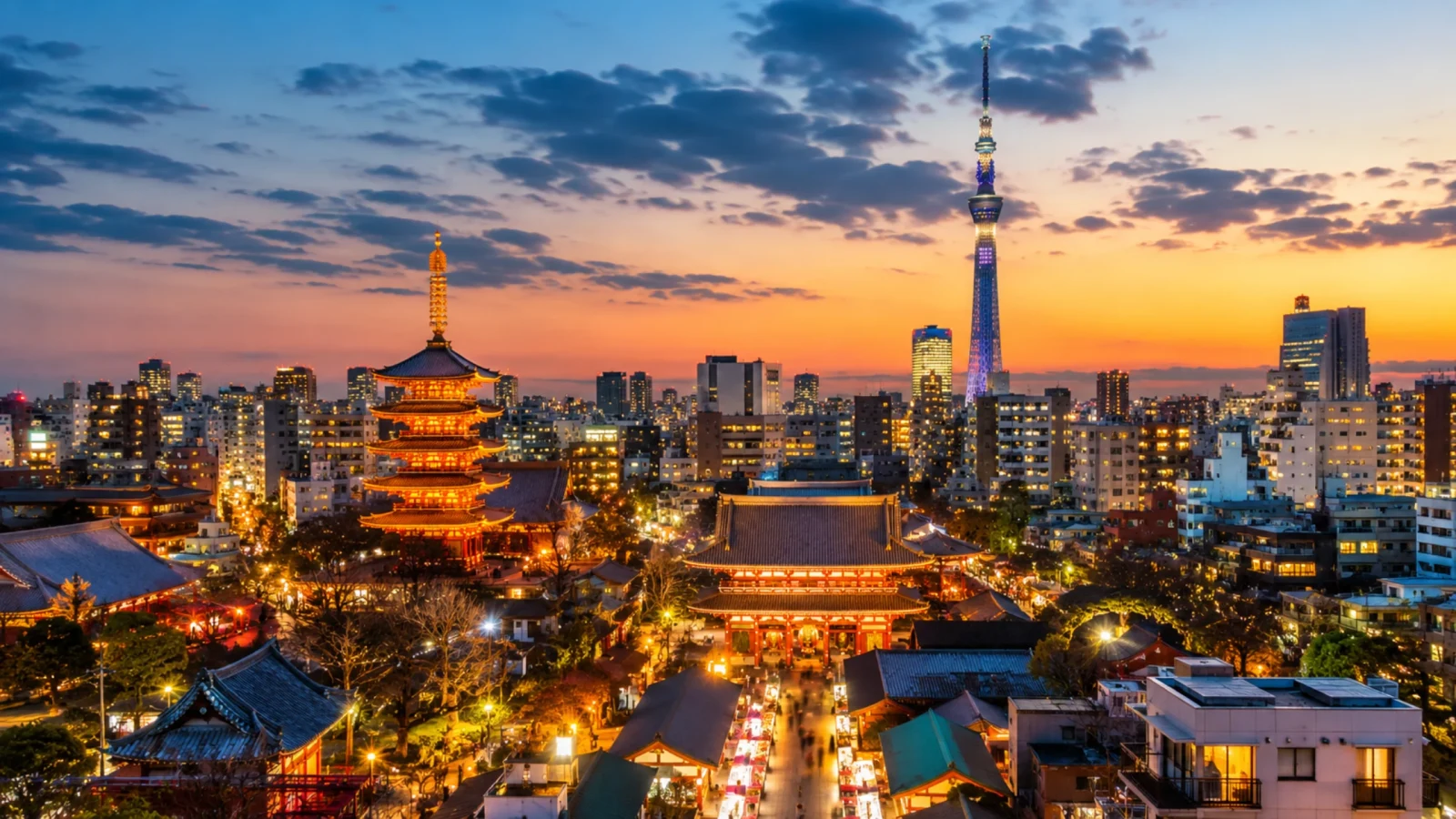
Asakusa is where travelers go to find the Tokyo that existed before skyscrapers took over. Centered on Senso-ji, the city's oldest Buddhist temple, it preserves narrow streets lined with traditional shops and stalls selling snacks that have barely changed in generations. It's a working neighborhood as much as a historic one. Two to three hours covers the highlights.
Experiences in Asakusa
Walk through Senso-ji and Nakamise-dori — passing the Kaminarimon gate toward the main hall shows how pilgrimage and commerce have coexisted here for centuries.
Climb the Asakusa Culture Tourist Information Center — its free observation deck offers one of the better views of the temple grounds without an entry fee.
Follow the Sumida River promenade — watch boat traffic pass beneath the golden Asahi Beer Hall sculpture, one of the district's more unusual landmarks.
Hotels in Asakusa
The Gate Hotel Asakusa (upper mid-range): upscale comfort with rooftop views of Senso-ji's pagoda.
Mimaru Tokyo Asakusa Station (mid-range): apartment-style rooms with kitchenettes, well suited to families.
Nui. Hostel & Bar Lounge (budget): a design-forward hostel with a genuinely social atmosphere.
Ginza: Flagship Boutiques and Old-Money Polish
Ginza has been synonymous with high-end shopping since the late nineteenth century, when it became one of Japan's first Western-style commercial districts. Wide boulevards and flagship stores give it a more deliberate pace than the chaos of Shibuya or Shinjuku. On weekends, the main strip closes to traffic and becomes a pedestrian promenade. Plan for three to four hours.
Experiences in Ginza
Browse Chuo-dori's flagship stores — a showcase of Japanese retail at its most refined, especially on car-free weekends.
Catch a single act at Kabuki-za Theatre — a taste of traditional kabuki performance without committing to a multi-hour show.
Ride up to Ginza Six's rooftop garden — worth visiting for the green space alone, a rare break from the crowds below.
Hotels in Ginza
The Peninsula Tokyo (luxury): faces the Imperial Palace grounds and delivers the understated luxury the district is known for.
Mitsui Garden Hotel Ginza Premier (mid-range): rooftop views and an easy walk to the main shopping streets.
Ginza Yoshimizu (budget-friendly): a traditional ryokan-style atmosphere at reasonable rates for the area.
Harajuku: Street Fashion and Youth Culture on Display
Harajuku built its reputation as the birthplace of Japanese street fashion, and while trends have shifted, that creative energy hasn't faded. The district splits into two personalities: Takeshita-dori's crowded, candy-colored chaos and Omotesando's tree-lined boulevard of luxury flagships are minutes away. Meiji Shrine's forested grounds sit at the edge, offering a sharp contrast to both. Half a day covers the essentials.
Experiences in Harajuku
Walk Takeshita-dori early — going on a weekday morning, before the afternoon crowds arrive, makes it easier to browse the crepe stands and fashion boutiques.
Visit Meiji Shrine — reached through a forested approach that feels worlds away from the surrounding city, it remains one of Tokyo's most atmospheric Shinto sites.
Explore Cat Street — running parallel to Omotesando, it rewards slower exploration with independent boutiques that see far fewer tourists.
Hotels in Harajuku
Trunk Hotel (luxury): a design icon in the neighborhood, appealing to travelers who want boutique style with a strong local social scene.
Hotel Villa Fontaine Shibuya (mid-range): a short walk away, with solid comfort and efficient rooms.
Nearby hostel-style stays (budget): trade room size for proximity to both Harajuku and Shibuya.
Akihabara: Anime, Arcades, and Electric Town Energy
Akihabara built its identity first as a postwar electronics market and later as the epicenter of anime, manga, and gaming culture. Multi-story stores dedicated to trading cards, retro games, or figurines line the streets, alongside maid cafes and arcades that run late. It rewards genuine enthusiasts more than casual browsers, though the sensory overload entertains most visitors for an hour or two.
Experiences in Akihabara
Explore a multi-floor retro gaming store — several are stocked with decades of Japanese console history, unlike anything found in the West.
Visit a themed cafe — whether centered on maids or anime characters, it offers a lighthearted look at one of the district's more unusual export industries.
Browse the main electronics strip — worth a look even for visitors who don't plan to buy anything.
Hotels in Akihabara
Nearby Kanda or Ochanomizu hotels (upper range): a short ride away, with a wider choice of upscale options.
Akihabara Washington Hotel (mid-range): a comfortable base within walking distance of nearly every major store.
Capsule hotels near the station (budget): practical for solo travelers focused squarely on the shops.
Ueno: Museums, Parks, and a Postwar Market
Ueno centers on one of Tokyo's largest parks, home to several of the country's most important museums alongside a zoo and temples. The surrounding streets carry a grittier, more local character than Ginza's polish, particularly around Ameyoko, a market street born from postwar trading. A full day allows time for at least one museum plus the park itself.
Experiences in Ueno
Tour the Tokyo National Museum — it houses the country's largest collection of art and antiquities, a natural stop for history beyond the temple circuit.
Wander Ameyoko Market — narrow covered lanes of street food and discount goods, far more local than the department stores elsewhere.
Rest at Shinobazu Pond — part of Ueno Park, it's an easy escape and a good spot to pause between museum visits.
Hotels in Ueno
The Gate Hotel Ueno (upper mid-range): a design-conscious stay with rooftop views over the park.
Hotel Sardonyx Ueno (mid-range): dependable comfort near both the museums and Ameyoko.
Business hotels near the station (budget): clean rooms at some of the more reasonable rates in central Tokyo.
Yanaka: Quiet Lanes from a Tokyo That Rarely Survived
Yanaka survived both the 1923 earthquake and the wartime bombing that leveled much of the surrounding city, which is part of why it still feels so different. Narrow lanes, wooden houses, and a famously cat-friendly atmosphere give it a small-town feel despite sitting well within city limits. It's the district most travelers wish they'd discovered earlier in their trip. Two to three hours covers the main streets.
Experiences in Yanaka
Wander Yanaka Ginza — a modest shopping street of family-run shops selling senbei and pottery, showing everyday Tokyo life up close.
Walk through Yanaka Cemetery — a peaceful path lined with cherry trees and centuries-old family plots, especially striking in spring.
Stop at an independent cafe — several are converted from old wooden houses, fitting the neighborhood's slower pace.
Hotels in Yanaka
Nearby Ueno or Nippori hotels — Yanaka itself has few large properties, so most visitors base themselves close by and walk in.
Hanare (mid-range): a small guesthouse run alongside a local bathhouse, for a genuinely local stay.
Converted townhouse guesthouses (budget): scattered through the back streets for travelers who want to stay in the district itself.
Best Day Trips from Tokyo
Beyond the city limits, several destinations make for an easy half-day or full-day escape.
Kamakura: About an hour away, Kamakura was Japan's first feudal capital and still holds more than eighty temples and shrines across wooded hills. The 11-meter Great Buddha is the signature sight, and the Daibutsu hiking trail reaches quieter hillside temples.
Nikko: Roughly two hours north, Nikko sits deep in forested terrain and is home to the UNESCO-listed Toshogu Shrine complex. Autumn foliage draws the biggest crowds, and a guided tour helps cover the highlights in a single day.
Yokohama: Part of the greater Tokyo metropolitan area and only around 30 minutes away, Yokohama is Japan's second-largest city and home to the country's largest Chinatown. The Minato Mirai waterfront blends futuristic architecture with a landmark Ferris wheel.
Hakone: About 90 minutes away, Hakone is one of the most popular spots to view Mount Fuji, set around a scenic crater lake with a long history as a wellness retreat. The ropeway and a cruise across Lake Ashi are the standout experiences.
Kawaguchiko: Roughly two hours from the city, Kawaguchiko is the most accessible of the Fuji Five Lakes and offers some of the best unobstructed views of Mount Fuji. The Chureito Pagoda delivers one of Japan's most photographed views, Fuji framed directly behind it.
Practical Tips for Visiting Tokyo
Public transport: An IC card (Suica or Pasmo) works across nearly all trains, subways, and buses and can be loaded directly onto most smartphones.
Cash vs. card: Cards are widely accepted, but smaller restaurants, market stalls, and some temples still operate cash only.
Best seasons: Spring (late March–April) and autumn (November) bring the most comfortable weather along with cherry blossoms or fall foliage, though both are also the busiest periods.
Temple and shrine etiquette: A small bow before entering a gate, quiet conversation on the grounds, and following posted photography restrictions go a long way.
Walking distances: Even a single district can involve several kilometers of walking in a day, so comfortable shoes matter.
Convenience stores: Chains like 7-Eleven, Lawson, and FamilyMart double as ATMs, ticket counters, and surprisingly good meal stops.
Rush hour: Weekday mornings (roughly 7:30–9:30) and evenings (5:30–7:30) see the most crowded trains.
Wi-Fi and eSIM: A prepaid eSIM activated before arrival tends to be more convenient than hunting for public Wi-Fi.
Tipping: Not expected anywhere in Japan, including restaurants, taxis, and hotels.
Safety: Tokyo consistently ranks among the safest major cities in the world, though standard precautions on crowded trains still apply.
Conclusion
What makes Tokyo memorable isn't any single landmark, but the way its neighborhoods sit so close together while feeling like entirely different cities. A morning among Asakusa's temple crowds and Yanaka's quiet lanes can give way, within the same afternoon, to Shibuya's neon energy or Ginza's polished storefronts. That contrast is the real appeal of exploring district by district rather than chasing a fixed list of sights. Visitors who build in time to wander rather than rush tend to come away with a far better sense of how the city actually works day to day. Beyond the well-known highlights, Tokyo rewards curiosity — a random side street in Harajuku or a family-run shop in Yanaka often ends up being the most memorable part of the trip. However the itinerary comes together, giving each neighborhood room to breathe is what turns a checklist of attractions into a genuine understanding of the city.
Frequently Asked Questions
Shibuya and Shinjuku work well for first-timers, combining major transport hubs with iconic sights, shopping, and dining, while still being easy to navigate using clear signage.
Ginza suits luxury shopping, while Shibuya and Harajuku cover fashion-forward and streetwear needs. Akihabara remains unmatched for electronics, gaming, and anime merchandise, with multi-story specialty stores found nowhere else.
Asakusa and Yanaka offer the strongest sense of old Tokyo, with historic temples, traditional shops, and narrow wooden-house streets that largely escaped postwar redevelopment and modernization.
Five to seven days allows a comfortable pace across the major districts, with time left for at least one day trip to nearby destinations like Kamakura or Hakone.
Shinjuku, particularly around Golden Gai and Kabukicho, and Roppongi both offer strong nightlife scenes, ranging from tiny themed bars to larger clubs and late-night restaurants.