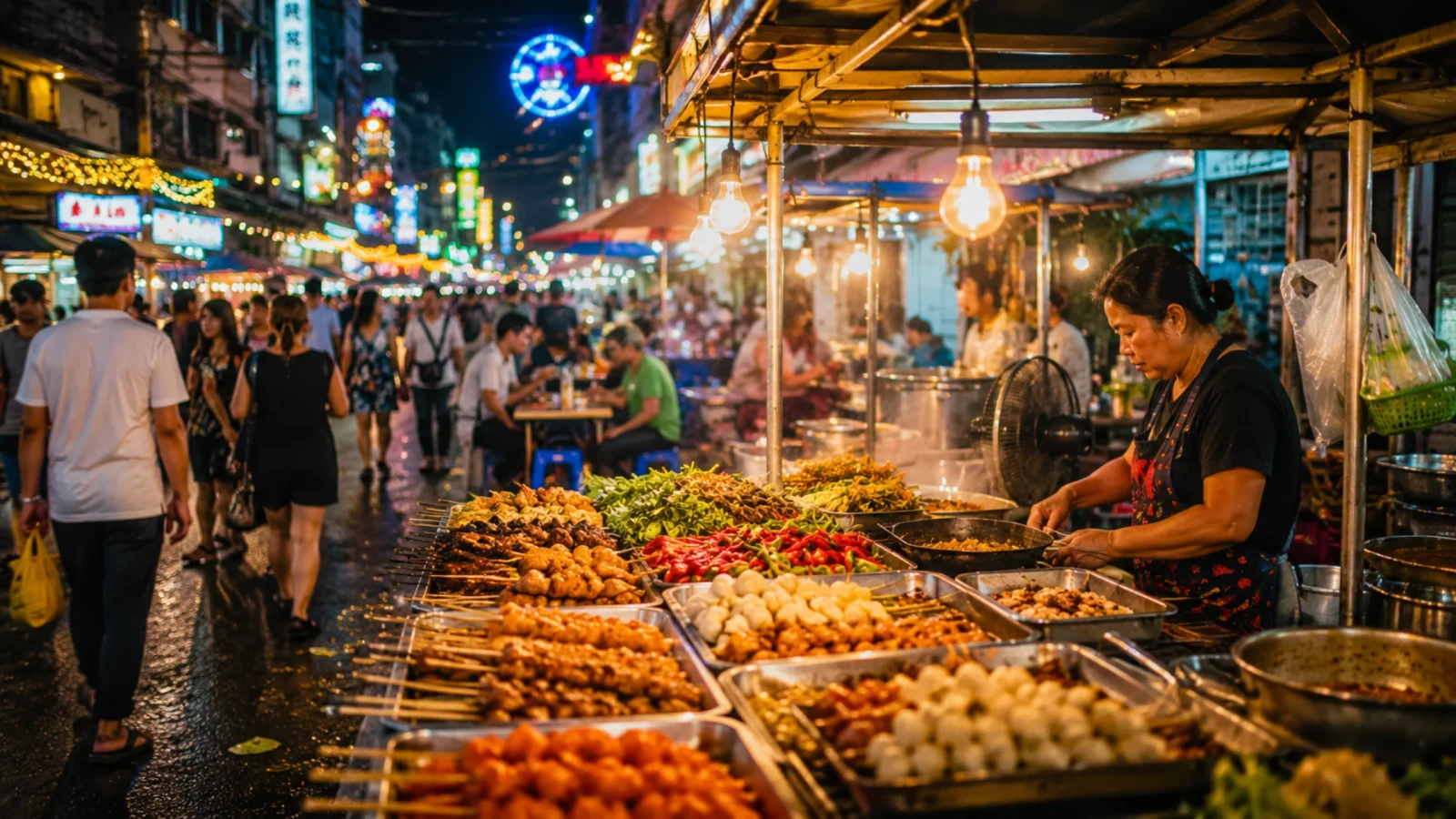
As dusk settles over Bangkok, woks begin to hiss over open flames and charcoal smoke drifts between parked scooters and folding plastic stools. The scent of garlic, chili, and fish sauce rolls down narrow sois before a single dish is served. Vendors call out orders, oil crackles against hot metal, and the clatter of tongs against a wok rim becomes part of the city's evening soundtrack. Bangkok street food culture reveals itself first through sound and smell, long before it reaches a plate, and the city seems to wake into a second, louder life once the sun disappears. By the time the streetlights flicker on, plastic stools are already filling with office workers, students, and taxi drivers settling in for a meal that costs less than a bus fare back home.
Why Bangkok's Streets Feel Like One Giant Kitchen
Cooking in Bangkok rarely stays hidden behind kitchen doors. Woks, grills, and steamers spill onto pavements, turning entire blocks into open workspaces where the boundary between kitchen and street barely exists. Meals happen in the open, in full view of passersby, which gives the city's food scene a rhythm closer to daily ritual than restaurant service, shaped more by habit than by occasion.
Cooking Happens in Public
Vendors set up their stations directly on the pavement, chopping herbs, portioning noodles, and firing up grills within arm's reach of pedestrians. The process is visible from start to finish, with no swinging kitchen door to hide behind. A pot of broth simmers for hours while a vendor works through a steady line of regulars, each order cooked fresh in full view rather than prepared in advance. Passersby can watch a dish take shape from raw ingredient to finished plate within a few short minutes, which builds a kind of transparency that few enclosed kitchens offer.
Meals Are Small, Frequent, and Shared
Rather than three large meals, many residents eat in smaller rounds throughout the day. A skewer here, a bowl of noodles there, a plate of fruit in the afternoon. This grazing pattern suits the pace of the city, where work, errands, and eating tend to overlap rather than follow a fixed schedule.
Street Food Is Part of Everyday Bangkok
Office workers, students, and taxi drivers eat at the same stalls, often standing shoulder to shoulder. Street food is not treated as a novelty or a special outing. It functions as ordinary infrastructure, woven into commutes and lunch breaks in the same way a corner shop might serve a neighborhood elsewhere.
Top Bangkok Street Food Neighbourhoods You Shouldn't Miss
Certain districts carry more weight than others when it comes to shaping the city's food identity. Each neighbourhood offers a different pace, specialty, and crowd, and together they map out a rough guide to how Bangkok eats, from centuries-old canal-side snacks to the newer stalls threading through office districts.
Yaowarat (Chinatown)
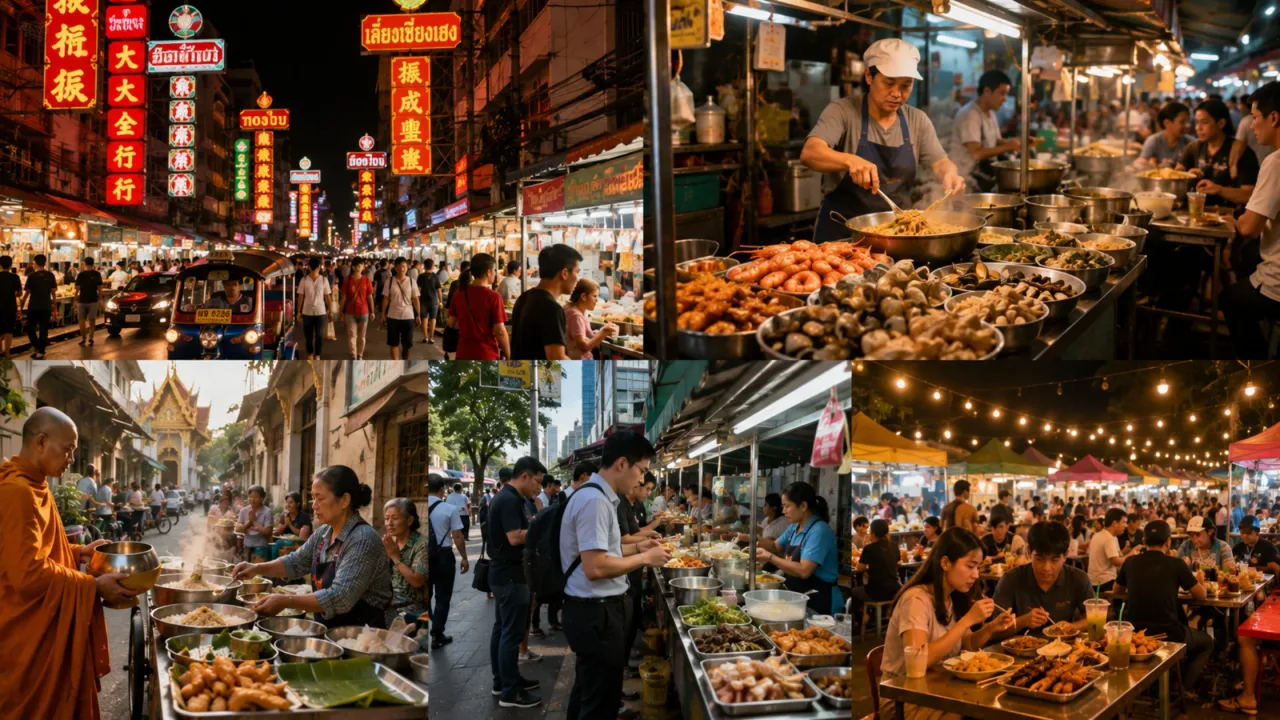
Neon signage in Chinese and Thai script lights up the main strip after dark, and traffic slows to a crawl as pedestrians spill off the narrow pavements into the road itself.
Seafood stalls with tanks of live crab and prawns
Noodle shops that have operated for decades
Dessert vendors selling custards and sweet soups
Late-night energy that peaks well after 9 pm
Old Town (Rattanakosin)
Mornings here move slower than in Chinatown, with monks collecting alms and vendors setting up carts along quiet lanes before the day's heat sets in.
Traditional Thai snacks sold from handcarts
Historic food stalls near temples and canals
Local breakfasts built around rice porridge and grilled pork
Sukhumvit Side Streets
Lunchtime here moves fast, with workers ordering in a few words and eating standing up before heading back to their desks within twenty minutes.
Regional Thai dishes from the north and northeast
Modern food stalls mixed among office towers
Local office crowds filling narrow soi during lunch hours
Bangkok Night Markets
Music often drifts from nearby speakers while vendors call out prices, and folding tables fill quickly once the evening crowd settles in for the night.
Grilled meats served on skewers or banana leaves
Fresh fruit cut and bagged for walking
Iced drinks and sugarcane juice sold from carts
A casual dining atmosphere built around shared tables
Must-Try Bangkok Street Food Dishes to Eat First
Bangkok becomes easier to understand once a handful of classic dishes come into focus. These five are common starting points, each tied to a particular time of day, price range, and street-side habit worth noticing before wandering further into the city's wider food scene.
Pad Thai: Stir-fried rice noodles with egg, tofu or shrimp, and a tamarind-based sauce. A plate typically costs between $1 and $2. It suits lunch or an early dinner. Regulars often ask for extra lime and crushed peanuts stirred in table-side.
Som Tam: A pounded green papaya salad mixed with chili, lime, and dried shrimp. Prices run around $1 to $1.50. It works well as a mid-afternoon snack. Vendors usually ask how many chilies to add, and the answer changes the dish entirely.
Moo Ping: Grilled pork skewers marinated in a slightly sweet coating, often sold alongside sticky rice. A skewer costs roughly $0.30 to $0.50. Mornings are the strongest window, when commuters buy a few skewers on the way to work.
Boat Noodles: A rich, dark broth served in small bowls, historically sold from boats along canals. Each bowl costs around $0.30 to $0.60, though most people order several. Late morning through early afternoon tends to draw the longest queues.
Mango Sticky Rice: Sliced ripe mango served over coconut-soaked sticky rice, finished with a drizzle of sweetened coconut cream. Prices sit between $1.50 and $2.50. It works best as a late-afternoon or after-dinner treat, when mangoes are at their sweetest for the day.
Eating Like a Local Instead of a Tourist
Local residents rarely choose stalls at random. Their habits tend to follow a few consistent patterns built on trust, repetition, and close attention to how food is handled in front of them, patterns that take visitors a little longer to pick up on but are easy enough to copy once noticed.
Follow stalls with visibly busy turnover
Watch how ingredients are cooked before ordering
Eat in small portions across several stops
Share dishes rather than ordering one large plate
Carry small cash notes for faster transactions
Stay patient during queues, since fast service usually follows
How to Spend an Evening Exploring Bangkok Street Food
An evening food walk works best when built around neighbourhoods rather than chasing specific restaurants. Moving from one district to the next allows the pace of the city, and its food, to shift naturally as the night goes on, from quiet early stalls to the louder crowds that gather later.
| Time | Area | Estimated Budget |
|---|---|---|
| 5:30 pm | Old Town snacks | $3–5 |
| 7:00 pm | Yaowarat dinner | $5–8 |
| 8:30 pm | Dessert stop | $2–4 |
| 9:30 pm | Night market drinks | $2–5 |
Start early to avoid the heaviest Chinatown crowds
Leave room between stops rather than filling up at one stall
Walk between areas when possible, since distances are short
Keep small notes on hand for each stop along the route
What Bangkok's Street Food Reveals About the City
Food in Bangkok says something about how the city organizes itself. Beneath the smoke and noise sits a set of habits built on speed, generosity, and repetition that stretch back generations, passed from one vendor to the next long before the term "street food" carried any particular weight abroad.
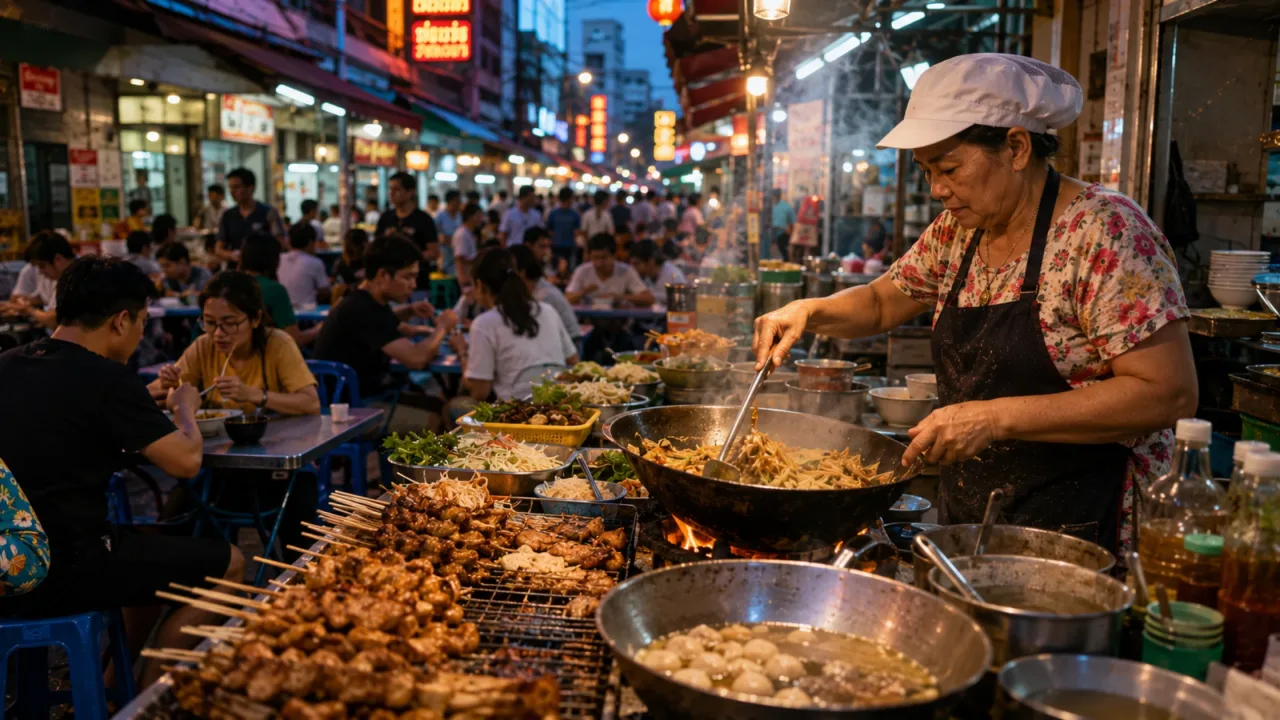
That repetition is part of what makes the food taste consistent. A vendor who has grilled the same skewers for twenty years tends to know exactly how long to hold them over the coals, and that kind of muscle memory rarely shows up on a menu description.
Vendors often perfect a single dish rather than a full menu
Recipes pass down through families over decades
Fast service reflects a city built around constant movement
Shared tables encourage strangers to eat side by side
Small daily routines matter more than occasional big meals
Practical Tips Before Exploring Bangkok's Street Food
A little preparation makes street food exploration smoother and more comfortable, particularly for those visiting Thailand for the first time and still adjusting to the pace, heat, and unfamiliar layout of a busy Bangkok street.
Carry small cash notes for faster, easier transactions
Drink bottled or filtered water rather than tap water
Choose stalls with high turnover and fresh ingredients
Don't be afraid of plastic stools set up on pavements
Ask for spice levels, since Thai chili can be intense
Keep tissues or wet wipes available for outdoor eating
Visit markets in the evening, when most stalls are active
Respect local dining customs, including queueing and shared seating
Conclusion
Bangkok's street food culture resists being reduced to a single "best" dish or must-try stall. It reveals itself more through wandering, watching a vendor work a wok, listening to the clatter of a night market, and noticing how neighbourhoods each carry their own rhythm. Understanding the city through its street food means paying attention to routine as much as flavour, one plate at a time. The dishes matter, but so do the small daily habits that keep the stalls running long after most kitchens elsewhere have closed for the night.
Frequently Asked Questions
Generally, yes, particularly at stalls with high customer turnover and freshly cooked ingredients. Choosing busy vendors, avoiding lukewarm pre-cooked items, and drinking bottled water reduces most common risks for visitors.
A full day of street food, including several meals, snacks, and drinks, typically costs between $8 and $15 per person, depending on the number of stops and dish choices made along the way.
Yaowarat, Bangkok's Chinatown, offers a dense concentration of stalls covering noodles, seafood, and desserts within walking distance, making it a practical starting point for visitors new to the city's food scene.
Rarely. Most stalls operate on cash only, and small notes are preferred since vendors often struggle to break larger bills during busy periods, particularly at night markets.
Early evening through late night tends to offer the widest variety, as more stalls open after sunset. Mornings suit specific dishes like grilled pork skewers and rice porridge instead.