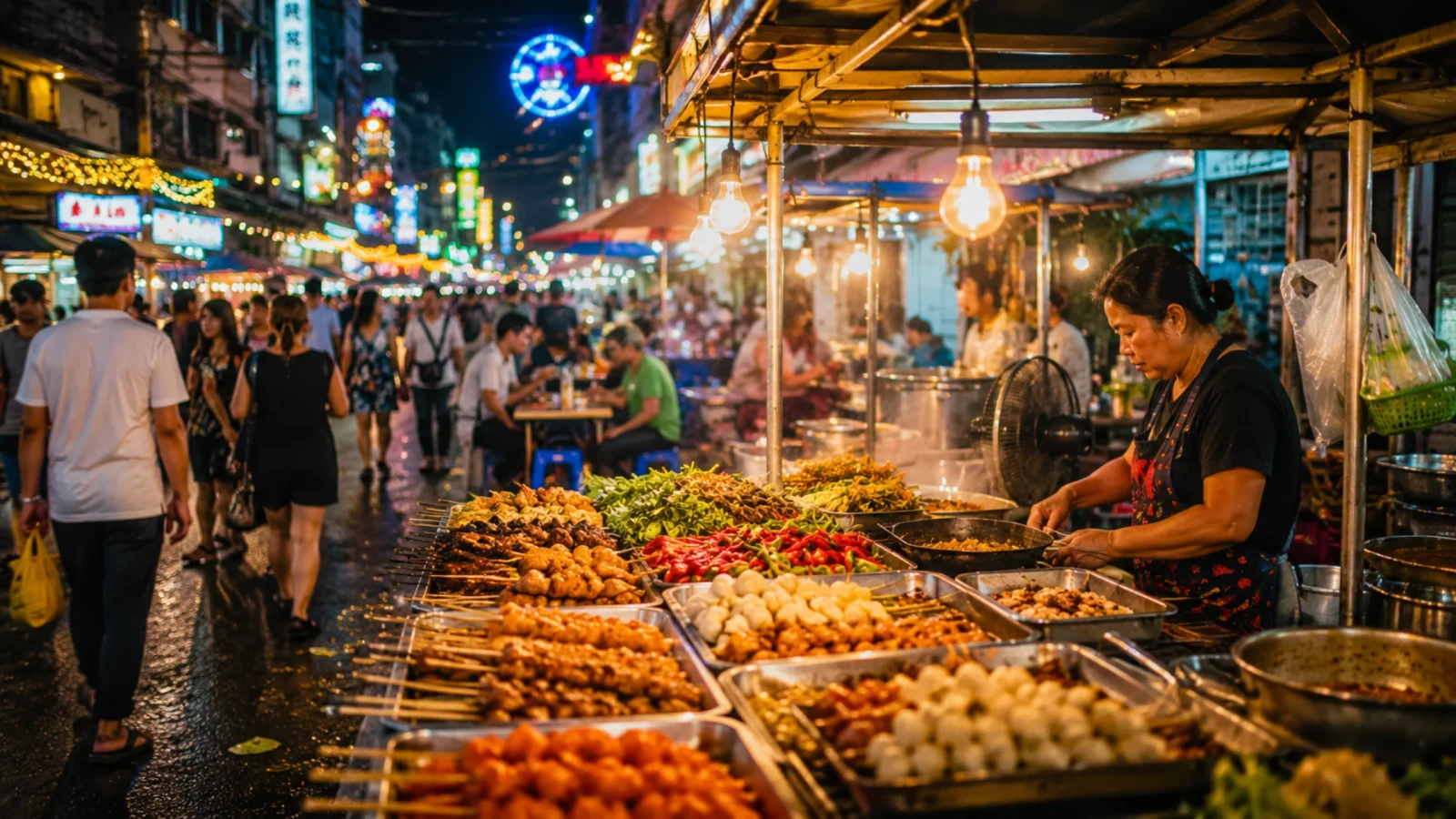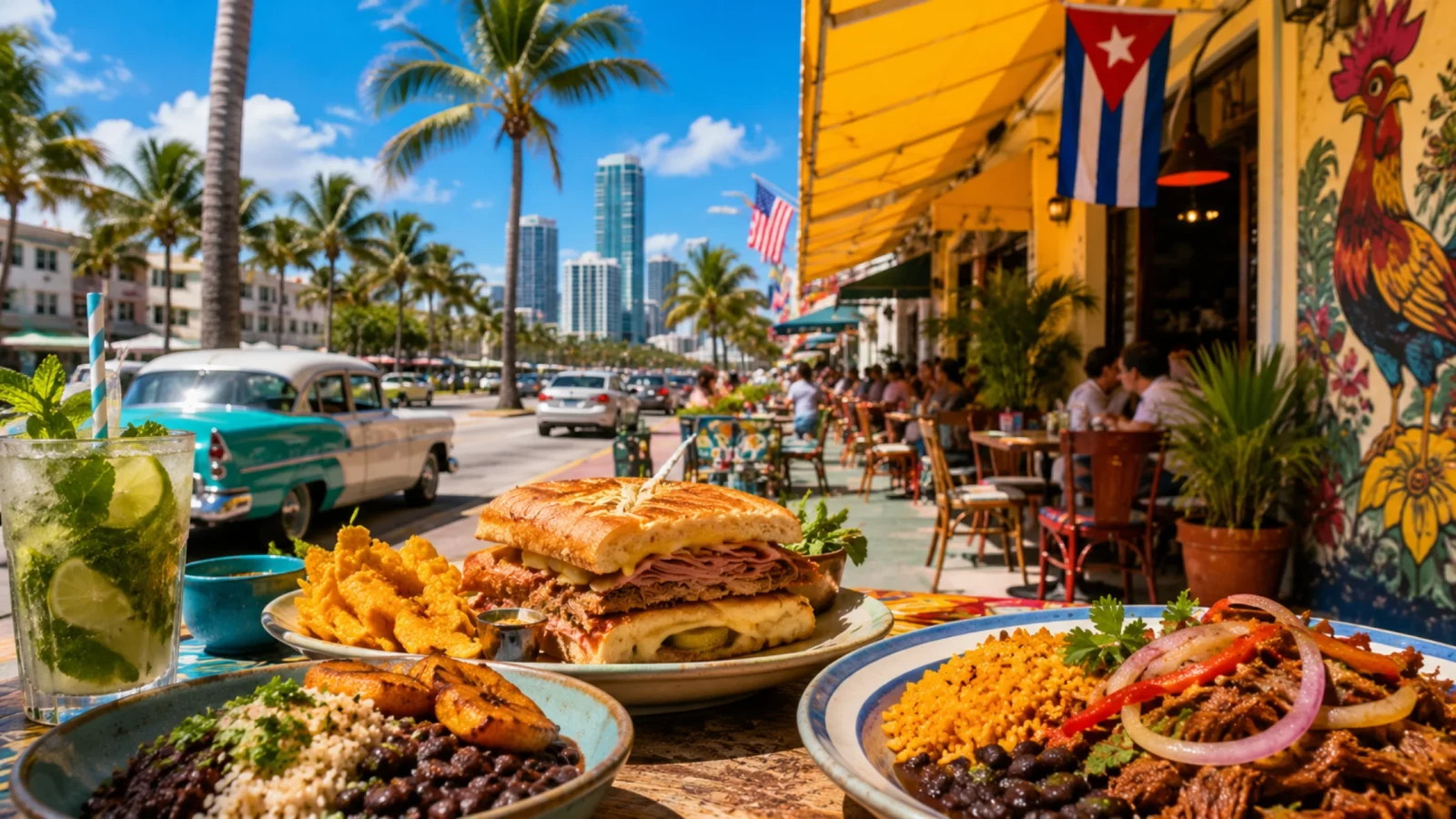
Step off a bus in certain corners of Miami before eight in the morning, and the smell arrives before anything else does. Sugar-scorched coffee, warm dough, and something with garlic and citrus are already going on a stove somewhere nearby. A radio plays son cubano through an open doorway. Someone is filleting a mango on a folding table. This is not a postcard version of the city; it's Tuesday.
Miami food culture didn't happen by accident, and it didn't happen in a single decade either. It was built by generations of Cuban and Latin American families who arrived with recipes, not much else, and turned corner cafés into institutions. Grilled meats, tropical fruit stands, and pressed sandwiches became shorthand for a whole city's personality.
Beaches and nightlife get the postcards. The food gets the loyalty. And once someone actually sits down at a Formica counter with a cortadito and a warm croquette, they start to understand why.
Why Cuban Influence Is Everywhere in Miami
Miami's relationship with Cuba goes back further than most visitors assume, shaped by geography, politics, and waves of migration that reshaped an entire city's palate. This overview traces how Cuban food in Miami moved from home kitchens to street corners to the center of local identity.
Miami and Havana sit fewer than 230 miles apart, and for much of the twentieth century, the two cities traded more than tourists; they traded people, ideas, and dinner tables. The real turning point came after the Cuban Revolution in 1959, when hundreds of thousands of Cubans fled the island and settled in South Florida, many with nothing more than a suitcase and a family recipe committed to memory. They didn't arrive to build a tourist attraction. They arrived to survive, and cooking became one of the fastest ways to do that. Small cafés opened along Calle Ocho and beyond, run by people who had once owned bakeries or worked as line cooks back home.
Coffee windows appeared on street corners because standing outside with a tiny cup and a cigar was simply how things were done back in Cuba, and that habit never left. Over decades, these small businesses stopped being "immigrant restaurants" and became Miami restaurants, full stop. Second and third generations kept the recipes but updated the spaces, and today it's almost impossible to separate Miami's identity from its Cuban roots. Ask a longtime Miami resident where to eat, and there's a strong chance the answer starts with a Cuban bakery. That's not nostalgia. That's just how the city eats.
Little Havana and the Heart of Cuban Food Culture
If Miami food culture has a single home address, it's Little Havana, a neighborhood where language, music, and food all move at the same unhurried, unmistakably Cuban rhythm. For anyone chasing Little Havana food, this is where the list begins.
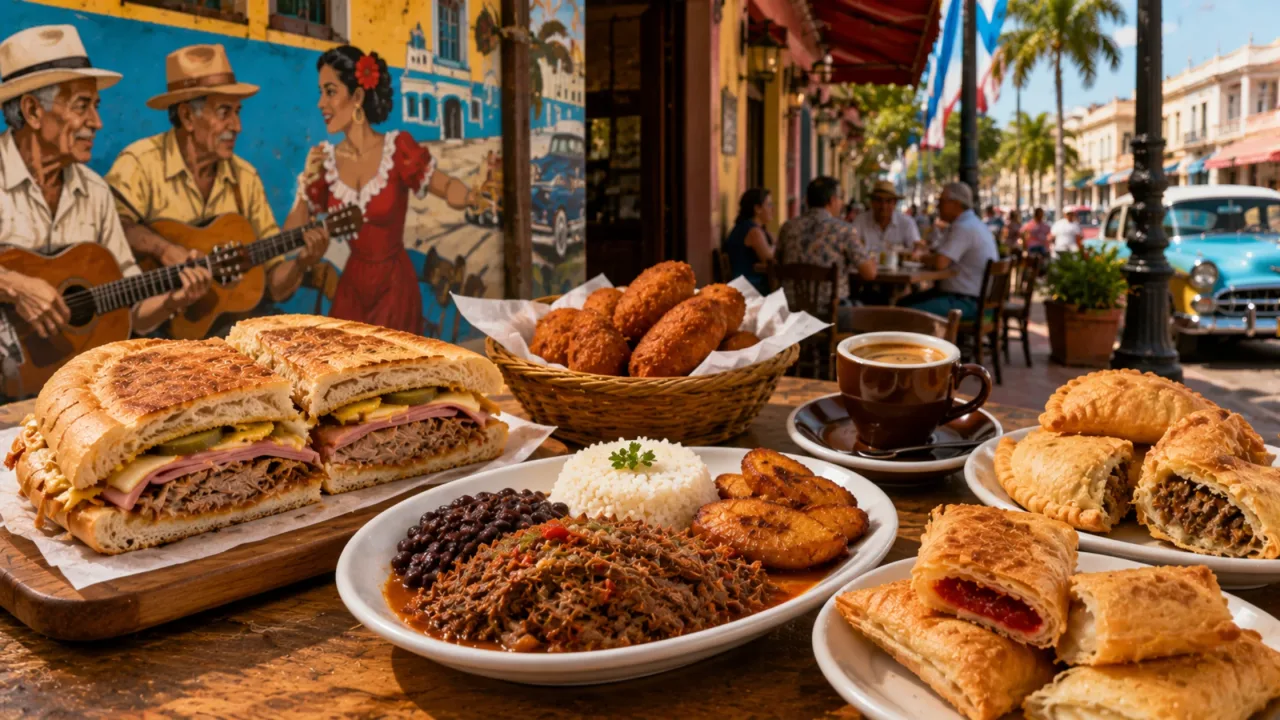
Cuban sandwich: Ham, roast pork, Swiss cheese, pickles, and mustard pressed between Cuban bread until the whole thing crackles. Miami Cuban sandwiches are pressed hot and hard, giving the bread a shatter-crisp edge that separates a good one from a great one. Locals argue endlessly about which bakery does it best, and that argument is half the fun.
Ropa vieja: Shredded beef slow-cooked in a tomato-based sofrito until it falls apart at the touch of a fork. The name translates to "old clothes," a nod to the way the meat shreds into ragged strips. It's usually served with white rice, black beans, and sweet plantains, and it's often the dish that converts first-time visitors into regulars.
Croquetas: Small, breaded, deep-fried cylinders packed with ham or chicken and a béchamel-style filling that stays molten in the middle. They're cheap, they're everywhere, and they disappear fast at any gathering. Most Cuban bakeries sell them by the dozen because nobody orders just one.
Empanadas: Handheld pastries filled with seasoned beef, chicken, or cheese, then baked or fried until golden. While technically found across Latin cuisine, Miami's Cuban bakeries put their own stamp on the dough, often flakier and less sweet than versions from other countries. They're a reliable grab-and-go option on busy mornings.
Cafecito (Cuban coffee): A shot of intensely sweet, syrupy espresso that fuels much of the neighborhood before nine a.m. Cafecito culture isn't really about caffeine, it's about the pause. Neighbors gather at walk-up windows, trade gossip, and drink it standing up, usually in under two minutes.
Pastelitos: Flaky puff pastry filled with guava, cream cheese, guava and cheese together, or savory options like beef. They're breakfast, dessert, and afternoon snack all at once, and no self-respecting Cuban bakery box comes without at least a few tucked inside.
Latin American Flavours That Expanded Miami's Food Scene
Cuban food may have laid the foundation, but Latin American cuisine in Miami is a much bigger story, shaped by newer waves of migration from across the continent. Each community brought techniques and dishes that now sit comfortably beside Cuban classics rather than competing with them.
Colombia: Colombian bakeries introduced arepas, pandebono, and buñuelos to Miami's breakfast rotation, along with hearty bandeja paisa plates that show up at family-run lunch spots. Colombian coffee culture also runs deep here, often served alongside Cuban cafecito on the same menu without much fuss.
Venezuela: Venezuelan arepas, split and stuffed rather than topped, carving out their own devoted following, especially in areas like Doral. Cachapas, sweet corn cakes folded around cheese, and tequeños, fried cheese sticks, rounded out a street-food style that's become a Miami staple in its own right.
Puerto Rico: Puerto Rican influence shows up in mofongo, a mashed and fried plantain dish often loaded with garlic, pork, or shrimp. Alcapurrias and pastelón also appear on menus that blend easily with Cuban staples, since the culinary overlap between the islands runs naturally deep.
Peru: Peruvian restaurants brought ceviche to a city already obsessed with fresh seafood, along with lomo saltado and anticuchos grilled over open flame. The citrus-forward, spice-layered style of Peruvian cooking gave Miami's food scene a sharper, brighter edge.
Dominican Republic: Dominican kitchens contributed mangu, a mashed plantain breakfast dish, along with slow-stewed sancocho and tostones fried to a deep golden crunch. Dominican bakeries also brought their own take on flaky pastries, distinct enough to spot next to Cuban versions.
Nicaragua: Nicaraguan influence appears in gallo pinto, grilled meats served with curtido slaw, and vigorón, a street-food plate of yuca, pork, and cabbage. It's a quieter presence than some other communities, but a loyal one, especially in pockets of Sweetwater and West Miami.
Neighbourhoods That Tell Miami's Food Story
Miami food neighborhoods each carry their own accent, and walking from one to the next can feel like crossing a border without ever leaving the city. Here's what sets the major food-driven neighborhoods apart from one another.
Little Havana: Dominated by Cuban culture, this is where cafecito windows, cigar shops, and domino games share the same block. First-time visitors should try a Cuban sandwich and a colada to split among friends. The atmosphere is loud, warm, and unapologetically nostalgic, with music spilling from open storefronts most afternoons.
Hialeah: Heavily Cuban with a strong working-class identity, Hialeah feels less curated and more lived-in than Little Havana. Visitors should seek out a proper Cuban breakfast : pan con mantequilla and a cortadito : from a no-frills local spot. The pace here is unhurried, and the restaurants often look plain from the outside, which is usually a good sign.
Wynwood: Known more for street art than tradition, Wynwood still carries strong Latin American influence through modern, design-forward restaurants. Ceviche and Venezuelan small plates pair oddly well with the neighborhood's mural-covered walls. The atmosphere skews younger, louder, and more experimental than the rest of the list.
Doral: Sometimes nicknamed for its Venezuelan population, Doral is the place to find arepas, cachapas, and tequeños done exactly right. The area feels suburban and polished, with strip-mall restaurants that quietly outperform their appearance. Family groups and long lunches define the vibe here more than nightlife does.
Allapattah: A working-class neighborhood with a growing Dominican and Puerto Rican presence, Allapattah rewards visitors who try mofongo or mangu at a family-run counter. It's less polished than nearby areas, and that's exactly the appeal. The atmosphere is unpretentious, practical, and refreshingly free of tourist markup.
What Travelers Should Eat During a Short Visit
For anyone with only a day or two, prioritizing a handful of traditional Cuban dishes and their Latin American counterparts will do more than any long itinerary could. These are the dishes and drinks worth building a short trip around.
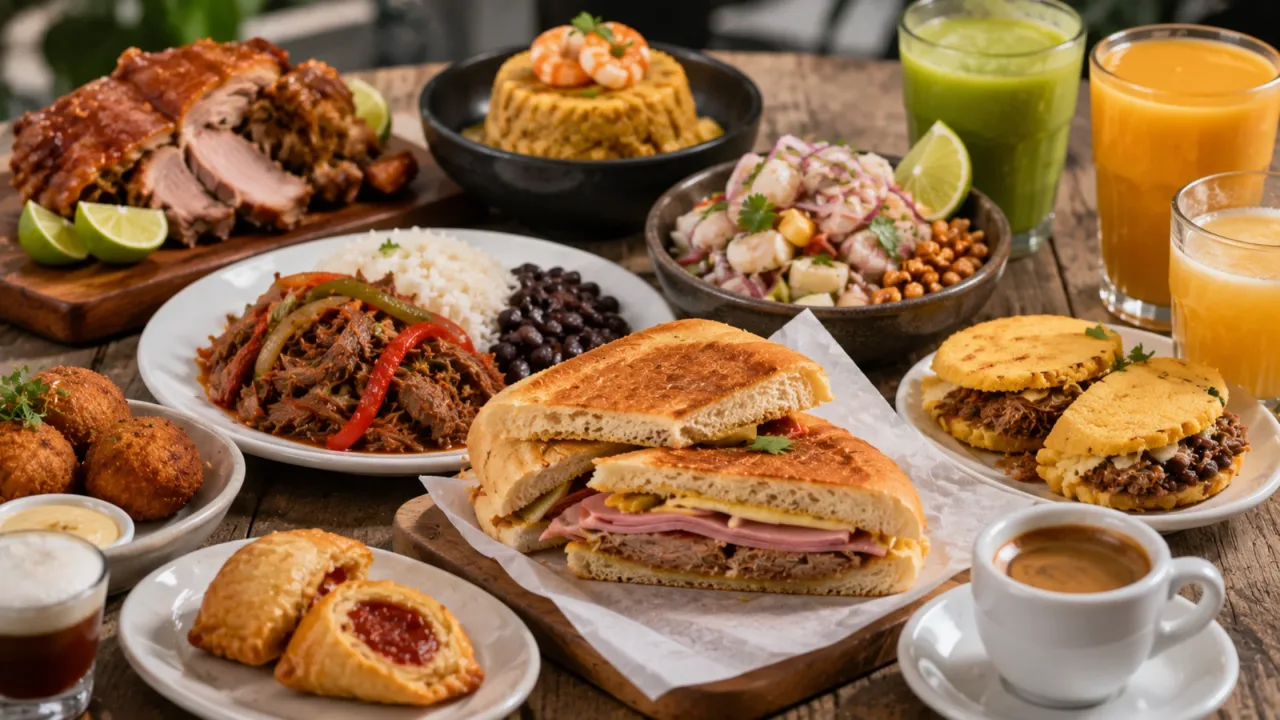
Cuban sandwich: The single most recognizable dish in the city, best eaten warm and pressed, ideally from a bakery rather than a chain restaurant.
Ropa vieja: A comforting, saucy shredded beef dish that pairs perfectly with rice and beans, and it reheats well if there's any left over.
Lechon: Slow-roasted pork, often marinated in citrus and garlic, that shows up at family gatherings and no shortage of neighborhood restaurants.
Croquetas: Small, crisp, and dangerously easy to order a dozen of, especially alongside a mid-morning coffee.
Pastelitos: A flaky, guava-filled pastry that works equally well as breakfast or dessert, sold at nearly every Cuban bakery in town.
Cafecito: A short, sweet, strong shot of espresso that functions as both a drink and a social ritual across Cuban Miami.
Arepas: Venezuelan and Colombian versions differ slightly, but both offer a warm, satisfying corn-based base for cheese, meat, or beans.
Ceviche: Bright, citrus-cured seafood, usually a Peruvian specialty, that brings a lighter contrast to heavier Cuban plates.
Mofongo: Fried, mashed plantains packed with garlic and often stuffed with pork or shrimp, a Puerto Rican dish with serious staying power.
Fresh tropical juices: Guarapo, mamey, and guanabana juices offer a sweet, distinctly tropical refresher between meals, sold from carts and small stands throughout the city.
Practical Tips for Enjoying Miami's Cuban and Latin Food Scene
Navigating Miami's food scene well has less to do with research and more to do with a handful of local habits. These small adjustments make meals smoother, cheaper, and considerably more authentic.
Best time to visit Little Havana: Mornings and early afternoons tend to be livelier and cooler, with cafés at their busiest and most social. Evenings are fine too, but the neighborhood's daytime rhythm is where the real character shows.
Cash vs card: Many smaller, family-run spots still prefer cash, even if they technically accept cards. Carrying some cash avoids awkward moments and speeds up ordering at walk-up coffee windows.
Portion sizes: Traditional Cuban and Latin dishes tend to arrive generously portioned, often enough for two people to share comfortably. Ordering one entrée and a side to split is rarely a bad idea.
Sharing dishes: Family-style eating is the norm rather than the exception, especially with items like croquetas, pastelitos, and tostones. Ordering a small spread rather than individual plates usually leads to a better meal.
Ordering coffee like a local: A cafecito is a shot, not a full cup, and it's meant to be drunk quickly, often standing at a walk-up window. Asking for a "colada" gets a larger portion meant for sharing among several small cups.
Tipping expectations: Standard American tipping norms apply at most sit-down restaurants, generally between eighteen and twenty percent. Walk-up coffee windows don't always expect tips, though leaving spare change is appreciated.
Avoiding tourist-only restaurants: Restaurants with multilingual menus, aggressive street promoters, or prices noticeably higher than neighbors are usually built for visitors rather than locals. A quieter spot with handwritten specials and an older regular crowd is almost always the better bet.
Conclusion
Miami's food culture is really a running conversation between generations of Cuban and Latin American families, one that plays out daily in bakery lines, coffee windows, and family-run kitchens. Every neighborhood adds its own accent, but the through-line stays the same: food as memory, food as welcome, food as identity. Travelers who skip past the beaches and head straight for a cafecito counter or a plate of ropa vieja end up with a far richer sense of the city. Miami doesn't just serve its heritage, it lives inside it, one warm sandwich and one strong coffee at a time.
Frequently Asked Questions
The Cuban sandwich is the most recognized dish, pressed hot with ham, pork, cheese, and pickles. Ropa vieja and croquetas are close contenders, especially among longtime residents and regular visitors.
Yes, Little Havana remains the most concentrated and authentic center for Cuban food in Miami. Coffee windows, bakeries, and family-run restaurants make it essential for anyone exploring the city's food culture.
Cafecito is a small, intensely sweet shot of Cuban espresso, typically drunk quickly at a walk-up window. It's as much a social ritual as it is a caffeine fix, often shared among neighbors and coworkers.
It depends on the cuisine; Doral leans Venezuelan, Hialeah leans deeply Cuban, and Allapattah offers strong Dominican and Puerto Rican options. Each neighborhood specializes rather than competes directly.
Absolutely. Bakeries, walk-up coffee windows, and family-run counters offer some of the most authentic dishes at low prices. Sandwiches, croquetas, and pastelitos rarely cost more than a few dollars each.