Immigrating to the U.S. can be confusing, but it's important to understand the system to make your trip successful. Traveling to America for leisure, learning, or work? Getting a USA visa is the first step. This guide is written for anyone who is planning to travel to the USA, study, or work there. Further in this, you will find detailed information on the requirements for the visas, the step-by-step application process, the recent 2026 visa fee structure, and the main differences between the types of visas. When you are planning your journey or booking your flights, the right USA visa enables you to travel legally and helps you in reaching your dream destination.
What Is a USA Visa?
The USA America visa is an official stamp that an embassy or consulate stamps into your passport. It indicates that a consular official has reviewed your application and found that you qualify for a visa and can travel to the United States in the near future. All foreign nationals who are not U.S. citizens or lawful permanent residents must obtain a visa in order to be admitted to the United States.
Visa-Exempt Countries and the Visa Waiver Program (ESTA)
Citizens of over 40 participating nations can travel to the U.S. for tourism or business for up to 90 days without obtaining a traditional visa. These are often colloquially known as America free visa countries, though travelers from these nations must still obtain an approved Electronic System for Travel Authorization (ESTA) before their departure.
What is the Difference Between a Visa and ESTA/Entry Permit
An ESTA is not a visa; it is a pre-screening entry authorization specifically for visa-exempt nationals. Conversely, an entry visa for USA requires a formal application process, biometric appointments, and a face-to-face interview. It is also important to note that a visa only allows you to travel to a U.S. port of entry. The Customs and Border protection officers who are there at the border, can only help you approving your entry permit (I-94) which mentions the length of your stay.
What are the different types of USA visas?
Non-Immigrant Visas (Tourist, Business, Student, Work)
This stamp denotes that your Visa has been approved by the consular official and you has been qualified for the purpose to entering the U.S. Make sure that every foreign national who is a citizen of a different country should get a visa to enter the U.S. as well.
Immigrant Visas (Green Card-Based)
This visa is for the ones who wish to live in the U.S and work there permanenetly. Obtaining this visa is the final step before arriving in the U.S. to receive Lawful Permanent Resident status (commonly known as a Green Card).
Transit Visas
Transit visas are designed strictly for travelers who must pass through the United States en route to another foreign destination. It ensures they can legally lay over in a U.S. airport but does not permit extended sightseeing.
USA Visa Eligibility Requirements
General Eligibility Criteria
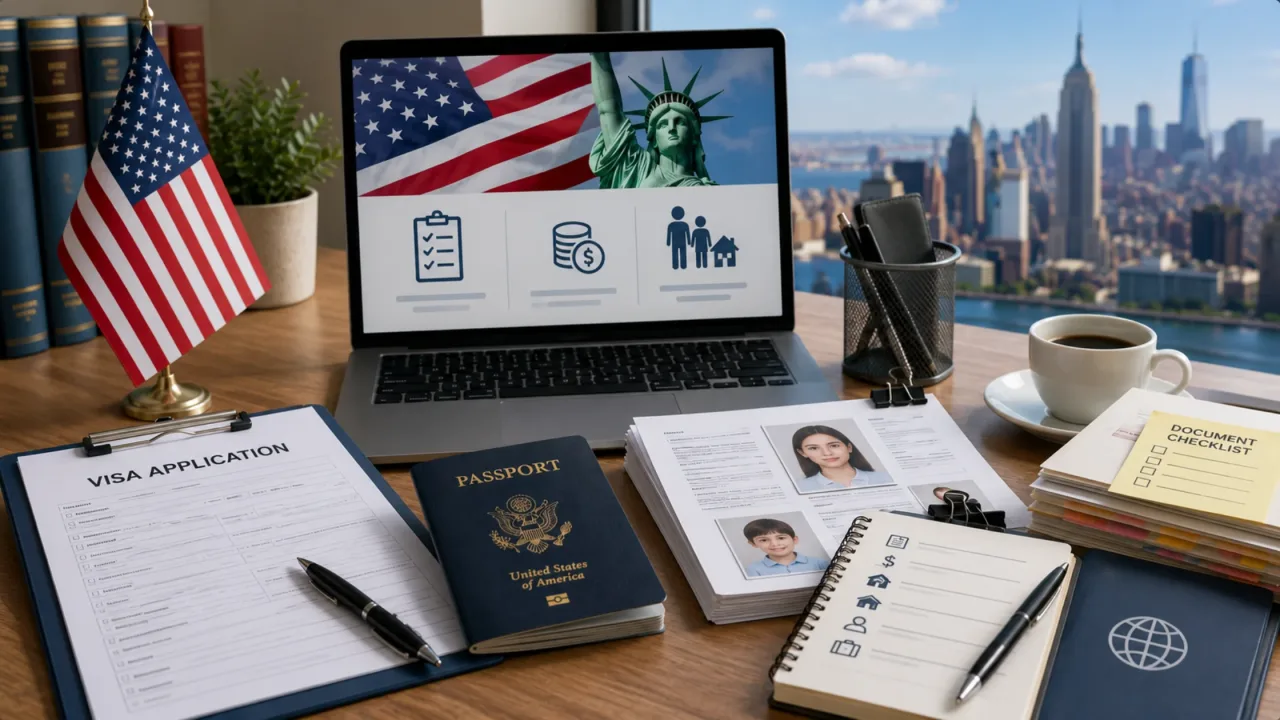
Applicants for USA America visa must possess valid passport, no criminal record and should follow all U.S. immigration rules and regulations. In addition, if applicable, you will need to demonstrate medical fitness for travel as part of your visa application (e.g. immigrant visa applications).
Financial Requirements and Proof of Funds
A U.S. government official needs to be sure that you won't turn into a public charge. You need to show that you have enough personal money or have good organized sponsors to cover the entire travel, residence, medical and living expenses for your period of stay.
Ties to Home Country (Non-Immigrant Intent)
Section 214(b) of the Immigration and Nationality Act presumes that the majority of temporary visa applicants are intending immigrants. This presumption needs to be actively challenged by having strong ties to your home country, owning property, stable employment, or having immediate family making it clear that you will be returning home after your visit.
Documents Required for a USA Visa Application
Passport and Photograph Requirements
Must have a valid passport for at least six months after you arrive in the United States. In addition, you must have a recent color photograph of yourself that is a plain white background of 2x2 (51x51mm) inches, which must also conform to the strict U.S. Department of State facial and size specifications.
DS-160 Confirmation Page
The mandatory online application for non-immigrant visas is the DS-160. Once it is filled, it needs to be printed as a confirmation page to be taken to the biometric and consular appointments.
Financial and Employment Documents
Bring the latest bank statements (usually within 6 months), the past 3 years of income tax returns, and an employment letter confirming your salary, job, and approved leave of absence.
Invitation Letters/Sponsorship Documents (if applicable)
To get your application approved, you can create a timeline for the things that you will be doing. For example, visiting family, attending a corporate meeting, or attending a conference. This invitation letter wil help in clarifying the timeline.
Additional Documents by Visa Category
An invitation letter explaining about the funds and time you'll be spending at your family's home, a corporate meeting, or a conference can take a big load off of your application.
Students are required to have an original I-20 issued by the university, and temporary workers are required to have an approved I-797 petition from USCIS that shows employment authorization.
How to Apply for a USA Visa (Step-by-Step Process)
The USA America visa application process is quite structured and systematic.
Step 1 – Determine the Correct Visa Category
Understand and analyze which visa you need for your visit. Keep in mind to complete all the checkboxes made for the criteria of the application before making the payment.
Step 2 – Complete the DS-160 Online Form
Make sure to fill out the original details on the DS-160 without any fake information. Be sure to save your application ID regularly, as the system times out after 20 minutes of inactivity.
Step 3 – Pay the Visa Application Fee
Make the nonrefundable application fee. Take a note of the receipt number, you will need this to unlock the appointment calendar.
Step 4 – Schedule Your Visa Interview
You will normally have to make two separate appointments, the first at a visa application center for biometrics (fingerprints and photograph) and the second at the embassy itself for the actual interview.
Step 5 – Prepare for the Visa Interview
Collect all necessary original documents and check DS-160 answers. Make sure that your responses in the interview match exactly with the information you provided on the web.
Step 6 – Attend the Interview at the U.S. Embassy/Consulate
Be on the scene 15 minutes before the officer's arrival, answer questions, and only show documents if requested. Please note that the waiting time for an appointment at the American Embassy in your country could be from a few weeks to several months, depending on the backlog of the embassy in your country.
Step 7 – Track Your Visa Application Status
After the interview, you will want to check status of visa USA online to know exactly when your passport is printed and ready for pickup or courier delivery
To do so, visit the CEAC Visa Status Check portal and enter your DS-160 information to see if your visa is issued. If it shows issues, you can log into the official visa appointment portal to track the delivery or the pickup status of the passport.
USA Visa Fees and Charges
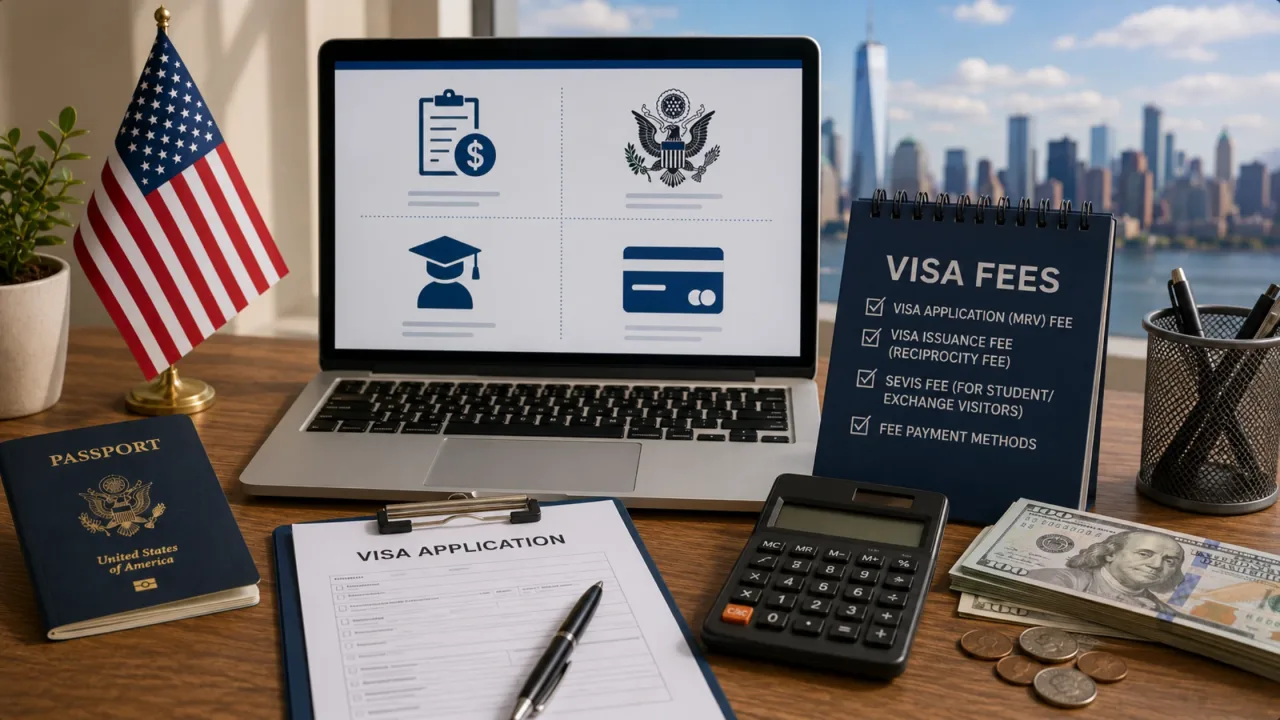
With recent changes to regulations, you’ll need to budget carefully for America visa fees and get an idea of the overall cost. You can find that information mentioned below:
Visa Application (MRV) Fee
The base Machine Readable Visa (MRV) fees for standard non-petition visas (tourist, business, and student visas) is $185. The base MRV fees for most petition-based work visas is $205.
(Note: Beginning in 2026, a new $250 Visa Integrity Fee is required for most non-immigrant visas, pushing total baseline costs to approximately $435.)
Visa Issuance Fee (Reciprocity Fee)
Depending on your nationality, you might owe an extra issuance fee if your home country charges U.S. citizens a similar fee for visas.
SEVIS Fee (For Student/Exchange Visitors)
The SEVIS fee is a very important fee to be paid for F-1 and J-1 applicants. It costs $350 for the students and $220 for most exchange visitors. The fee should be paid online at the official website. It can be done using the forms I-20 or DS-2019 details at least three days before your visa interview. Kindly make sure to get the receipt printed.
Fee Payment Methods
Payments can usually be made electronically via NEFT, IMPS, electronic funds transfer (EFT), or in cash at designated partner banks in your home country.
USA Visa Processing Time
Following a successful interview, standard processing takes about 3 to 10 business days for your passport to be stamped and returned to you via courier.
Expedited/Emergency Appointment Processing
If you have a life or death medical emergency, a critical business need, or a university start date approaching, you can request an expedited emergency interview slot through the scheduling portal.
Factors That Can Delay Visa Processing
If the consulate needs to do more background checks or you need to provide more documents, they will put your application into administrative processing under section 221(g), which can delay your application for weeks or months.
USA Visa for Special Categories
Student Visa (F-1/M-1) Requirements
To get a student visa USA you will need an official acceptance (I-20) from a SEVP-approved academic institution and proof of funds to cover your first year’s tuition and living expenses.
Work Visa (H-1B, L-1, O-1) Requirements
Securing a work visa USA requires direct employer sponsorship. If you are pursuing specialized jobs visa USA pathways, an American employer must first file and receive approval for an I-129 petition from USCIS before you can apply at the consulate.
Business/Tourist Visa (B-1/B-2) Requirements
To get this visa, make sure that your trip will last only for a few days/weeks. You will do any kind of work that is related to U.S. employment, and you should have enough funds in your bank account to support yourself during the stay.
Family-Sponsored Visa Requirements
U.S. citizens and lawful permanent residents can sponsor certain relatives for immigration. Processing wait times depend heavily on the family preference category and annual visa caps.
K-1 Fiancé(e) Visa Requirements
Aimed at foreign fiancé(e)s of U.S. citizens traveling to the U.S. with the explicit intent to get married within 90 days of arrival.
Common Mistakes to Avoid During USA Visa Application
Applying for a USA America visa can be highly unforgiving if you make basic administrative errors.
DS-160 Form Errors
If the names don't match, there are typos in passport numbers, or incorrect travel dates, you can be denied immediately and redo the process.
Incomplete or Inconsistent Documentation
If you are bringing financial documents not matching the income you've stated in your DS-160, there are instant red flags about your credibility.
Interview Preparation Mistakes
The memorized answers and complicated responses or argumentation with the consular officer are usually followed by a hasty rejection.
How to Track Your USA Visa Application Status
After applying, staying updated on your passport's location is crucial.
Online Status Check Methods
You can easily perform an America visa tracking check via the Department of State’s CEAC (Consular Electronic Application Center) website. To properly USA check status visa, enter your interview location and your DS-160 barcode number. Alternatively, an America visa status check can be done directly through the local visa application portal where you initially scheduled your appointment.
What Each Status Update Means
Administrative Processing: This status means that your case is being evaluated or maybe a background check is needed.
Issued: The visa is finally printed, and it is getting to be dispatched.
Refused: This means that due to some reason your visa was denied. This also means that tracking your American visa status regularly will help you to get away with the missed communication from the embassy.
How to Strengthen a Future Application
Do not make a mistake of reapplying immediately, unless your situation or the circumstances have changed. Try harder, get a better job, acquire more assets, or make sure that your documents are ready to present a stronger case.
Types of United States of America Visas
To navigate the immigration system efficiently, you must deeply understand the United States of America visa types. The U.S. government issues dozens of specific visas based strictly on traveler intent.
Tourist Visa (B-2)
The United States of America tourist visa is specifically designed for leisure, tourism, medical treatment, and visiting friends or family. It is strictly temporary and does not allow for any form of employment or long-term academic study.
Business Visa (B-1)
Designed for short-term business travelers who are going to attend conventions, negotiate contracts or meet with business associates. It applies only to business activities that don't include a direct salary from a U.S. source.
Student Visa (F-1 & M-1)
Academic students pursuing studies at universities, colleges, or high schools are eligible to receive an F-1 visa. Students who are enrolled in vocational or any other recognized non-academic program are only eligible for an M-1 visa. In both types, it is essential to maintain full-time enrollment.
Exchange Visitor Visa (J-1)
J-1 visa is designed for those who have been approved to participate in work and study-based exchange visitor programs. This general category encompasses au pairs, camp counselors, the researcher or the host scholar with a teaching associate coming to advance cultural exchange.
Work Visa
An America visa work category encompasses multiple distinct visas. The H-1B is for specialty occupations requiring degrees, the L-1 is for intracompany transferees (managers or specialized knowledge employees), and the O-1 is for individuals with extraordinary abilities in their field. All require prior employer sponsorship.
Transit Visa (C-1)
Aimed at travelers whose sole reason for landing in the United States is to transit to an onward international destination. If you wish to leave the airport and sightsee during a long layover, you must possess a B-2 visa instead.
Crew Visa (D)
Reserved for individuals working on board commercial sea vessels or international airlines operating within the United States. Flight attendants and ship crew members often apply for a combined C-1/D visa.
Immigrant Visa
An immigrant visa is a type of visa that lets foreign nationals permanently move to the United States. Visa holders are then issued a Permanent Resident Card (Green Card) when they cross the border with this visa.
Family-Sponsored Visa
A highly utilized subset of immigrant visas, these are issued to immediate relatives (spouses, unmarried minor children, parents) of U.S. citizens, as well as preference categories like siblings or adult married children.
Employment-Based Visa
These immigrant visas (categorized from EB-1 through EB-5) allow individuals to gain permanent residency based on their elite professional skills, significant capital investments in the U.S. economy, or specialized work experience. Before you book your travel America visa appointment for an EB category, ensure your employer or sponsor has completed all USCIS prerequisites.
Conclusion
To be successful in securing a USA America visa, a lot of patience, attention to detail and insight into federal immigration laws is required. From selecting the appropriate category that matches your intent to carefully preparing for the consular interview, every single step matters. If you are prepared, document honestly and follow the current guidelines, you can rest assured that your USA America visa will be granted and you will be on your way to the United States.
Frequently Asked Questions
U.S. citizens do not need a visa to travel to or enter the United States. A valid U.S. passport is sufficient for travel to all 50 states, Washington, D.C., and U.S. territories.
Yes, the U.S. is issuing visas, but processing is currently paused for nationals of specific countries and at a few specific embassies.
You only need to pay the $250 fee if you are required to apply for a U.S. nonimmigrant visa. This mandatory charge, the "Visa Integrity Fee", is levied on top of standard visa application fees.
The cost of a U.S. visa depends on the specific category, with standard tourist, business, and student visas costing $185. Work and investment visas range from $205 to $315, while immigrant visas range from $205 to $345. The cost of the visa differs and depends on the particular type. For example, standard tourist, business and student visas cost $185. Visas for work and investments cost from $205- $315. And the immigrant visa cost from $205-$345.
There is no single "new" comprehensive immigration bill; rather, U.S. immigration policy is currently dominated by massive border enforcement funding and conservative legislative pushes.