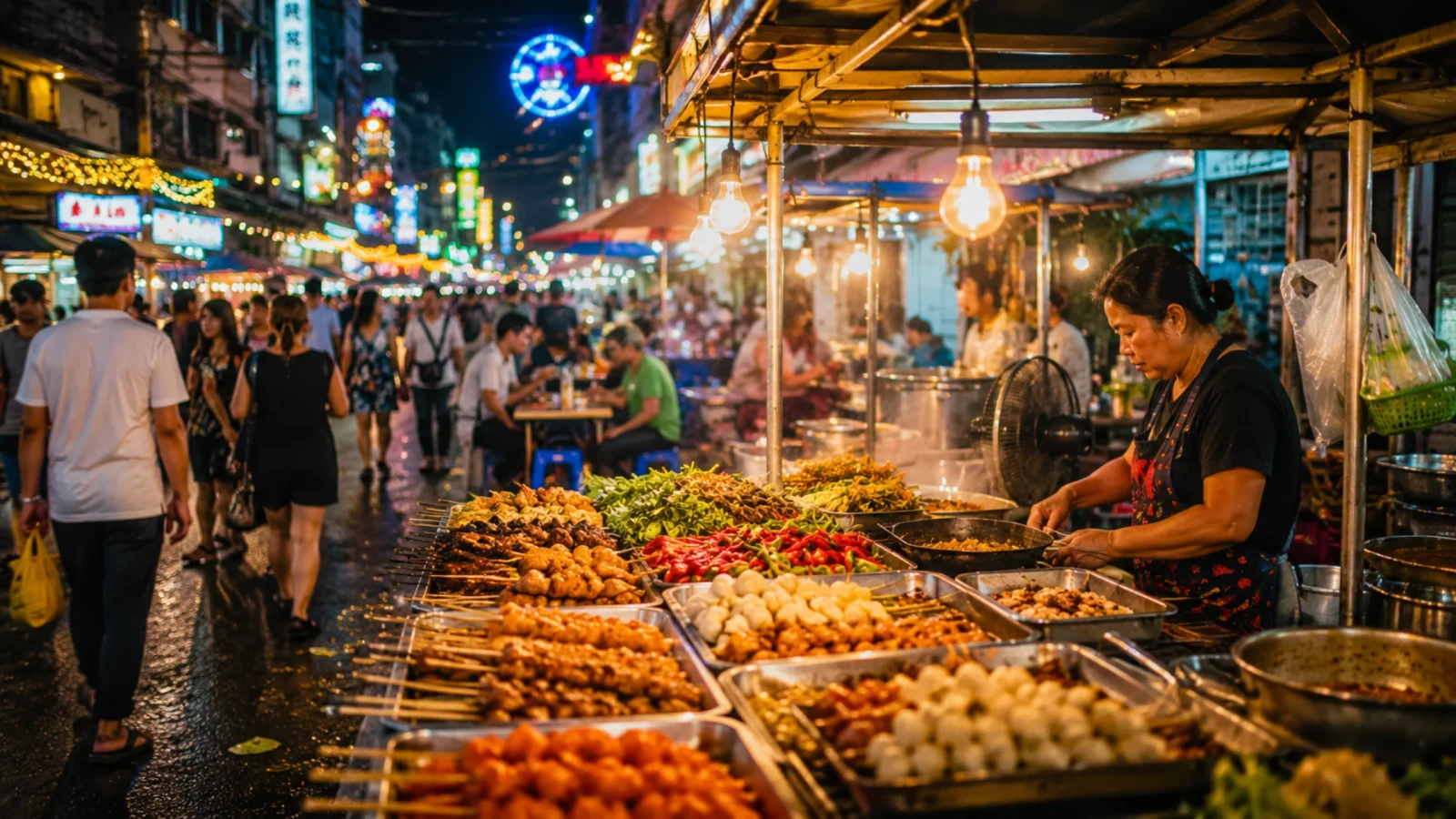
Steam rises off a wok before the sun fully clears the rooftops, and somewhere nearby, a vendor is already pounding green papaya in a clay mortar with the kind of rhythm that comes from doing it ten thousand times. Bangkok wakes up through its food stalls, not its skyline.
Food is not a side attraction here, it's the organizing principle of the whole city. Meals happen on plastic stools, in air-conditioned malls, and everywhere in between, often within the same afternoon.
For anyone trying to figure out what to eat in Bangkok before landing, ten dishes offer the clearest, most rewarding entry point. They won't cover everything the city serves, but they'll cover enough to make the rest of the trip make sense.
Pad Thai
Stir-fried rice noodles, egg, tofu, and shrimp come together in a tamarind-based sauce that balances sour and sweet in equal measure. It's often considered a gateway dish for anyone new to Thai cuisine.
What it is: Pan-fried rice noodles tossed with protein and egg
Key ingredients: Rice noodles, tamarind paste, fish sauce, palm sugar, crushed peanuts
Flavour profile: Tangy, slightly sweet, with a savoury backbone
Why it's famous: Adaptable, widely available, and approachable for newcomers to Thai flavours
Where to find it: Street carts throughout the city, especially around Thonglor and old town alleys
Som Tam (Green Papaya Salad)
Shredded unripe papaya gets pounded in a mortar with chilli, lime, and fish sauce until every strand carries the dressing. Peanuts and dried shrimp add crunch and depth.
What it is: A raw salad built around shredded green papaya
Key ingredients: Green papaya, chilli, lime, fish sauce, tomatoes, long beans
Flavour profile: Sharp, sour, and spicy, with occasional sweetness
Why it's famous: A defining flavour of Isaan cuisine, now common across the whole city
Where to find it: Roadside stalls, especially near grilled chicken vendors
Tom Yum Goong
Sour and spicy in the same spoonful, this soup relies on lemongrass, galangal, and kaffir lime leaves simmered with plump shrimp. Chilli paste gives the broth its signature reddish tint.
What it is: A hot and sour shrimp soup
Key ingredients: Shrimp, lemongrass, galangal, kaffir lime leaves, chilli paste
Flavour profile: Sour, spicy, aromatic, occasionally creamy with added milk
Why it's famous: Regarded internationally as a signature representative of Thai cooking
Where to find it: Seafood restaurants and market food courts citywide
Boat Noodles (Kuay Teow Reua)
Named after vendors who once sold this soup from boats along Bangkok's canals, these bowls arrive small and intense, meant to be ordered several at a time. Pork blood thickens the broth into something dark and rich.
Locals often order five or six bowls in one sitting, comparing it to tapas.
What it is: A concentrated noodle soup traditionally sold from canal boats
Key ingredients: Pork or beef, blood broth, morning glory, bean sprouts
Flavour profile: Deep, savoury, slightly spiced, with a thick mouthfeel
Why it's famous: Compact bowls encourage repeat orders and social eating
Where to find it: Victory Monument area and canal-side markets
Pad Kra Pao
Minced pork or chicken gets stir-fried fast and hot with garlic, chilli, and holy basil, then piled over rice with a fried egg on top. It's the dish most Bangkok residents eat on an ordinary weekday.
What it is: Stir-fried minced meat with holy basil over rice
Key ingredients: Ground pork or chicken, holy basil, garlic, chilli, fish sauce
Flavour profile: Spicy, garlicky, and intensely savoury
Why it's famous: A daily staple that represents everyday Thai cooking rather than tourist fare
Where to find it: Nearly every street corner, office canteen, and market stall
Mango Sticky Rice
Ripe mango slices rest beside warm, sweetened sticky rice, finished with a drizzle of coconut cream and a scatter of toasted mung beans. Sweetness here comes from the fruit itself as much as the sugar.
What it is: A seasonal dessert pairing mango with coconut sticky rice
Key ingredients: Sticky rice, coconut milk, palm sugar, ripe mango
Flavour profile: Sweet, creamy, and fruity with a salty coconut finish
Why it's famous: Considered one of Thailand's signature desserts, especially during mango season
Where to find it: Dessert stalls near Chinatown and tourist-heavy districts
Khao Man Gai
Poached chicken sits over rice cooked in chicken fat and garlic, served alongside a ginger-chilli dipping sauce and a bowl of light broth. Simplicity is the entire point.
What it is: Thai-style Hainanese chicken rice
Key ingredients: Poached chicken, garlic rice, ginger, soybean-chilli sauce
Flavour profile: Mild, savoury, with sharp accents from the dipping sauce
Why it's famous: A comfort dish eaten by office workers and taxi drivers alike
Where to find it: Small specialist shops, particularly around Pratunam and Ratchawat
Satay (Moo or Gai Satay)
Marinated pork or chicken skewers get grilled over charcoal until slightly charred, then dipped into a rich peanut sauce. A side of pickled cucumber cuts through the richness.
What it is: Grilled marinated meat skewers with peanut sauce
Key ingredients: Pork or chicken, turmeric, coconut milk, ground peanuts
Flavour profile: Smoky, nutty, and mildly sweet
Why it's famous: A widely recognised snack that travels well beyond Thailand's borders
Where to find it: Street carts and evening markets across the city
Massaman Curry
Slow-cooked beef or chicken simmers with potatoes, peanuts, and a spice blend that leans closer to Indian and Malay cooking than most other Thai curries. Cinnamon and cardamom hint at trade routes centuries old.
What it is: A mild, slow-cooked curry with Muslim-Thai roots
Key ingredients: Coconut milk, potatoes, peanuts, cinnamon, cardamom, tamarind
Flavour profile: Rich, slightly sweet, and gently spiced rather than fiery
Why it's famous: Frequently ranked among the world's best-loved dishes by international food polls
Where to find it: Southern Thai and Muslim-owned restaurants near Charoenkrung
Thai Milk Tea (Cha Yen)
Strong brewed tea gets mixed with condensed and evaporated milk, then poured over ice until the color turns a distinctive burnt orange. It's less a drink and more a punctuation mark to a meal.
What it is: A sweetened, chilled tea drink
Key ingredients: Black tea, condensed milk, evaporated milk, ice
Flavour profile: Sweet, creamy, and slightly spiced from tea blends
Why it's famous: An everyday drink that has become a visual and flavour icon of Thai food culture
Where to find it: Tea stalls at nearly every market and street corner
Where to Eat All of This in Bangkok
Different neighborhoods specialize in different flavors, so choosing where to wander matters almost as much as choosing what to order. Each area rewards a slightly different appetite and pace.
Yaowarat (Chinatown): Known for late-night stalls, seafood, and roast duck under bright neon signs
Old Bangkok (Rattanakosin): Home to long-standing family-run shops near temples and canals
Sukhumvit: A mix of upscale Thai restaurants and casual noodle counters side by side
Ari: A quieter, residential area favoured by locals for brunch spots and modern Thai cafes
Or Tor Kor Market: A produce-focused market known for fresh fruit, curries, and grilled seafood
Chatuchak Market: A weekend market combining shopping with food stalls covering nearly every regional style
Why Bangkok Is One of the World's Great Food Cities
Bangkok earns its reputation through sheer density of options, consistency of quality, and a food culture that treats eating out as a daily habit rather than an occasion.
Cost plays a role. A satisfying meal often costs less than a coffee elsewhere, which means residents eat out multiple times a day rather than cooking at home. That volume keeps vendors sharpening their recipes constantly.
Regional influence matters too. Isaan, southern, and Chinese-Thai cooking styles all sit within the same city blocks, giving visitors access to variety that would otherwise require crossing the entire country.
Finally, food here isn't separated from daily life. Markets, temples, offices, and canals all exist alongside food stalls, so eating becomes woven into every other activity rather than scheduled around it.
Conclusion
Ten dishes only scratch the surface of what Bangkok serves daily, but they offer a genuine starting point. Sour, sweet, spicy, and savory all show up within a single meal, often within a single dish. Visitors who follow their nose through Yaowarat or Chatuchak will likely stumble onto something not listed here, and that discovery is exactly how Bangkok's food culture is meant to be experienced.
Frequently Asked Questions
Generally yes, especially at busy stalls with high turnover. Freshly cooked food from popular vendors tends to carry lower risk than food that has been sitting out for hours.
Pad Thai remains the most ordered dish by first-time visitors, largely because of its balanced flavour and wide availability across nearly every neighbourhood and price range.
Not always. Dishes like Khao Man Gai and Massaman curry stay mild, while Tom Yum Goong and Som Tam lean spicier. Vendors can often adjust heat on request.
Morning markets suit noodle soups and rice dishes, while evenings bring grilled meats and desserts. Late-night areas like Yaowarat come alive well after dark.
No. Pointing at dishes, using simple English, or showing a photo works at most stalls. Many vendors in tourist-heavy areas also understand basic English food terms.